G503135 - R01
CARACTERÍSTICAS Y FUNCIONAMIENTO. CHARACTERISTICS AND FUNCTIONING.
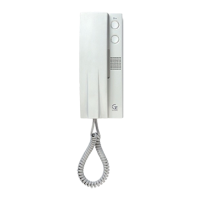
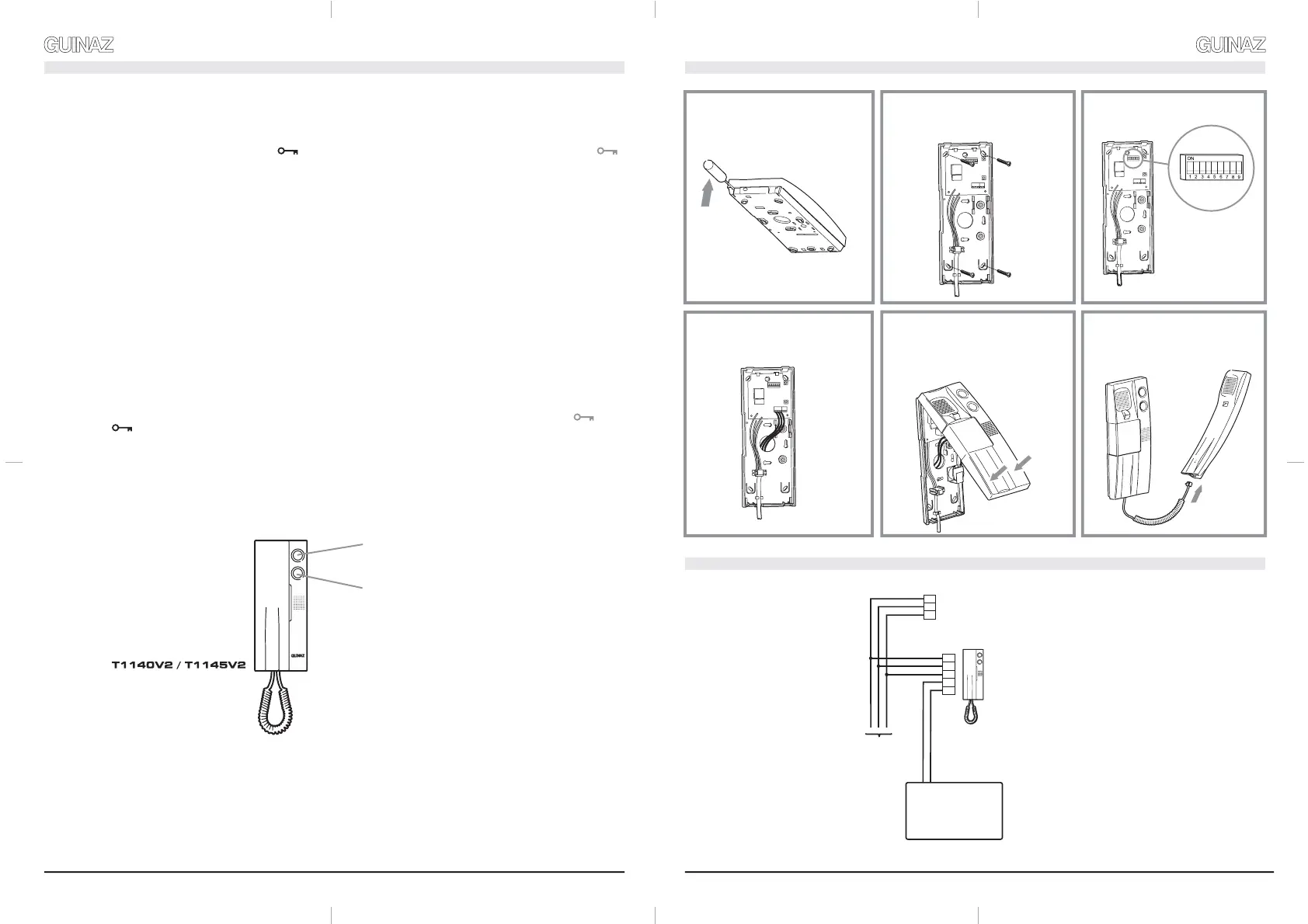
Pulsador abrepuertas.
Door opener pushbutton.
Pulsador auxiliar, libre de potencial.
Supplementary pushbutton, potential-free contact.
The telephone works in the following way:
When a call is received, the telephone emits a dual tone sound.
When audio contact is established, simply unhook the
telephone.
To open the door press de door opener button
.
The telephone has a second potential-free pushbutton for
auxiliary functions. This pushbutton admits a maximum voltage
of 17Vdc and a maximum current of 40mA.
Hang up the telephone to end the communication.
The maximum duration of the communication will be determined
by the type of street panel of the installation.
The communication underway will end automatically if a new
call is made from the street panel to another dwelling.
You will have 30 sec. to continue the communication once
this has finished, simply unhook the telephone once again.
If there is a porters unit connected to the installation, functioning
will be as follows:
When a call is received from the porters unit, the telephone
emits a dual tone sound. Simply unhook the telephone to
establish audio communication.
To make a call from a dwelling to the porters unit, unhook the
telephone and press the door opener button
. Three
things may occur at this point:
a) If the porters unit is free, call tones are heard on the
telephone.
b) If the bus is occupied by another user, the telephone will
make no sound.
c) If the porters unit is in IDLE state, the telephone emits
three busy tones, this indicating the call has been saved
in the porters unit.
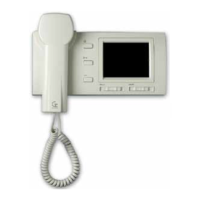
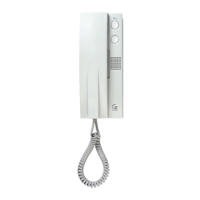
Telephone T1140V2 can also be used as a supplementary
telephone in video entryphone installations with monitors that
have a telephone. The supplementary telephone to be installed
in installations with hands-free monitors (surface or flush mounted)
will be T1145V2.
Installing the monitor in places where calls can be heard all
around the dwelling and far from heat sources (radiators, heaters,
etc.) or aggressive environments (kitchens, etc.) is recommended.
El teléfono T1140V2 también puede utilizarse como supletorio
en instalaciones de videoportero con monitores con auricular.
En instalaciones con monitores manos libres (superficie o
empotrables), el teléfono que ha de instalarse como supletorio
es el T1145V2.
Se recomienda instalar los teléfonos en lugares desde los cuales
se escuche la llamada en toda la vivienda, y que estén alejados
de fuentes de calor (radidores, estufas, etc.) o de ambientes
agresivos (cocinas, etc.).
El funcionamiento del teléfono es como sigue:
Al recibir una llamada, el teléfono emite un sonido bitonal.
Para establecer contacto auditivo, basta con descolgar el
auricular.
Para abrir la puerta, pulse el botón abrepuertas
.
Para funciones auxiliares, el teléfono dispone de un segundo
pulsador libre de potencial. Este pulsador admite 17Vdc de
tensión máxima y 40mA de corriente máxima.
Para finalizar la comunicación, cuelgue el auricular.
La duración máxima de la comunicación está determinada
por el tipo de placa calle de la instalación.
Si se realiza una nueva llamada desde la placa calle a otra
vivienda, la comunicación en curso finaliza automáticamente.
Una vez terminada la comunicación, dispone de 30 segundos
para retomarla, simplemente descolgando de nuevo el
auricular.
En instalaciones con conserjería, el funcionamiento es el siguiente:
Al recibir una llamada desde la conserjería, el teléfono emite
un sonido bitonal. Basta con descolgar el auricular para
establecer la comunicación de audio.
Para realizar una llamada desde el teléfono de la vivienda a
la conserjería, descuelgue el auricular pulse el botón
abrepuertas
. Llegados a este punto pueden ocurrir tres
cosas:
a) Si la conserjería está libre, en el teléfono se escuchan
tonos de llamada.
b) Si el bus está ocupado por otro usuario, en el teléfono
no se escucha ningún sonido.
c) Si la conserjería se encuentra en modo REPOSO, el
teléfono emite tres tonos de ocupado, indicando con
ello que la llamada ha sido memorizada en la conserjería.
INSTALACIÓN TELÉFONO. INSTALLATION OF TELEPHONE.
12
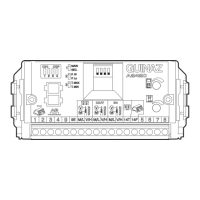
Configure el nº de vivienda.
Configure the No. of dwelling.
Coloque la base del teléfono en la pared
mediante tirafondos.
Assemble this base of the telephone on
the wall using sleeper-screws.
Para abrir la base del teléfono, introduzca
un destornillador y haga palanca.
To open the base of the telephone, insert
a screwdriver and lever it.
56
Conecte el auricular del teléfono.
Inserte el conector hasta oír el "clip".
Connect the telephone receiver. Insert
the connector until it clips in.
Cierre el teléfono:
A) Apoye la tapa en la parte superior.
B) Presione en la parte inferior hasta oír
el "clip".
Close the telephone:
A) Lean the cover on the upper part.
B) Press the lower part until it clips in.
4
Conecte los cables a la base del
teléfono.
Connect the cables to the base of the
telephone.
3
G503135 - R01
1M
2M
3M
1M
2M
12
13
3M
Contactos
pulsador auxiliar
(17 Vdc max; 40mA max.)
Auxiliary
push-button contacts
(17 Vdc max; 40mA max.)
T1140V2
Teléfono n
n Telephone
Bus de conexiones
entre telefónos
Connection bus
between telephones
NORMAS DE USO. NORMS OF USE.
Bus de conexiones
Connection bus


 To Previous Page
 Loading...