This document provides detailed instructions for the installation and removal of a protective case for a laptop or similar device, manufactured by Gumdrop. The case appears to be a two-piece design, consisting of a "bottom case" that protects the keyboard and lower chassis, and a "top case" that protects the screen and lid. The instructions are presented in a step-by-step visual format, accompanied by concise textual descriptions.
Function Description:
The primary function of this Gumdrop case is to provide robust protection for a portable electronic device, likely a laptop or Chromebook, against everyday wear and tear, impacts, and potential damage. It encases both the top (screen/lid) and bottom (keyboard/chassis) sections of the device, offering comprehensive coverage. The installation process suggests a snug, custom fit, implying that the case is designed to remain on the device during normal use, enhancing its durability without significantly impeding functionality. The "Congratulations on your new case!" message at the end of the installation guide reinforces its protective purpose.
Usage Features (Installation):
The installation process is broken down into six distinct steps, focusing on securing both the bottom and top cases to the device.
-
Bottom Case - Step 1: Keyboard Insertion (Left Side)
- Action: "Slide the device keyboard under the bottom case's left side clip."
- Visual: An arrow indicates sliding the left edge of the keyboard assembly underneath a clip on the left side of the bottom case. This suggests a starting point for securing the keyboard portion of the device.
-
Bottom Case - Step 2: Keyboard Insertion (Right Side)
- Action: "Press the other side of the keyboard down to snap into the right side clip securely."
- Visual: An arrow points downwards, indicating pressure applied to the right side of the keyboard to engage it with a corresponding clip on the right side of the bottom case. This ensures the keyboard is held firmly by the case.
-
Bottom Case - Step 3: Keyboard Positioning
- Action: "Push the keyboard forward until it is flush with the front edge of the bottom case."
- Visual: An arrow points towards the front of the device, illustrating the action of sliding the keyboard assembly forward within the bottom case until it aligns perfectly with the front edge. This step ensures proper alignment and full coverage by the bottom case.
-
Bottom Case - Step 4: Rear Corner Clips
- Action: "Carefully massage the rear corner clips up and over device edge to snap onto the keyboard."
- Visual: Two arrows point upwards and inwards at the rear corners of the device, showing the clips being guided over the device's edge. The term "massage" implies a gentle but firm manipulation to ensure the clips securely engage the device's rear corners, providing a tight fit.
-
Top Case - Step 5: Rear PC Clips
- Action: "Hook the top case rear PC clips up onto the device bottom edge."
- Visual: Two arrows point upwards and inwards at the rear of the device, indicating the top case being brought down and its rear clips engaging with the bottom edge of the device. This is the initial step for attaching the top case, likely forming a hinge-like connection.
-
Top Case - Step 6: Side Clips
- Action: "Press all 7 clips over the device, with pressure from both sides, to snap into place securely."
- Visual: Multiple arrows point inwards along the sides of the top case, illustrating the action of pressing the clips down to secure the top case around the device. The mention of "7 clips" suggests a specific design with multiple attachment points for a secure hold. "Pressure from both sides" indicates a balanced approach to ensure all clips engage properly.
Maintenance Features (Removal):
The removal process is also detailed in five steps, with a critical warning about the order of operations to prevent device damage.
CRITICAL WARNING: "FOLLOW STEPS 1 AND 2 IN ORDER. Failure to do so may result in damage to the device." This highlights the importance of adhering to the specified sequence for safe removal, indicating potential stress points or fragile components if removed incorrectly.
-
Top Case - Step 1: Unhook Rear PC Clips (CRITICAL First Step)
- Action: "Unhook the top case rear PC clips from the device bottom edge."
- Visual: Two arrows point downwards and outwards at the rear of the device, showing the top case's rear clips being disengaged from the device's bottom edge. This is the reverse of installation step 5 and is crucial for initiating the top case removal.
-
Top Case - Step 2: Release Side Clips (CRITICAL Second Step)
- Action: "Push the upper left and right side clips outward to release the sides of the case from the device."
- Visual: Two arrows point outwards from the upper left and right sides of the top case, illustrating the action of pushing these clips away from the device. This releases the main side attachments of the top case.
-
Top Case - Step 3: Hinge and Remove
- Action: "Gently hinge the top case up and off the device to release it from the top clips."
- Visual: Two arrows point upwards and outwards from the top corners of the device, showing the top case being lifted away. This step completes the removal of the top case after the rear and side clips have been disengaged.
-
Bottom Case - Step 4: Unhook Rear Clips
- Action: "Gently push the rear clips down to unhook from the device."
- Visual: Two arrows point downwards and outwards at the rear of the device, indicating the action of pushing the bottom case's rear clips away from the device. This is the reverse of installation step 4.
-
Bottom Case - Step 5: Release Side Clips
- Action: "Push the left and right side clips down past the device, one side at a time, to release it from the bottom case."
- Visual: Two arrows point downwards from the left and right sides of the bottom case, illustrating the action of pushing the side clips down and away from the device. The instruction "one side at a time" suggests a methodical approach to prevent undue stress on the device or the case. This completes the removal of the bottom case.
General Observations:
- Visual Clarity: The use of clear, sequential diagrams with directional arrows significantly enhances the user's understanding of each step.
- Concise Language: The instructions are brief and to the point, avoiding jargon and focusing on actionable commands.
- Emphasis on Security: Phrases like "snap into place securely," "flush with the front edge," and "carefully massage" indicate a design that prioritizes a tight and protective fit.
- Attention to Detail: The specific mention of "7 clips" for the top case and the "one side at a time" instruction for bottom case removal highlight the precision required for proper handling.
- Safety Precaution: The "CRITICAL!" warning for removal underscores the potential for device damage if instructions are not followed, emphasizing the importance of the correct sequence.
In summary, this Gumdrop case is a protective accessory designed for easy, yet secure, installation and removal on a portable electronic device. Its multi-clip system ensures a snug fit, and the detailed instructions, particularly the critical warnings for removal, guide users to maintain both the case and the device in optimal condition.

 Need help?
 General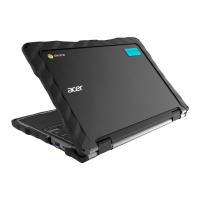

 To Next Page
