Need help?
Do you have a question about the Hailo TOPlift CCV and is the answer not in the manual?
This document serves as a supplement to the operating instructions for the Hailo TOPlift CCV, a specialized service lift designed for professional use. It is crucial to read these instructions in conjunction with the original operating instructions for the Hailo TOPlift L, as this supplement details the distinctive features and enhancements of the Cold Climate Version (CCV). The manual emphasizes safety and proper handling, requiring trained personnel for operation, adherence to prescribed maintenance intervals, and the creation of an emergency plan. The manufacturer's warranty for all components is two years, provided the technical documentation is observed, and periodic tests and inspections must follow stipulated schedules.
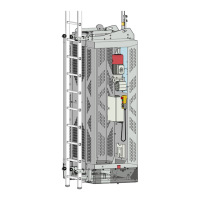
The Hailo TOPlift CCV is an enhanced version of the Hailo TOPlift L, specifically designed for operation in cold climates, enabling it to function at temperatures as low as -35°C. To ensure proper functioning in such extreme conditions, the service lift incorporates several additional or alternative components. These include temperature measurement in the arrester device, a heating mat on the back of the arrester device, temperature measurement in the switch cabinet, a switch cabinet heater, and a modified lock mechanism for the shutter door. The service lift will only operate once the components in both the switch cabinet and the arrester device have reached their respective operating temperatures.
For safe operation at -35°C, the Hailo TOPlift CCV relies on several safety devices and features. The switch cabinet is equipped with its own heater, which ensures reliable functioning of components at low temperatures. The temperature inside the switch cabinet must be above -15°C for the controls to be enabled and the service lift to be operational. The heater raises the temperature to +10°C and then automatically shuts off, remaining active at temperatures below +10°C even when the main switch is off. A warning is issued regarding the danger of electrical shock, as many areas of the control unit remain energized even with the main switch off. Work on the control unit should never be performed while it is under voltage, and the voltage supply to the service lift should be switched off if necessary. A temperature sensor in the switch cabinet monitors the temperature, disabling controls and preventing operation if it falls below -15°C.
The arrester device also features a heating mat on its back, covered by an insulating mat, which heats the device to its operating temperature when needed. A temperature sensor within the arrester device relays its temperature to the control unit, preventing lift movement if the temperature is below -15°C. A caution advises against removing the insulation on the back of the arrester device, as the heating mat's surface can reach 60°C.
On the front of the switch cabinet, two indicator lights provide status information. A red light indicates a heating-up phase, meaning the operating temperature of the arrester device and/or control unit has not yet been reached, and the service lift cannot be operated. Once the operating temperature is achieved, the red light extinguishes, and a green light illuminates, signaling that the temperatures in both the switch cabinet and arrester device are above the threshold level, and the lift is operational. The heating-up time is approximately 15 minutes. A warning advises against changing temperature settings on the controls, as this could jeopardize the proper functioning of safety-related components. Correct temperature settings are detailed in the circuit diagram.
The Hailo TOPlift CCV is equipped with a special shutter door lock, a safety device that prevents the door from opening during ascent, descent, or when stopped between platforms, mitigating the risk of falling. Entry and exit are only possible when the cabin is precisely level with the intended platform position. A magnet on the platform and a solenoid switch in the lift work together to stop the lift at the correct position and unlock the shutter door. In an emergency, the shutter door can be manually unlocked via a switch located in the entry sill frame. To disable the lock, the pushbutton on the switch must be pressed, allowing the shutter door to be opened. The emergency release must then be reset by pulling the button back to its starting position to restore operational status.
Crucially, before opening the shutter door, all persons in the cabin must be secured to one of the two attachment points in the cabin ceiling with a connecting device (part of personal protective equipment, PPE) to prevent falls. Failure to secure oneself with PPE poses a danger of falling.
Maintenance is a critical aspect of the Hailo TOPlift CCV. Before any maintenance work, the machine's main switch in the control cabinet must be turned to the lowest position and secured with a padlock to prevent accidental restart. Tools left on or in the machine can cause severe injuries and damage, so it's essential to ensure no tools or objects are forgotten before restarting. The document emphasizes observing all instructions in the maintenance chapter. Adequate tools and workshop equipment are essential, and only technically sound, suitable, and in some cases, prescribed tools should be used.
The inspection and maintenance process requires traveling the entire path of the lift. Therefore, the structure should be in an operating state that allows climbing the tower before maintenance begins. Maintenance work can only be performed by authorized Hailo employees, employees of local Hailo service centers, or company employees trained and certified by Hailo. A scheduled inspection of drive components is required annually, with a full service lift inspection and maintenance every one or two years. Drive components require scheduled maintenance every four years or after 200 hours of operation. Non-scheduled inspections are necessary if the service lift or its components are damaged through improper use, such as after a collision or impact. System components must be cleaned, greased (oiled), or exchanged as needed.
Only manufacturer-approved cleaning and lubricating agents should be used. All inspection and maintenance results must be documented in a report, listing any abnormalities, defects, or problems found, along with the component name.
A significant danger during maintenance is electrical shock. Contact with voltage-conducting components can be fatal. Only specially trained and qualified personnel are permitted to work on the electrical circuitry. For all electrical work, the main switch must be turned off and secured with a padlock. Another danger is falling; personnel must always secure themselves with PPE. For electrical system maintenance and repair, the entire machine must be switched free of current at the lowest level using the main switch on the switch cabinet or in the cabin. These main switches are secured with a padlock. An electrician is defined as someone with professional training to perform electrical installations, while a qualified person has professional training, experience, and manufacturer training to inspect equipment and is authorized and certified by the manufacturer.
Procedures for inspection and maintenance include:
Additional "Cabin" inspection and maintenance plan (yearly):
Additional "Switch cabinet" inspection and maintenance plan (every 2 years):
A warning reiterates the danger of electrical shock during switch cabinet maintenance, as the heater remains active even with the main switch off, and many control unit areas carry voltage. It is crucial to switch off the voltage supply to the service lift in the wind energy installation if necessary before performing any work.
 General
| Brand | Hailo |
|---|---|
| Model | TOPlift CCV |
| Category | Lifting Systems |
| Language | English |


 To Next Page