EasyManua.ls Logo

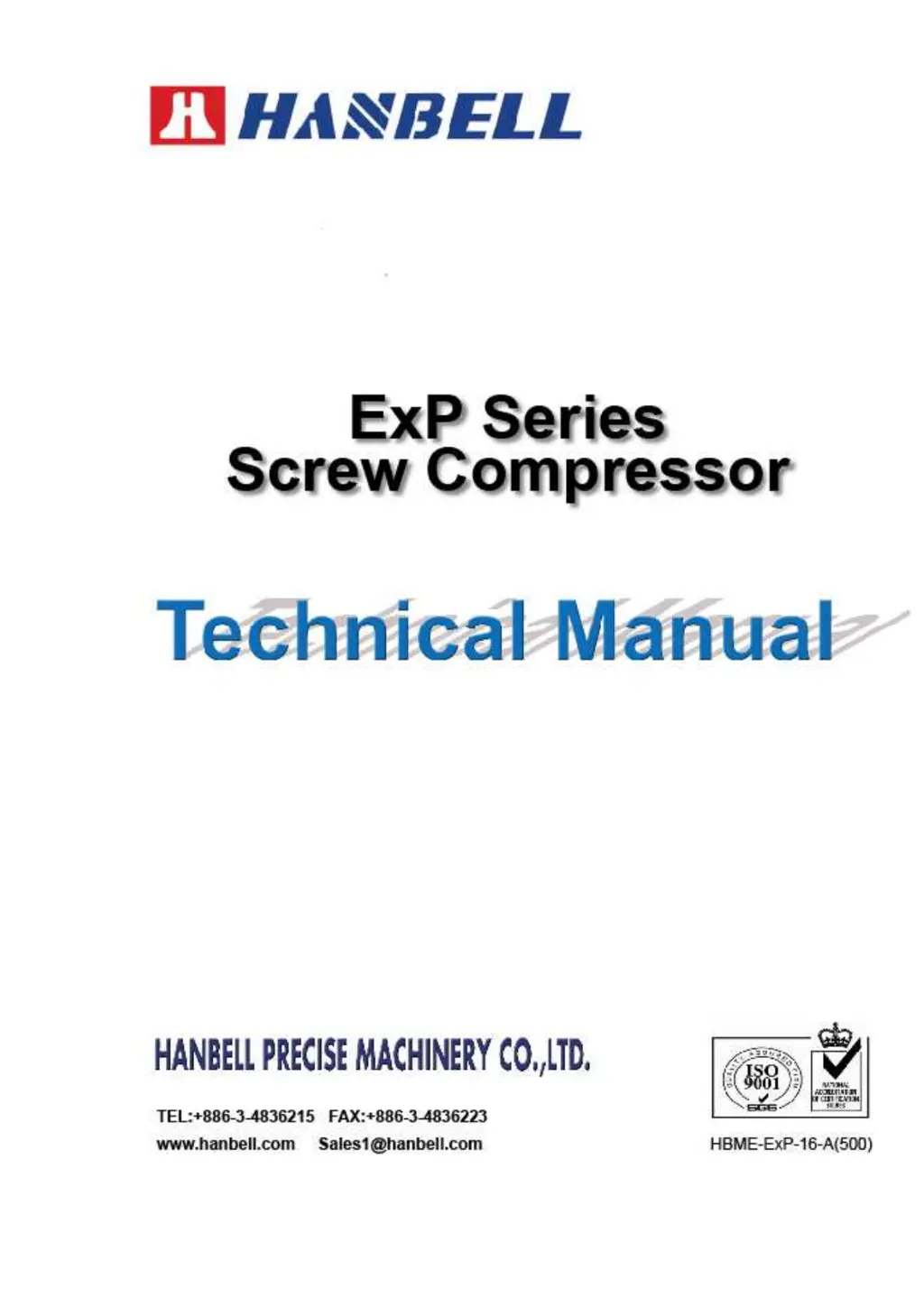
Hanbell ExP Series - User Manual

Hanbell ExP Series
46 pages
Print Icon
To Next Page IconTo Next Page
Loading...
1

Questions and Answers

Summary

General

1.1 Introduction of ATEX

Explains ATEX directives and their purpose in regulating equipment for dangerous zones.

1.2 Zone Classification

Defines explosive environment zones (Gas and Dust) based on frequency and duration of occurrence.

1.3 Gas Group

Classifies gases into groups based on their explosive properties and temperature limits.

1.4 ATEX code description

Explains the meaning of various components within an ATEX certification code.

Specifications and description of design

2.1 Compressor Nomenclature

Identifies and labels the key parts of the compressor using a nomenclature system.

2.2 Compressor outline

Provides dimensional drawings and component layouts for various compressor models.

2.3 Compressor construction

Provides detailed exploded view and component list for specific compressor models.

2.4 Available refrigerants for compressors

Lists compatible refrigerants for Hanbell compressors according to ASHRAE standards.

2.5 Compressor specifications

Details technical specifications like displacement, voltage, HP, and weight for various models.

2.6 MCC and LRA

Provides Motor Circuit Capacity (MCC) and Locked Rotor Amps (LRA) for different models and voltages.

2.7 Certification marking

Explains ATEX certification markings and their suitability for hazardous environments.

2.8 Cable Box

Details the design, installation, and tightening torque for the compressor's cable box.

2.9 INT69 HBY control module and PTC temperature sensor

Describes the function of the INT69HBY module and PTC sensors for motor protection.

2.10 Oil heater

Explains the function and installation of the standard 150W oil heater.

2.11 Oil level switch

Details the wiring, function, and installation of the oil level switch.

2.12 Oil drain valve

Explains the purpose and safe usage of the oil drain valve.

2.13 Solenoid valve

Provides dimensions, electrical diagram, and specifications for the solenoid valve.

2.14 Power Supply

Covers power supply limitations, voltage, frequency, and unbalanced voltage issues.

Capacity Control Systems

Explains capacity control logic for customer flexibility and future modifications.

Suction and Discharge Check Valves

Describes gravity-driven vertical/horizontal check valves and their dimensions.

Suction and Discharge Connection Bushings

Provides specifications and dimensions for standard and optional flange bushings.

Suction and Discharge Stop Valves

Lists recommended stop valves for maintenance and their sizes for different models.

Lubricants

3.1 Lubricants table

Lists applicable oils and their properties for different refrigerants.

3.2 Pre-cautions of changing oil

Provides essential precautions for oil selection, handling, and system preparation.

3.3 Oil change

Outlines the recommended schedule and procedures for changing compressor oil.

Compressor handling and installation

4.1 Compressor Lifting

Details safe procedures and equipment for lifting and transporting compressors.

4.2 Mounting the Compressor

Covers guidelines for compressor installation, ventilation, and vibration damping.

Piping Works Suggestions

Provides recommendations for piping to prevent vibration, noise, and damage.

Sloping Position Installation

Specifies limits for oblique angle installation and recommendations for special cases.

4.3 Compressors accessories

Lists standard and optional accessories for various compressor models.

Operation and maintenance

5.1 Compressor start-up

Details pre-start checking procedures and required conditions for safe operation.

5.2 regular check

Lists checks for refrigerant leakage and frozen oil.

5.3 Troubleshooting

Provides a table of common compressor problems, causes, and corrective actions.

5.4 Compressor checking list

A checklist for documenting compressor issues and facilitating troubleshooting analysis.

Warranty

Summary

General

1.1 Introduction of ATEX

Explains ATEX directives and their purpose in regulating equipment for dangerous zones.

1.2 Zone Classification

Defines explosive environment zones (Gas and Dust) based on frequency and duration of occurrence.

1.3 Gas Group

Classifies gases into groups based on their explosive properties and temperature limits.

1.4 ATEX code description

Explains the meaning of various components within an ATEX certification code.

Specifications and description of design

2.1 Compressor Nomenclature

Identifies and labels the key parts of the compressor using a nomenclature system.

2.2 Compressor outline

Provides dimensional drawings and component layouts for various compressor models.

2.3 Compressor construction

Provides detailed exploded view and component list for specific compressor models.

2.4 Available refrigerants for compressors

Lists compatible refrigerants for Hanbell compressors according to ASHRAE standards.

2.5 Compressor specifications

Details technical specifications like displacement, voltage, HP, and weight for various models.

2.6 MCC and LRA

Provides Motor Circuit Capacity (MCC) and Locked Rotor Amps (LRA) for different models and voltages.

2.7 Certification marking

Explains ATEX certification markings and their suitability for hazardous environments.

2.8 Cable Box

Details the design, installation, and tightening torque for the compressor's cable box.

2.9 INT69 HBY control module and PTC temperature sensor

Describes the function of the INT69HBY module and PTC sensors for motor protection.

2.10 Oil heater

Explains the function and installation of the standard 150W oil heater.

2.11 Oil level switch

Details the wiring, function, and installation of the oil level switch.

2.12 Oil drain valve

Explains the purpose and safe usage of the oil drain valve.

2.13 Solenoid valve

Provides dimensions, electrical diagram, and specifications for the solenoid valve.

2.14 Power Supply

Covers power supply limitations, voltage, frequency, and unbalanced voltage issues.

Capacity Control Systems

Explains capacity control logic for customer flexibility and future modifications.

Suction and Discharge Check Valves

Describes gravity-driven vertical/horizontal check valves and their dimensions.

Suction and Discharge Connection Bushings

Provides specifications and dimensions for standard and optional flange bushings.

Suction and Discharge Stop Valves

Lists recommended stop valves for maintenance and their sizes for different models.

Lubricants

3.1 Lubricants table

Lists applicable oils and their properties for different refrigerants.

3.2 Pre-cautions of changing oil

Provides essential precautions for oil selection, handling, and system preparation.

3.3 Oil change

Outlines the recommended schedule and procedures for changing compressor oil.

Compressor handling and installation

4.1 Compressor Lifting

Details safe procedures and equipment for lifting and transporting compressors.

4.2 Mounting the Compressor

Covers guidelines for compressor installation, ventilation, and vibration damping.

Piping Works Suggestions

Provides recommendations for piping to prevent vibration, noise, and damage.

Sloping Position Installation

Specifies limits for oblique angle installation and recommendations for special cases.

4.3 Compressors accessories

Lists standard and optional accessories for various compressor models.

Operation and maintenance

5.1 Compressor start-up

Details pre-start checking procedures and required conditions for safe operation.

5.2 regular check

Lists checks for refrigerant leakage and frozen oil.

5.3 Troubleshooting

Provides a table of common compressor problems, causes, and corrective actions.

5.4 Compressor checking list

A checklist for documenting compressor issues and facilitating troubleshooting analysis.

Warranty

Hanbell ExP Series Specifications

General IconGeneral
BrandHanbell
ModelExP Series
CategoryCompressor
LanguageEnglish

Related product manuals