EasyManua.ls Logo

Handiquilter HQ Capri 18 - User Manual

Handiquilter HQ Capri 18
54 pages
Print Icon
To Next Page IconTo Next Page
Loading...
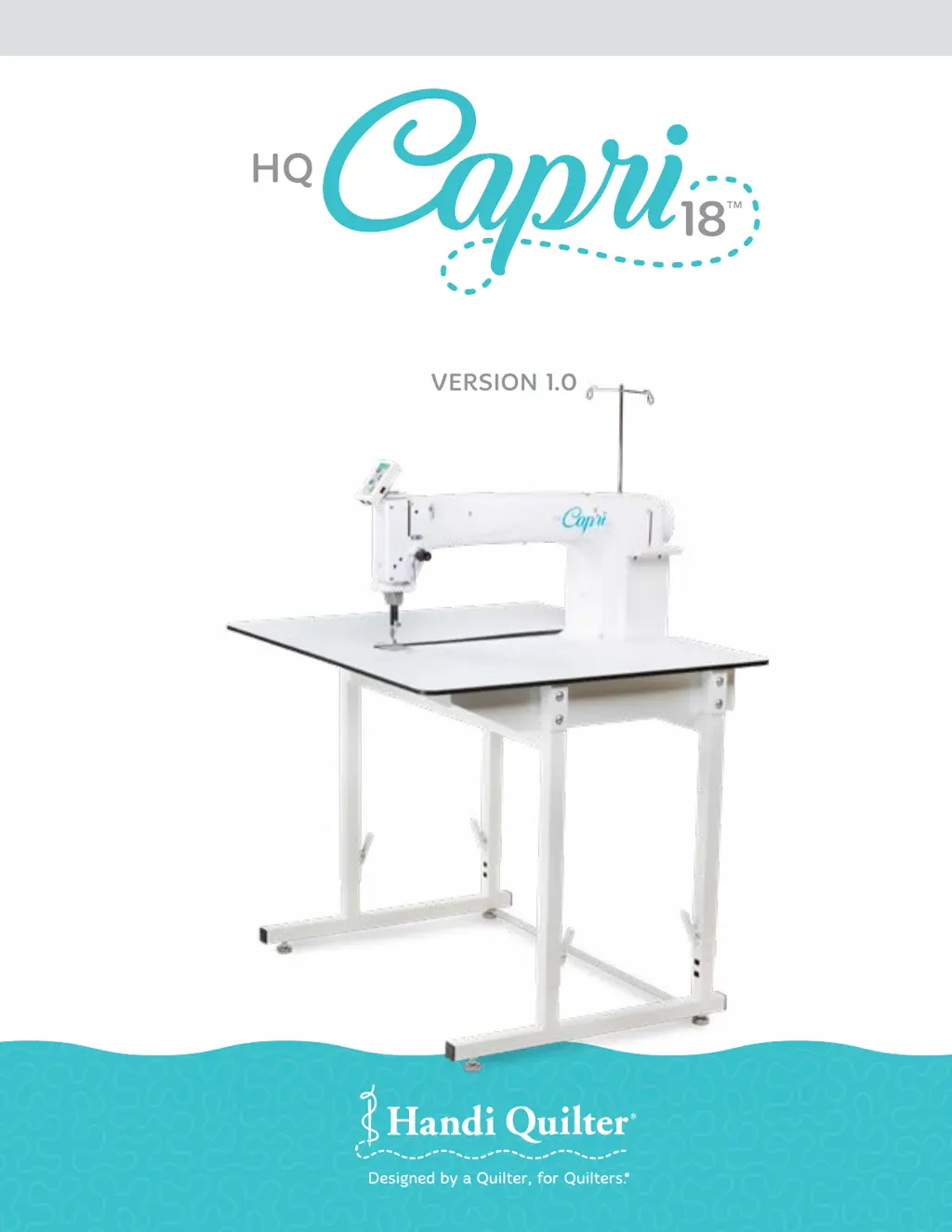
HANDI QUILTER 18-INCH STATIONARY LONGARM
Designed by a Quilter, for Quilters.
®
USER MANUAL
VERSION 1.0

Table of Contents

Questions and Answers

  • T
    Terry SmithAug 20, 2025
    Why does my Handiquilter Sewing Machine skip stitches?
    • R
      ryan03Aug 20, 2025
      Skipped stitches in your Handiquilter Sewing Machine can occur for several reasons. The needle may be damaged, dull, bent, or installed improperly; replace the needle, ideally once or twice daily during continuous quilting or at least once per quilt, using only the recommended needle system. Always change the needle if it hits a hard object or is bumped off-center. Also, ensure you are using the proper size needle for the work and thread. Some materials may constrict thread passage, so experiment to find the best needle for your fabric, thread, and batting combination. Check and adjust the bobbin case and top thread tension if the thread tension is too tight. Finally, make sure that the machine is threaded correctly.
  • J
    Jessica MitchellAug 25, 2025
    How to fix puckered stitches on my Handiquilter Sewing Machine?
    • C
      Carla GordonAug 25, 2025
      Puckered stitches in your Handiquilter Sewing Machine can occur if the tension is not balanced; ensure the bobbin tension is adjusted correctly, then balance the needle thread tension. Also, the needle may be too large for the quilting fabric; replace it with a size better suited for the fabric.
  • A
    Amanda JacksonAug 26, 2025
    What to do if my Handiquilter Sewing Machine has poor stitch quality?
    • J
      Jason JohnsonAug 26, 2025
      Poor stitch quality on your Handiquilter Sewing Machine may arise from unbalanced tension; ensure that you balance the tension of the needle thread after verifying that the bobbin tension is adjusted correctly. Another cause could be a damaged, corroded, or dirty bobbin case; ensure the bobbin case is free of any lint or foreign material that could impede thread passage through the machine.
  • J
    Jerry HaneyAug 28, 2025
    Why is the thread nesting under the quilt with my Handiquilter Sewing Machine?
    • S
      Sharon MontgomeryAug 28, 2025
      Thread nests under the quilt when using your Handiquilter Sewing Machine can be due to not enough tension on the top thread. Check that the machine is threaded correctly, making certain that the thread is flossed snugly in place between the two tension discs. If the machine is threaded correctly, tighten top tension by rotating the tension knob clockwise. This issue can also be caused by improper threading; refer to the threading diagram and threading instructions.
  • D
    Dr. Jacob NelsonAug 30, 2025
    Why does the needle break on my Handiquilter Sewing Machine?
    • C
      Crystal BurnsAug 30, 2025
      The needle of your Handiquilter Sewing Machine may break because it is bent or not installed properly; replace the needle, ensuring it is pushed into the needle bar clamp as far as it can go, and visually check that it reaches the top of the sight hole above the needle bar clamp screw. Also, the needle may hit the throat plate; correctly position the needle, throat plate, or hopping foot, and replace the needle.
  • P
    parkerjasonSep 1, 2025
    What causes thread backlash on my Handiquilter Sewing Machine?
    • Y
      Yesenia JonesSep 1, 2025
      Thread backlash on your Handiquilter Sewing Machine occurs when the bobbin thread tangles within the bobbin case, winds onto the hook spindle, or forms loops on the bottom of the quilt. Ensure the bobbin is in the bobbin case correctly and the thread is coming out from under the tension spring. The bobbin should rotate clockwise when the thread is pulled.
  • S
    Stacy DixonSep 2, 2025
    How to position the needle properly on a Handiquilter Sewing Machine?
    • K
      Karl VelazquezSep 3, 2025
      To position the needle properly to the needle bar on your Handiquilter Sewing Machine, inspect the needle's position to ensure it is at the 6 o’clock position. When facing the bobbin case side, you should see the entire needle eye directly facing you. Ensure the needle is installed all the way into the needle bar to the needle-stop hole, the long groove faces the front (bobbin case side), and the scarf faces the back of the machine. The needle can sometimes be rotated to 5 o’clock or 7 o’clock to adjust for a more positive thread loop pickup by the hook point.
  • R
    Russell StevensSep 4, 2025
    What happens if I move the quilt too fast on my Handiquilter Sewing Machine?
    • G
      garciachristinaSep 4, 2025
      To resolve the issue of moving the quilt too fast for the needle speed selected on your Handiquilter Sewing Machine in manual mode, synchronize quilt movement and needle speed to achieve your desired stitch length. Elongated stitches indicate that you are moving the quilt too fast for the current speed.
  • G
    George LopezSep 7, 2025
    What to do if the hand wheel won’t rotate on my Handiquilter Sewing Machine?
    • L
      lrobinsonSep 7, 2025
      If the hand wheel of your Handiquilter Sewing Machine won’t rotate, it may be because thread is entangled and caught in the hook, creating a thread lock. Gently rock or turn the hand wheel in the direction of motion and then the opposite direction until the thread lock breaks free. Remove the thread from the hook and basket, re-oil the hook, and ensure the hand wheel turns freely without the hook hitting the needle. Note that a thread lock can sometimes cause a timing problem.
  • T
    tonyphillipsSep 8, 2025
    How to fix damage or burrs on the throat plate of my Handiquilter Sewing Machine?
    • C
      Crystal WallSep 9, 2025
      If thread is shredding at the throat plate of your Handiquilter Sewing Machine, check for burrs or jagged edges. Gently rub with emery cloth to remove the sharp edge. Consult a repair technician to polish any hard-to-reach or delicate areas, or if the burr is inside the throat.

Summary

Important Safety and Machine Information

General Safety Precautions

Covers DANGER, WARNING, electrical shock, burn, fire, injury risks, and basic safe handling.

Operational Safety Guidelines

Details safe lifting, unplugging, avoiding moving parts, environmental conditions, and intended use.

Electrical Grounding and Safety

Explains optional U.S. grounding for 120 VAC connections and its importance.

Machine Operation and Care

Safe Machine Usage Practices

Instructions on watching the needle, unplugging, and connecting power directly.

Maximizing Machine Lifespan

Guidance on proper storage, cleaning agents, and avoiding impacts.

Repair and Adjustment Guidance

Basic steps for troubleshooting and seeking expert help.

About Your Machine

Machine Overview and Design

Introduction to the HQ Capri's features and ease of service.

General Specifications List

Detailed technical specifications including dimensions, speed, and power requirements.

HQ Capri Components Identification

Front Side Component Layout

Identifies parts visible from the front of the machine.

Back Side Component Layout

Identifies parts visible from the back of the machine.

Machine Views Overview

Diagrams showing rear and front perspectives of the machine.

Installation and Setup Procedures

Table and Machine Installation

Guides on setting up the table and placing the machine within it.

Accessory Component Installation

Instructions for installing the power cord, foot pedal, and thread mast.

Touch-Screen Display Setup

Steps for securely mounting and connecting the color touch-screen.

Using Your HQ Capri Machine

Needle and Thread Compatibility

Guide for selecting appropriate needles and threads for quilting.

Hopping Foot Installation

Procedures for changing between different hopping feet.

Machine Threading Process

Step-by-step instructions for threading the machine correctly.

Needle Installation and Replacement

Details on how to insert and change the machine needle.

Bobbin and Tension Adjustments

Bobbin Insertion Procedure

Guide on correctly placing the bobbin into the bobbin case.

Drawing Bobbin Thread to Top

Methods for cycling the needle to bring the bobbin thread up.

Bobbin Case Tension Calibration

Steps for testing and adjusting bobbin case thread tension.

Easy-Set Top Thread Tension

Instructions for adjusting the top thread tension for balanced stitches.

Machine Maintenance

Cleaning and Lubricating the Machine

Procedures for oiling the hook assembly and cleaning the machine.

Touch-Screen Display Cleaning

Instructions for safely cleaning the touch-screen display.

Touch-Screen Display Operations

Manual Mode Controls Overview

Explains Pause/Play, My Speed, and Limit Controls.

Preset and Basting Mode Setup

How to set up and use preset speeds and basting stitches.

Tension and Indicator Functions

Details on the Easy-Set Tension display and Bobbin Thread Indicator.

Regulated Mode Operations

Explains Stitches Per Inch (SPI), Precision, and Cruise stitch regulation.

Tools Menu Functions

Low Bobbin and Timer Settings

Accessing the low bobbin alarm and stitch/time counters.

Alarms, Lighting, and Calculator

Settings for machine alarms, lighting brightness, and the built-in calculator.

Language and Update Procedures

Changing display language and updating machine software.

Diagnostic Tests and Calibration

Sensor and Motor Performance Tests

Tests for motor, speed, motion, and needle sensors.

Tension and Foot Pedal Calibration

Procedures for calibrating tension and testing the foot pedal.

Getting Started with Quilting

Thread and Needle Recommendations

Guidance on selecting suitable threads and needles.

Basic Quilting Preparation

Techniques for preparing the machine and fabric for quilting.

Troubleshooting Common Issues

Needle and Stitch Problems

Addresses skipped stitches, bent needles, and incorrect needle size.

Tension, Threading, and Breakage Issues

Solutions for tension imbalances, improper threading, and thread breaks.

Machine Operation and Display Faults

Troubleshooting for power issues, display errors, and other mechanical faults.

Accessories and Options

Optional Machine Accessories

Information on spool pins, table extensions, and large foot pedals.

Handi Feet Guide

Overview of available specialized feet.

Appendix and Compliance Information

Regulatory Compliance Statements

FCC declarations and Canadian compliance statements.

Machine Limited Warranty Details

Terms and conditions of the manufacturer's warranty.

Handiquilter HQ Capri 18 Specifications

General IconGeneral
Machine TypeLongarm Quilting Machine
Throat Space18 inches
Bobbin TypeM-Class
LightingLED
Stitch RegulationYes
Stitch LengthAdjustable
Warranty5 years
Table SizeOptional

Related product manuals