
 Need help?
Do you have a question about the Hanna Instruments HI83141-1 and is the answer not in the manual?
Lists key attributes: two-point calibration, secure grip, water-resistance, custom calibration.
Details HI1230B pH electrode and HI7662 temperature probe characteristics.
Covers pH, mV, Temperature, Calibration, Battery, Environment, Dimensions, and Weight.
Details Reference, Junction, Electrolyte, Operating Temp, Pressure, Range, Shape, Glass type, Body material.
Lists Dimensions and Cable length for the temperature probe.
Covers battery replacement procedure and indicator.
Explains how to turn on the meter and the initialization screen.
Details protective cap preparation and sensor soaking for use.
Outlines frequency and conditions for pH recalibration.
Details buffer solutions and best practices for calibration preparation.
Instructions for proper disposal of electronic equipment.
Instructions for proper disposal of batteries.
Advice on suitability for application, environment, and safety.
Details the warranty period, coverage, and service procedures.
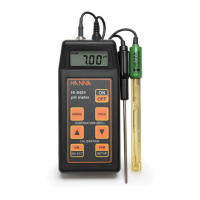
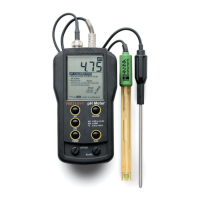
The Hanna Instruments HI83141-1 is a portable, water-resistant pH/mV/Temperature meter designed for accurate and reliable measurements in various applications. This instrument is intended to be paired with the HI1230B combination pH electrode and the HI7662 temperature probe for pH, mV, and temperature readings. For ORP measurements, the meter can optionally be paired with the HI3131B refillable ORP electrode (not included).
The HI83141-1 serves as a versatile tool for monitoring pH, mV (including ORP), and temperature. Its primary function is to provide precise readings of these parameters, crucial for a wide range of scientific, industrial, and environmental applications. The meter features a clear LCD display that shows the measured value, the unit tag (pH, mV, or °C/°F), and various status indicators such as battery level and temperature compensation status.
The pH measurement function allows users to determine the acidity or alkalinity of a solution. The mV measurement function is used for redox potential (ORP) measurements, which indicate the oxidizing or reducing capacity of a solution. The integrated temperature measurement, facilitated by the HI7662 probe, enables automatic temperature compensation (ATC) for pH readings, ensuring accuracy across varying temperatures.
Calibration is a key function of this meter, supporting both one- and two-point pH calibration using standard buffer solutions. This ensures the accuracy of pH measurements over time and with different electrodes. The calibration process is guided by on-screen tutorial messages, making it user-friendly.
The HI83141-1 is designed for ease of use and portability. Its compact, heavy-duty, and water-resistant casing makes it suitable for field use and demanding environments. A hand-strap on the bottom provides a more secure grip during operation.
To begin using the meter, users connect the HI1230B BNC connector to the designated socket and the HI7662 RCA connector to its socket. The meter is turned on by pressing the On/Off key, which initiates an initialization screen displaying LCD segments and battery status.
Before taking measurements, it is essential to prepare and condition the pH electrode. This involves removing the protective cap, and if dry, pouring HI70300 Storage solution into the cap and soaking the sensor for at least 30 minutes. The electrode should be rinsed with tap water before calibration or measurement.
pH calibration is a critical step for accurate readings. The meter supports a two-point calibration using standard buffer solutions such as pH 4.01, 6.86 (NIST), 7.01, 9.18 (NIST), or pH 10.01. For two-point calibration, pH 7.01 or pH 6.86 buffer is typically used as the first calibration point. The procedure involves placing the electrode tip into the buffer, allowing it to stabilize, and then using the OFFSET and SLOPE trimmers on the front panel to adjust the displayed pH value to match the buffer's pH at the current temperature. The CAL key is pressed to enter and complete the calibration. On-screen messages guide the user through the process, indicating when to adjust the trimmers and when the meter is calibrated.
For measurements, after connecting the probes and turning on the meter, the electrode tip is placed into the sample. Users select the desired measurement mode (pH, mV, or TEMP) using the corresponding keys. The meter then displays the measured value and unit. It is recommended to stir gently and wait for the measurement to stabilize. When taking successive measurements in different samples, rinsing the probes between samples is crucial to prevent cross-contamination. After cleaning, rinsing the probes with some of the next sample to be measured is advised.
The meter also features an auto shut-off function after 8 minutes of non-use to conserve battery life.
Maintaining the HI83141-1 involves regular battery replacement and proper care of the probes. The meter operates on a 9V Alkaline battery, providing approximately 150 hours of continuous use. When the "BATT" tag blinks on the LCD, it indicates that the battery level is too low and needs replacement. To replace the battery, the instrument must be turned off, three screws on the back removed to open the battery compartment, the old battery removed, and a new 9V Alkaline battery inserted with correct polarity. The compartment is then closed with the screws.
The pH electrode, HI1230B, is designed for durability with a polyetherimide (PEI) resin body, making it resistant to many aggressive chemicals. Its double junction reference prevents silver from entering the sample, which is beneficial in applications where silver ions are undesirable. Proper storage of the pH electrode in HI70300 Storage solution is essential to maintain its performance and extend its lifespan.
The HI7662 temperature probe, made of stainless steel with a built-in NTC Thermistor, is robust and provides automatic temperature compensation.
Frequent pH calibration is recommended for high accuracy, especially when the pH electrode is replaced, at least once a month, or after testing aggressive chemicals. This ensures the meter's readings remain accurate over time. Using separate calibration beakers for each buffer and discarding rinsing buffers after use helps maintain the integrity of the calibration solutions.
The instruction manual emphasizes saving all packing material until the meter is confirmed to be working correctly, as any damaged or defective items must be returned in their original packing material with supplied accessories. This highlights the importance of proper handling and storage from the outset.
 General
| Category | Measuring Instruments |
|---|---|
| Measurement Parameters | pH, mV, Conductivity, TDS, Dissolved Oxygen, Temperature |
| pH Resolution | 0.01 pH |
| pH Accuracy | ±0.01 pH |
| Temperature Resolution | 0.1 °C |
| Dimensions | 240 x 160 x 70 mm |
| Weight | 1.2 kg |
| pH Range | -2.00 to 16.00 pH |
| mV Resolution | 1 |
| mV Accuracy | ±0.2% |
| Temperature Accuracy | ±0.5 °C |
| Temperature Compensation | Automatic |
| Calibration | Automatic |
| Calibration Buffers | pH 4.01, 7.01, 10.01 |
| Input Impedance | 10^12 Ω |
| Environment | 0 to 50 °C, 0 to 95% RH |
| mV Range | ±2000 mV |


 To Next Page