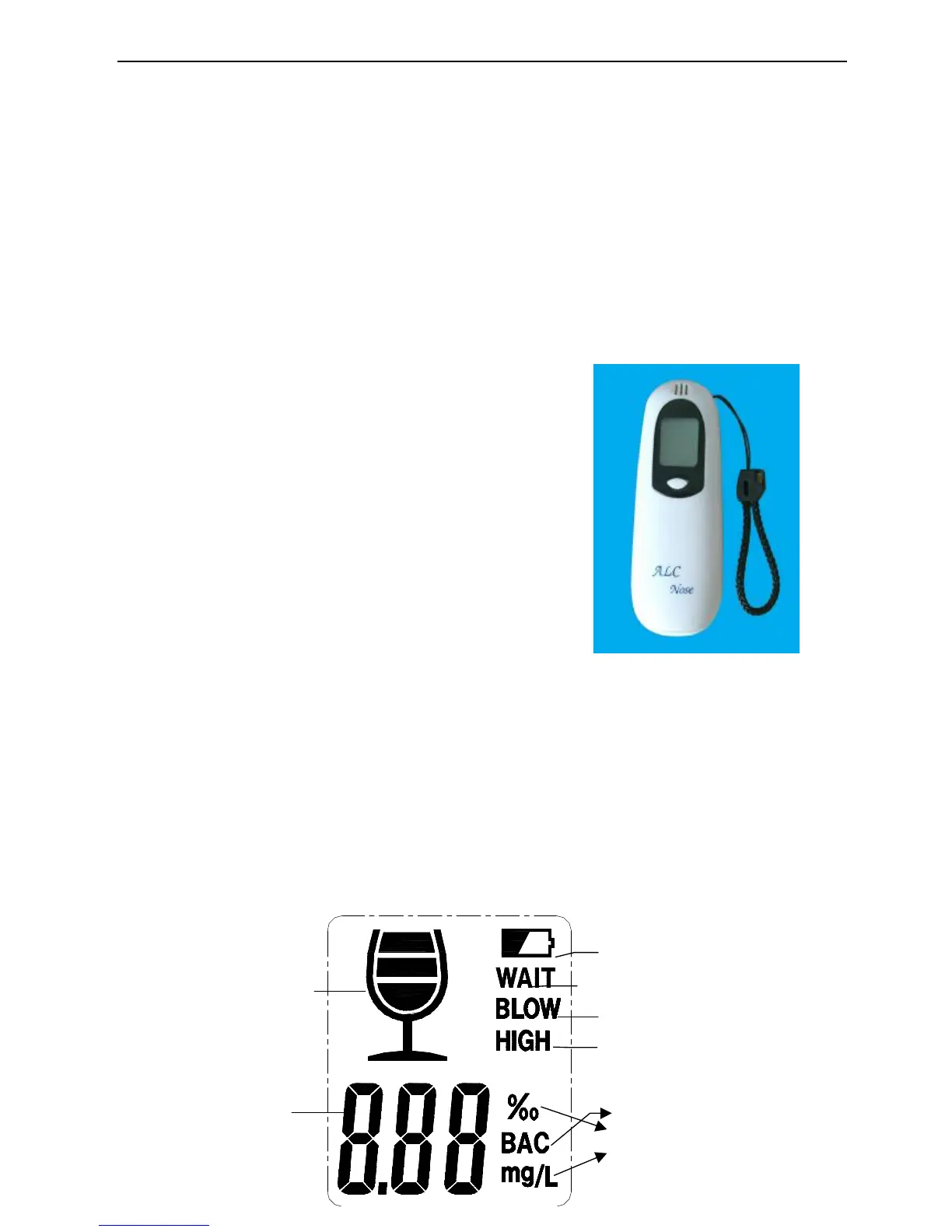
ALC Nose
AT-126 Breath Alcohol Tester
Reminding Before your testing
Alco Nose Breath tester should be used only to give an indication of the possible presence of alcohol in the breath/blood.
You should not rely upon it as the sole basis to determine intoxication or whether it is safe to drive a vehicle, operate
equipment, or engage in dangerous activities.
Everyone has different body responds to alcohol consumption and his testing result only as reference, not a subject
standard for consequent decision.
The manufacture, importer or distributor takes no responsibility whatsoever for the use of
this product for any reason. This product must not be used as a tool for determining whether a person is able to operate a
motor vehicle or device legally or safely. The intake of any alcohol will impair reflexes and judgment to operate motor vehicle.
Main Features:
Advanced NM hot-wire alcohol sensor;
□Quick response;
□SMD assembling, stable performance;
□MCU control;
□Cartoon and LCD indication, backup light
□Portable and small design
□No Touch Healthy design;
□ Sensor fault self-checking;
Battery saved design, low Volt warning.
Main Technical Info:
Sensor Type: Hot-wire alcohol sensor
Detection Range: 0.00~1.00mg/L(0.00~0.20%BAC;0.00~2.00g/L)
Alarming Level: 0.24mg/L (0.05%BAC; 0.5g/L)
Working Volt: DC3V(2×AAA batteries) Battery using time: ≥60 times
Using Environment: Tem: 0℃~45℃ Relative Hum:≤93% No Dews
Response Time: <8S Warm-Up: <18S
Indication Manner: 3 digital LCD with cartoon indication
Dimension: l×b×h, 103×37×19 mm ≤45 g
Structure and function Direction
3.2 Function Direction,
shown as Fig 1:


 To Next Page