EasyManua.ls Logo

Harbor Freight Tools VIKING 59466 - User Manual

Harbor Freight Tools VIKING 59466
16 pages
Print Icon
To Next Page IconTo Next Page
Loading...
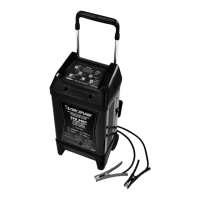
WHEELED BATTERY CHARGER,
ENGINE STARTER AND
ALTERNATOR TESTER
Visit our website at: http://www.harborfreight.com
Email our technical support at: productsupport@harborfreight.com
59466
Owners Manual & Safety Instructions
Save This Manual Keep this manual for the safety warnings and precautions, assembly,
operating, inspection, maintenance and cleaning procedures. Write the product’s serial number in the
back of the manual (or month and year of purchase if product has no number). Keep this manual and the
receipt in a safe and dry place for future reference. 23g
When unpacking, make sure that the product is intact
and undamaged. If any parts are missing or broken,
please call 1-888-866-5797 as soon as possible.
Copyright
©
2022 by Harbor Freight Tools
®
. All rights reserved.
No portion of this manual or any artwork contained herein may be reproduced in
any shape or form without the express written consent of Harbor Freight Tools.
Diagrams within this manual may not be drawn proportionally. Due to continuing
improvements, actual product may differ slightly from the product described herein.
Tools required for assembly and service may not be included.
Read this material before using this product.
Failure to do so can result in serious injury.
SAVE THIS MANUAL.
Question and Answer IconNeed help?

Do you have a question about the Harbor Freight Tools VIKING 59466 and is the answer not in the manual?

Summary

Warning Symbols and Definitions

Understanding Safety Alert Symbols

Explains DANGER, WARNING, CAUTION, and NOTICE symbols for hazard identification.

Electrical and Battery Unit Definitions

Defines units like Volts, Amperes, CCA, RC, and Ampere-hours for clarity.

Specific Safety Icon Meanings

Details icons for eye injury, manual reference, and fire risk warnings.

Important Safety Instructions

General Safety Guidelines and Precautions

Covers manual handling, environmental exposure, cord safety, and product care.

Battery Hazards and Personal Safety

Addresses explosive gases, personal protective measures, and battery interaction.

Extension Cord Usage and Safety

Provides guidance on selecting and using extension cords with the charger.

Preparing to Charge: Battery and Environment

Steps for preparing the battery and environment before charging.

Connecting and Charging Procedures

Guidance on connecting clips, charging in-vehicle, and charging outside vehicle.

Charger Location and DC Connection

Guidelines for charger placement and safe DC connection practices.

Product Specifications and Connections

Input and Output Ratings

Details electrical ratings, charge rates, and engine start specifications.

Grounding and AC Power Cord Connection

Ensures safe operation by properly grounding the charger's power cord.

Setup and Controls

Pre-Setup Safety Warning

Crucial warning to not plug in the charger until directed.

Product Functions Overview

Identifies key components and controls of the battery charger.

Control Panel Functions

Explains buttons, LEDs, and digital display messages on the control panel.

Operating Procedures

Charger Location Guidelines

Instructions for positioning the charger away from the battery and avoiding fumes.

Handle Adjustment

Steps to unlock, adjust, and lock the retractable handle for portability.

Charging Battery Installed in Vehicle

Detailed steps for connecting clips, initiating, and monitoring charge in-vehicle.

Charging Battery Outside Vehicle

Steps for connecting clips, initiating, and monitoring charge when battery is removed.

Engine Starting Assist

Procedure to connect, activate, and monitor the engine starting assist function.

Testing and Repair Functions

Battery and Alternator Testing

How to check battery voltage, percentage, and alternator output.

Repair 12 V Battery Mode

Steps for using the mode to recondition old or sulfated 12V batteries.

Maintenance and Troubleshooting

Pre-Use Inspection and Cleaning

Guidelines for inspecting the charger's condition and performing post-use cleaning.

Troubleshooting Common Issues

Diagnosing and solving problems like display errors, connection issues, and bad battery readings.

Parts and Assembly Information

Component Identification

Lists and identifies all parts of the battery charger for reference and replacement.

Visual Assembly Guide

Illustrated diagram showing how the charger components are assembled.

Limited 90 Day Warranty Information

Warranty Coverage and Claim Process

Details warranty terms, exclusions, and instructions for making a claim.

Summary

Warning Symbols and Definitions

Understanding Safety Alert Symbols

Explains DANGER, WARNING, CAUTION, and NOTICE symbols for hazard identification.

Electrical and Battery Unit Definitions

Defines units like Volts, Amperes, CCA, RC, and Ampere-hours for clarity.

Specific Safety Icon Meanings

Details icons for eye injury, manual reference, and fire risk warnings.

Important Safety Instructions

General Safety Guidelines and Precautions

Covers manual handling, environmental exposure, cord safety, and product care.

Battery Hazards and Personal Safety

Addresses explosive gases, personal protective measures, and battery interaction.

Extension Cord Usage and Safety

Provides guidance on selecting and using extension cords with the charger.

Preparing to Charge: Battery and Environment

Steps for preparing the battery and environment before charging.

Connecting and Charging Procedures

Guidance on connecting clips, charging in-vehicle, and charging outside vehicle.

Charger Location and DC Connection

Guidelines for charger placement and safe DC connection practices.

Product Specifications and Connections

Input and Output Ratings

Details electrical ratings, charge rates, and engine start specifications.

Grounding and AC Power Cord Connection

Ensures safe operation by properly grounding the charger's power cord.

Setup and Controls

Pre-Setup Safety Warning

Crucial warning to not plug in the charger until directed.

Product Functions Overview

Identifies key components and controls of the battery charger.

Control Panel Functions

Explains buttons, LEDs, and digital display messages on the control panel.

Operating Procedures

Charger Location Guidelines

Instructions for positioning the charger away from the battery and avoiding fumes.

Handle Adjustment

Steps to unlock, adjust, and lock the retractable handle for portability.

Charging Battery Installed in Vehicle

Detailed steps for connecting clips, initiating, and monitoring charge in-vehicle.

Charging Battery Outside Vehicle

Steps for connecting clips, initiating, and monitoring charge when battery is removed.

Engine Starting Assist

Procedure to connect, activate, and monitor the engine starting assist function.

Testing and Repair Functions

Battery and Alternator Testing

How to check battery voltage, percentage, and alternator output.

Repair 12 V Battery Mode

Steps for using the mode to recondition old or sulfated 12V batteries.

Maintenance and Troubleshooting

Pre-Use Inspection and Cleaning

Guidelines for inspecting the charger's condition and performing post-use cleaning.

Troubleshooting Common Issues

Diagnosing and solving problems like display errors, connection issues, and bad battery readings.

Parts and Assembly Information

Component Identification

Lists and identifies all parts of the battery charger for reference and replacement.

Visual Assembly Guide

Illustrated diagram showing how the charger components are assembled.

Limited 90 Day Warranty Information

Warranty Coverage and Claim Process

Details warranty terms, exclusions, and instructions for making a claim.

Overview

The VIKING Wheeled Battery Charger, Engine Starter, and Alternator Tester is a versatile device designed for maintaining, charging, and jump-starting lead-acid batteries, as well as testing vehicle alternators. This manual provides comprehensive instructions for its safe and effective operation, emphasizing the importance of following all safety warnings and precautions.

Function Description:

The device serves three primary functions:

  1. Battery Charging: It charges 6V and 12V flooded lead-acid batteries, including Standard, Gel, and AGM (Absorbed Glass Mat) types. It offers multiple charge rates: 2A (slow charge), 15A (fast charge), and 50A (quick boost). A unique "REPAIR 12V" mode is available for reconditioning old, idle, stratified, or sulfated 12V lead-acid batteries. The charging process is monitored, and the device automatically transitions to a maintenance mode once the battery is fully charged.
  2. Engine Starting (Starting Assist): This function provides a high-current boost (250A) to assist in starting vehicles with deeply discharged or cold batteries. It is specifically designed for engine start assist and should not be used for charging batteries. The engine start cycle delivers a charge for 10 seconds, followed by a mandatory 120-second cool-down period.
  3. Alternator Testing: The device can test the vehicle's charging system (alternator) to determine if its output voltage is within the normal range (13.4V to 14.4V). It indicates whether the output is "GOOD," "LOW" (below 13.4V), or "HI" (over 14.4V).

Important Technical Specifications:

  • Input Electrical Rating: 120VAC / 60Hz / 11.5A Maximum continuous, 50A Maximum intermittent.
  • Output Charge Rates:
    • Charge-2A: 6/12VDC, 2A
    • Charge-15A: 6/12VDC, 15A
    • Boost: 6/12VDC, Duty-cycle operation (50A-120 Seconds, 40A-60 Seconds, 30A-60 Seconds, 20A-60 Seconds, 30A-60 Seconds, 40A-60 Seconds)
  • Engine Start: 12V-START, 250A (10 Seconds On, 120 Seconds Off)
  • Battery Types: Flooded lead-acid batteries (Standard, Gel, AGM). Not for dry-cell or non-rechargeable batteries.
  • Safety Features: Overload device, grounding plug, various error messages (e.g., OVER TEMP, CONN-CLMP, CLMP-REVR, WRG-VOLT, BAD-BATT) for problem diagnosis.

Usage Features:

  • Control Panel: Features a digital display and buttons for Volt Select (6V/12V), Battery Type (Standard, Gel, AGM), Charge Rate (2A, 15A, 50A Boost, REPAIR 12V), Start/Stop, Engine Start, and Test (for Battery Voltage, Battery %, and Alternator).
  • LED Indicators: Separate LEDs for CHARGED MAINTENANCE, CHARGING, and ERROR provide visual status updates.
  • Digital Display Messages: Provides clear messages such as INIT (starting up), REDY (ready to charge), REPR (repair cycle), CHRG (charging in process), ANAL (analyzing battery), and FULL (fully charged). Error messages are also displayed for troubleshooting.
  • Portability: Equipped with wheels and a retractable handle for easy movement. Includes clip storage and cord wrap panel for organized storage of cables.
  • Battery Connection: Detailed instructions are provided for connecting to batteries both installed in a vehicle and outside a vehicle, with specific precautions to prevent sparks and explosions.
  • Repair Mode (REPAIR 12V): A specialized mode for reconditioning 12V lead-acid batteries, which can take up to 8 hours.
  • Cold Weather Operation: Recommends starting charging at the lowest rate and increasing as the battery warms. Explicitly states not to charge a frozen battery.

Maintenance Features:

  • Pre-use Inspection: Before each use, inspect the charger for loose hardware, cracked/broken parts, damaged electrical wiring/cable insulation, and any other condition affecting safe operation.
  • Post-use Cleaning: After use, wipe external surfaces with a clean cloth.
  • Cord Maintenance: Emphasizes pulling by the plug, not the cord, when disconnecting. Proper extension cord usage is detailed, including wire size requirements based on AC input rating.
  • Troubleshooting Guide: A comprehensive table lists common problems, possible causes, and likely solutions, including error messages displayed on the device.
  • Qualified Service: Stresses that repairs and internal maintenance should only be performed by qualified technicians. The charger housing should not be opened by the user.
  • Storage: After use, the charger should be cleaned and stored indoors, out of reach of children.

The manual strongly advises users to read the entire safety information section before setup or use, particularly concerning the risks of explosive gases from lead-acid batteries and the necessity of wearing appropriate personal protective equipment. It also highlights the importance of proper grounding and avoiding the use of the device with non-rechargeable or defective batteries.

Harbor Freight Tools VIKING 59466 Specifications

General IconGeneral
BrandHarbor Freight Tools
ModelVIKING 59466
CategoryBattery Charger
LanguageEnglish

Related product manuals