SAFETY INSTRUCTIONS
the plug. If the plug still does not t, obtain a
correct polarized extension cord. A polarized
extension cord will require the use of a
polarized wall outlet.
This plug will t into the polarized wall outlet
only one way. If the plug does not t fully into
the wall outlet, reverse the plug. If the plug
still does not t, contact a qualied electrician
to install the proper wall outlet. Do not
change the equipment plug, extension cord
receptacle, or extension cord plug in any way.
11. Avoid Dangerous Environment. Don’t use
tools in damp or wet locations.
12. Don’t Use In Rain.
13. Keep Children Away. All visitors should be
kept at a safe distance from work area.
14. Dress Properly. Do not wear loose clothing
or jewelry. They can be caught in moving
parts. Use of rubber gloves and substantial
footwear is recommended when working
outdoors. Wear protective hair covering to
contain long hair.
15. Use Safety Glasses. Always use face or dust
mask if operation is dusty.
16. Use Right Tool. Do not use tool for any job
except that for which it is intended.
17. For additional safety, the tool should be
connected to a GFCI protected outlet.
18. Warning. To reduce the risk of electric shock,
use only with an extension cord intended
EN
for outdoor use, such as an extension cord
of cord type SW-A, SOW-A, STW-A, STOW-A,
SJW-A, SJOW-A, SJTW-A, or SJTOW-A.
19. Extension Cord. Make sure your extension
cord is in good condition. When using an
extension cord, be sure to use one heavy
enough to carry the current your product
will draw. An undersized extension cord will
cause a drop in line voltage resulting in loss
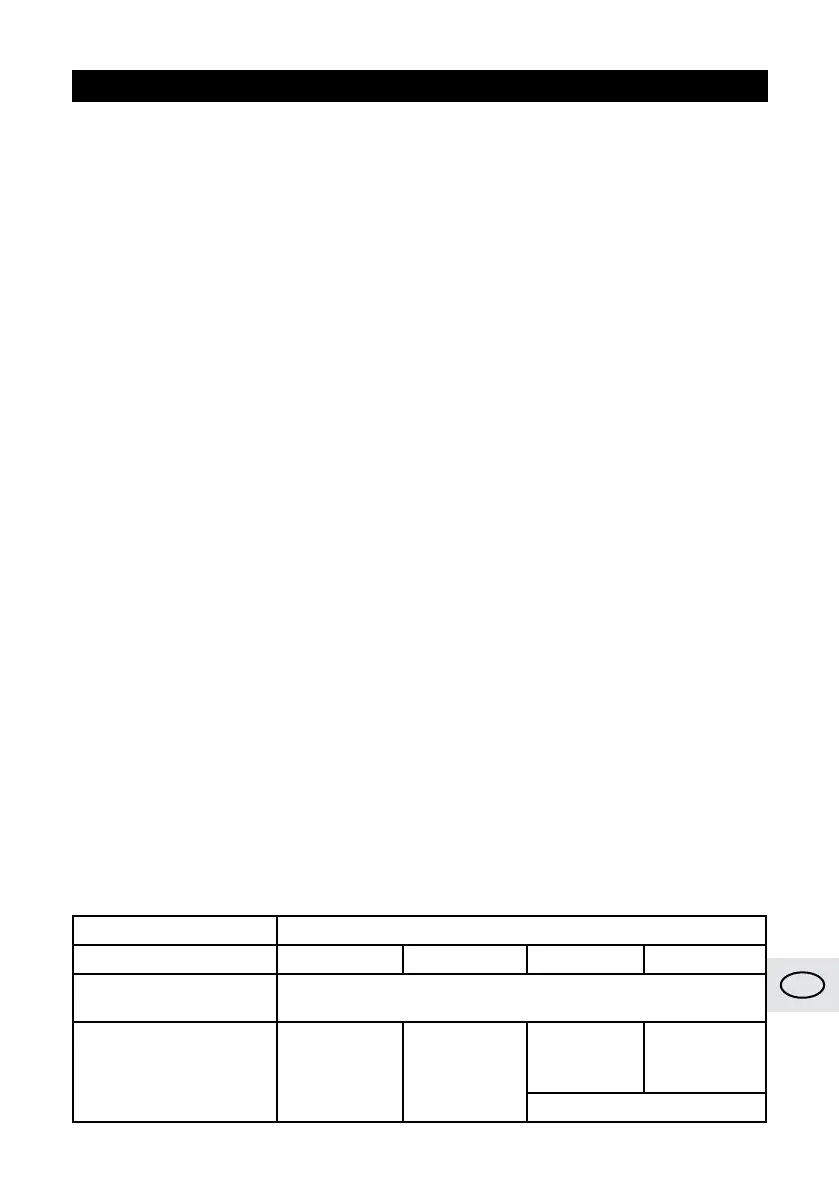
of power and overheating. Table1 shows the
correct size to use depending on cord length
and nameplate ampere rating. If in doubt, use
the next heavier gauge. The smaller the gage
number, the heavier the cord. To reduce the
risk of disconnection of tool cord from the
extension cord during operating:
Make a knot shown in gure 2
Avoid Unintentional Starting. Don’t carry
plugged-in tool with nger on switch.
Be sure switch is o when plugging in.
Handle cord carefully. Never carry tool by
cord or yank it to disconnect from receptacle.
Keep cord from heat, oil, and sharp edges.
20. Don’t grasp the exposed cutting blades or
cutting edges when picking up or holding
the tool.
21. Don’t Force Tool. It will do the job better
and with less likelihood of a risk of injury at
the rate for which it was designed.
22. Don’t overreach. Keep proper footing and
balance at all times.
Volts Total length of cord in feet
120V 25 50 100 150
Ampere Rating
More than / Not more than AWG
0-6
6-10
10-12
12-16
18
18
16
14
16
16
16
12
16
14
14
14
12
12
Not recommended
Table 53.1
Minimum gauge of extension cords


 To Next Page
 Loading...