34 Emission control equipment
check
1
1 Of the emission control systems that may
be fitted, only the air pump drivebelt (where
applicable), the crankcase ventilation system
and the evaporative emission control systems
require regular checking, and even then, the
components of these systems require minimal
attention.
2 Checks and adjustment of the air pump
drivebelt are contained in Section 9.
3 The crankcase ventilation system filter in
the oil filler cap should be renewed by simply
renewing the cap (the new cap is supplied
with filter inside). Checks of the other system
components are contained in Chapter 4C.
4 Should it be felt that the other systems are
not functioning correctly, the advice of a
dealer should be sought.
35 Coolant renewal
2
Warning: Wait until the engine is
cold before starting this
procedure. Do not allow
antifreeze to come into contact
with your skin, or with painted surfaces of
the vehicle. Rinse off spills immediately
with plenty of water. Never leave antifreeze
lying around in an open container, or in a
puddle in the driveway or on the garage
floor. Children and pets are attracted by its
sweet smell, but antifreeze can be fatal if
ingested.
Note: If coolant to Rover specification, in the
correct ratio, has been continuously
maintained in the system, then coolant
renewal will not normally be necessary.
However, to be absolutely sure about the
integrity of the antifreeze and anti-corrosion
properties of the coolant, periodic renewal is
to be recommended.
Cooling system draining
1 To drain the system, first remove the
expansion tank filler cap (see “Weekly
checks”). Move the heater temperature
control to the hot position.
2 If there is anti-freeze in the system, place
clean bowls beneath the radiator and at the rear
of the engine to collect the coolant for re-use.
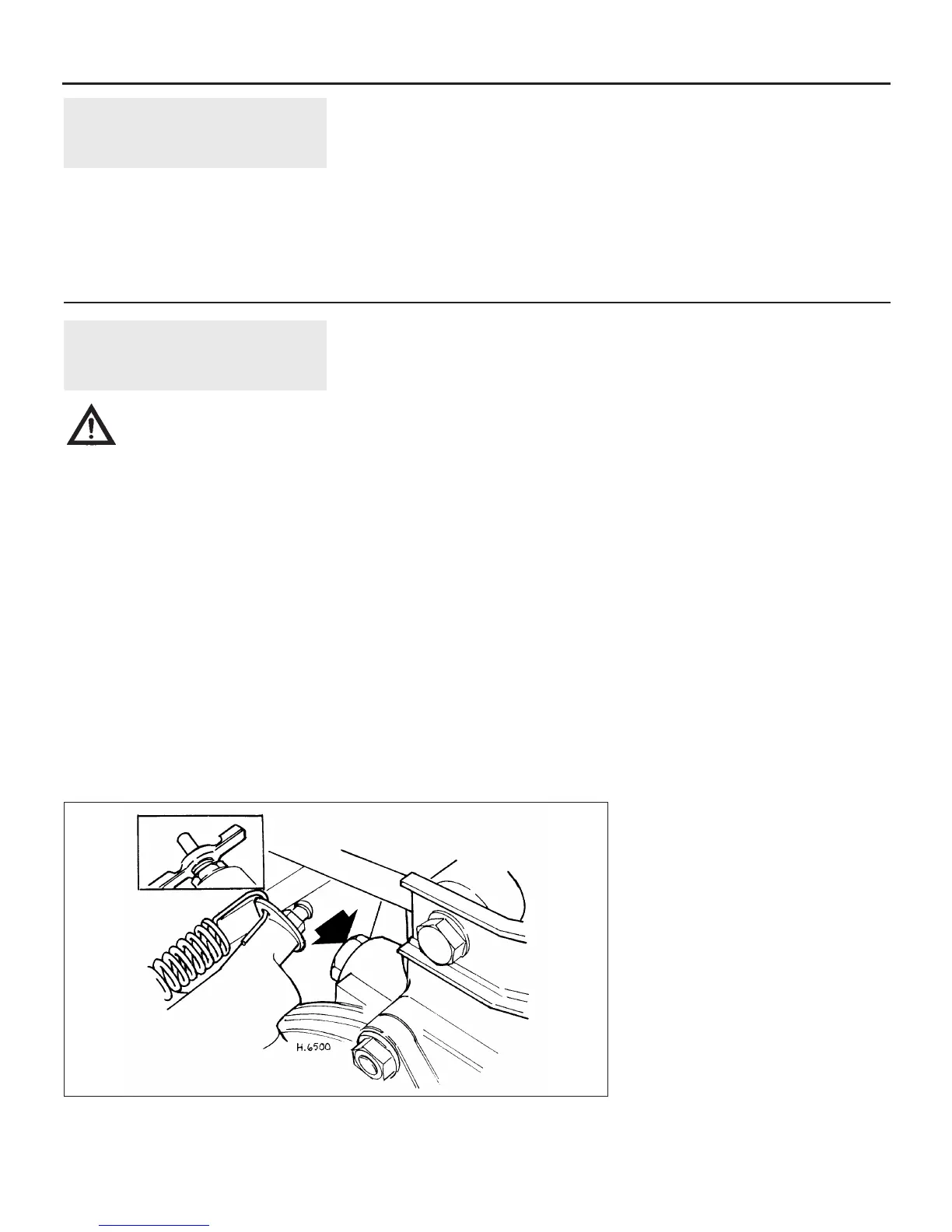
3 Undo and remove the radiator drain plug
and cylinder block drain plug, and allow the
coolant to drain. If fitted, the radiator drain
plug is located at the bottom of the radiator
nearest the grille, and the cylinder block drain
plug (if fitted) can be found at the rear of the
block, beneath the engine tie-bar (see
illustration).
4 On later models the radiator does not
incorporate a drain plug, and it is therefore
necessary to detach the bottom hose to drain
the coolant. To do this slacken the bottom
hose retaining clip and pull the hose off the
radiator outlet. The hose clip is very
inaccessible and a long thin screwdriver is
quite useful here. If the hose proves difficult to
remove from the radiator outlet, it is possible
to gently push it off from the access hole
under the wheel arch.
5 When the coolant has stopped running,
probe the orifices, particularly the cylinder
block orifice, with a short piece of wire to
dislodge any particles of rust or sediment
which may be preventing the coolant from
completely draining out.
Cooling system flushing
6 With time, the cooling system may
gradually lose its efficiency if the radiator core
becomes choked with rust, scale deposits
from the water, and other sediment. This is
especially likely if an inferior grade of
antifreeze has been used that has not been
regularly renewed. To minimise this, as well as
using only the specified type of antifreeze and
clean soft water, the system should be
flushed as follows whenever any part of it is
disturbed, and/or when the coolant is
renewed.
7 With the coolant drained, close the drain
taps and refill the system with fresh water.
Refit the radiator cap, start the engine and
warm it up to normal operating temperature,
then stop it and (after allowing it to cool down
completely) drain the system again. Repeat as
necessary until only clean water can be seen
to emerge, then refill finally with the specified
coolant mixture.
8 If only clean, soft water and good-quality
antifreeze has been used, and the coolant has
been renewed at the specified intervals, the
above procedure will be sufficient to keep the
system clean for a considerable length of
time. If, however, the system has been
neglected, a more thorough operation will be
required, as follows.
9 To flush the system first drain the coolant
as described in the previous Section. Place a
garden hose in the radiator filler cap neck and
allow water to run through the system for ten
to fifteen minutes.
10 To flush the engine, remove the
thermostat (see Chapter 3), insert the garden
hose into the thermostat housing, and allow
water to circulate until it runs clear from the
bottom hose. If, after a reasonable period, the
water still does not run clear, the radiator
should be flushed with a good proprietary
cleaning agent.
11 In severe cases of contamination,
reverse-flushing of the radiator may be
necessary. To do this, remove the radiator
(see Chapter 3), invert it, and insert the garden
hose into the bottom outlet. Continue flushing
until clear water runs from the top hose outlet.
A similar procedure can be used to flush the
heater matrix.
12 The use of chemical cleaners should be
necessary only as a last resort. Normally,
regular renewal of the coolant will prevent
excessive contamination of the system.
1•20 Every 12 000 miles or 12 months
Every 24 000 miles or 24 months
35.3 Cylinder block coolant drain tap or plug location (arrowed)


 To Next Page
 Loading...