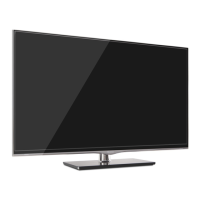
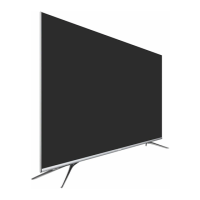
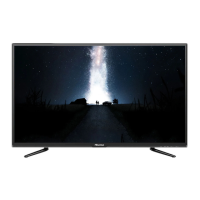
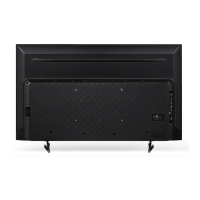
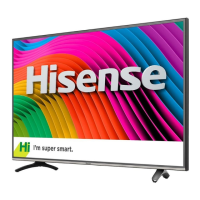
This document is a user manual for Hisense 40K360 and 50K360G series televisions. It provides important information regarding safety, usage, troubleshooting, and specifications.
Function Description
The Hisense 40K360 and 50K360G are high-definition LCD televisions designed for home entertainment. They are capable of displaying video content from various sources, including broadcast television (analog and digital), external media players, and computers. The TVs feature built-in speakers for audio output and offer multiple input options for connectivity. They are designed to provide a sharp video quality with a resolution of 1920 x 1080.
Important Technical Specifications
Model Names:
Dimensions (Without Stand):
- 40K360:
- Width: 36 inches (922 mm)
- Height: 21.7 inches (552 mm)
- Depth: 2.3 inches (58 mm)
- 50K360G:
- Width: 44.3 inches (1124 mm)
- Height: 26.2 inches (666 mm)
- Depth: 2.5 inches (64 mm)
Dimensions (With Stand):
- 40K360:
- Width: 36 inches (922 mm)
- Height: 24 inches (607 mm)
- Depth: 8.9 inches (225 mm)
- 50K360G:
- Width: 44.3 inches (1124 mm)
- Height: 28.7 inches (729 mm)
- Depth: 11.1 inches (281 mm)
Weight:
- 40K360:
- Without Stand: 24.3 lbs (11 kg)
- With Stand: 27.6 lbs (12.5 kg)
- 50K360G:
- Without Stand: 39.7 lbs (18 kg)
- With Stand: 46.3 lbs (21 kg)
LCD Panel Minimum Size (diagonal):
- 40K360: 40 inches
- 50K360G: 50 inches
Screen Resolution: 1920 × 1080
Audio Power:
- 40K360: 7 W + 7 W
- 50K360G: 8 W + 8 W
Power Consumption: Please refer to the rating label.
Power Supply: 120 V ~ 60 Hz
Receiving Systems:
- Analog: NTSC
- Digital: ATSC / QAM
Receiving Channels:
- VHF: 2~13
- UHF: 14~69
- CATV: 1~125
- Digital Terrestrial Broadcast (8VSB): 2 ~ 69
- Digital cable (64/256 QAM): 1 ~ 135
Tuner Type: Frequency synthesized
Environmental Conditions:
- Temperature: 41°F ~ 95°F (5°C ~ 35°C)
- Humidity: 20% ~ 80% RH
- Atmospheric pressure: 86 kPa ~ 106 kPa
- Component Input: 480 I / 60 Hz, 480 P / 60 Hz, 720 P / 60 Hz, 1080 I / 60 Hz, 1080 P / 60 Hz
- VGA Input: VGA (640×480 / 60 Hz), SVGA (800×600 / 60 Hz), XGA (1024×768 / 60 Hz)
- HDMI Input: RGB / 60 Hz (640×480, 800×600, 1024×768), YUV / 60 Hz (480 I, 480 P, 720 P, 1080 I, 1080 P)
Usage Features
- Child Safety: The manual emphasizes the importance of child safety, advising users to secure the TV to prevent tip-over and to follow proper installation guidelines. It also warns against allowing children to climb on or play with the TV or its furniture.
- Installation: Provides instructions for installing the TV with a stand or mounting it on a wall, specifying minimum clearance requirements for adequate air circulation (at least 12 inches/30cm from the top and 4 inches/10cm from the sides and back). It warns against installing the TV in enclosed areas or against a wall without proper ventilation to prevent overheating.
- Power Management: The TV is ENERGY STAR® qualified in "Energy Saving" mode, indicating compliance with energy efficiency guidelines. Users are advised that changes to certain features may affect power consumption.
- Connectivity: Supports various input types including Component, VGA, and HDMI, allowing connection to a wide range of external devices.
- Audio Features: Includes MTS (Multichannel Television Sound) functionality, allowing for stereo sound and Second Audio Program (SAP) for alternative audio channels (e.g., different languages or descriptive audio).
- Troubleshooting Guide: A comprehensive section helps users diagnose and resolve common issues such as no sound/picture, distorted picture/sound, remote control malfunction, and channel reception problems.
- LCD Panel Handling: Specific instructions are provided for handling the LCD panel, warning against pressing hard or jolting it to prevent damage. It also advises caution if the panel is broken due to potential skin inflammation from liquid.
- Condensation: Explains how condensation can affect TV performance and provides advice on how to prevent it by allowing the unit to acclimatize to room temperature.
- FCC Compliance: The device complies with part 15 of the FCC Rules, ensuring it does not cause harmful interference and accepts any received interference.
- Legal Notices: Includes important legal information, including the Hisense Limited Warranty for original purchasers, covering manufacturing defects for one year from the purchase date.
Maintenance Features
- Cleaning: The manual specifies cleaning the TV only with a dry cloth.
- Power Cord Protection: Users are instructed to protect the power cord from being walked on or pinched, especially at plugs and where it exits the apparatus.
- Ventilation: Emphasizes the importance of not blocking ventilation openings to ensure proper cooling.
- Servicing: All servicing is to be referred to qualified service personnel. The manual lists conditions under which servicing is required, such as damage to the power cord, liquid spills, or if the apparatus has been dropped.
- Replacement Parts: When replacement parts are needed, service technicians are advised to use parts specified by the manufacturer or those with identical characteristics to avoid fire, electric shock, or other hazards.
- Safety Checks: After service or repairs, technicians should perform safety checks to ensure the unit is in proper operating condition.
- Long-Term Storage: If the unit is not used for a long time (e.g., during a trip), it should be unplugged from the AC outlet for safety.
- End-of-Life Directives: Information is provided for recycling the TV, advising users to contact local authorities or the Electronic Industries Alliance (www.eia.org) for recycling information.
- Non-Active Pixels: Explains that the presence of a few non-active pixels (fixed black, blue, green, or red points) on the LCD screen is a technical limitation and not considered a defect affecting performance.
- Warranty: The warranty covers manufacturing defects for one year. It specifies that for TVs 42" and below, service is carry-in or ship-in, while for 46" and above, on-site service is provided. The warranty does not cover consumer instruction, delivery, installation, set-up, adjustments, signal reception problems, cosmetic damage, damage due to acts of nature, accident, misuse, abuse, negligence, commercial use, modification, or "burnt" images on the screen.

 Need help?

 To Next Page
 General