Hisense Refrigerator and Freezer
This document provides detailed instructions for the use, installation, and maintenance of a Hisense upright refrigerator and freezer. It emphasizes safety, proper handling, and efficient operation to ensure the longevity and optimal performance of the appliance.
Function Description
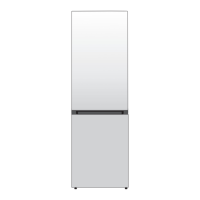
The Hisense appliance is a combined refrigerator and freezer unit designed for storing fresh and frozen food. The refrigerator compartment is intended for storing fresh food at temperatures above 0°C, while the freezer compartment is for freezing fresh food and for long-term storage of frozen food (up to one year, depending on the type of food).
The appliance features various internal components to facilitate organized storage:
- Refrigerator Compartment: Includes a control unit (depending on the model), LED lighting, MultiFlow column, glass shelves, FreshZone drawer, CrispZone fruit and vegetables drawer with humidity control, bottom door shelves, and a bottle shelf.
- Freezer Compartment: Features top freezing and storage drawers, a Deep SpaceBox drawer for freezing and storage, and bottom storage drawers.
Some models may include a FreshZone drawer (fresh box) for storing food longer in a conventional refrigerator, retaining more flavor and nutrients. This drawer is suitable for items like pineapples, avocado, bananas, olives, potatoes, eggplant, cucumbers, beans, peppers (capsicum), melons, watermelons, pumpkins, squash, and zucchini.
The appliance also incorporates advanced technologies like MultiFlow with air ionizer (NoFrost appliances) which evenly distributes temperature throughout the entire refrigerator, enriching the air with negative ions to mimic the natural microclimate and keep food fresh for longer. AdaptTech technology allows the appliance to adjust its operation based on user habits and environmental conditions, anticipating increased frequency of door opening to maintain stable temperatures and reduce energy consumption.
Important Technical Specifications
The appliance is designed for household and similar applications, including staff kitchen areas, shops, offices, hotels, motels, bed and breakfast type environments, and catering/non-retail applications.
Climate Classes and Temperature Ranges:
- SN (subnormal): from +10 °C to +32 °C
- N (normal): from +16 °C to +32 °C
- ST (subtropical): from +16 °C to +38 °C
- T (tropical): from +16 °C to +43 °C
The relative humidity for all climate classes is ≤75%.
Refrigerant: The appliance contains a small amount of an environmentally friendly yet flammable gas R600a. In case of a gas leak, ventilate the room thoroughly, disconnect the appliance from the power mains, and call a service technician.
Dimensions (example for one model):
- Height: 536/707* mm
- Width: 592/663* mm
- Depth: 599 mm** / 641 mm*** (depending on model and handle type)
- Minimum clearance from wall: 50 mm (top), 30 mm (back)
Door Racks: Maximum load on each door rack is 5 kg.
Total Weight Capacity for Bottle Rack: The holder can take a maximum load of nine 0.75-litre bottles or 13 kilograms of total weight.
Usage Features
Before First Use:
- Before connecting the appliance to the power mains, read the instructions carefully.
- Allow the appliance to rest in a vertical position for a minimum of 2 hours before connecting it to the power mains to prevent damage from transport.
- Check for any damage or irregularities.
Connecting the Appliance:
- Connect the appliance to the power mains using the power cord. The wall outlet should be fitted with a ground contact (safety socket).
- The appliance must be connected to the power mains and grounded in compliance with effective standards and regulations.
- The appliance will withstand short-term deviations from the nominal voltage, but not more than +/- 6%.
Operating the Appliance (Control Unit 1 - Controls in the Appliance Interior):
- Appliance on/off key (A): Press to switch the appliance on or off.
- Temperature and extra functions settings key (B): Press to adjust the temperature.
- Set temperature display for the refrigerator compartment (C): Displays the set temperature.
- Freezer boost function indicator (D): Activates intensive freezing.
- Eco function indicator (E): Activates the Eco function.
Adjusting Temperature:
- The factory default setting for the refrigerator compartment is 4 °C.
- The freezer compartment temperature is around -18 °C.
- Press the B key to adjust the temperature. The indicator cycles through the settings in a circular manner, from right to left.
- Recommended settings: Refrigerator 4 °C, Freezer -16 °C.
Intensive Freezing (Freezer Boost) Function:
- Activates intensive freezing for 24 hours before adding a large amount of food, or for 24 hours after adding food.
- Press the B key until the light above the D symbol lights up.
- When activated, the appliance will operate with maximum power.
- If the intensive freezing function is not deactivated manually, it will automatically switch off after approximately two days.
Eco Function:
- Activates the Eco function, which sets the refrigerator temperature to 4 °C and the freezer temperature to -17 °C.
- Press the B key until the E symbol lights up.
- This function optimizes energy consumption.
High Temperature Alarm:
- If the temperature inside the appliance is too high, an acoustic alarm will sound, and the signal light above the set temperature (C) will flash.
- To switch off the alarm, press the B key.
- The alarm will automatically switch off after a 24-hour delay if the temperature falls to a sufficiently low level.
Open Door Alarm:
- If the refrigerator or freezer compartment door is open for more than 2 minutes, an acoustic alarm will sound.
- To switch off the alarm, press the B key.
- If the door remains open for more than 10 minutes, the appliance will stop, and the light above the display 8 will flash.
Operating the Appliance (Control Unit 2 - Controls on the Appliance Door):
- Appliance on/off key (A): Press and hold for 3 seconds to switch on/off.
- Refrigerator/freezer compartment switch key (B): Press to select the compartment for temperature adjustment.
- Freezer compartment display (B1): Shows freezer temperature.
- Refrigerator compartment display (B2): Shows refrigerator temperature.
- Temperature adjustment key (C): Press to adjust temperature.
- Intensive freezing (freezer boost) on/off key (D): Activates intensive freezing.
- Intensive freezing (freezer boost) function indicator (D1): Indicates intensive freezing is active.
- Eco function on/off key (E): Activates Eco function.
- Eco function indicator (E1): Indicates Eco function is active.
Adjusting Temperature (Control Unit 2):
- Press B key (ZONE CHOICE) to select the compartment.
- Press C key to adjust the temperature.
- Fridge: 8°C → 7°C → 6°C → 5°C → 2°C → 3°C → 4°C.
- Freezer: -18°C → -19°C → -20°C → -21°C → -22°C → -23°C → -17°C → -16°C → -15°C → -14°C → -24°C.
Super Freeze (Control Unit 2):
- Quickly lowers the temperature in the freezer for fresh food.
- Press D key (SUPER) to enter super freezer mode.
- The light will be illuminated, and the freezer temperature will be set at -24°C.
- Automatically switches off after 50 hours.
Eco Function (Control Unit 2):
- Press E key (ECO MODE) to get into Eco function.
- The light E1 will be illuminated. The freezer temperature will be set at -17°C, and the fridge temperature will be set at 6°C.
Alarm (Control Unit 2):
- Door alarm: If the door of the fridge has been opened for over 2 minutes, the door alarm will sound.
- In case of door alarm, buzzer will sound 3 times every 1 minute and will stop alarming automatically after 8 minutes.
- To save energy, avoid keeping the door open for a long time.
Appliance Interior Equipment:
- Shelves: Can be removed for cleaning or to adjust height.
- Wire Bottle Rack: Designed to hold bottles securely.
- Fruit and Vegetable Bin with Humidity Control: The bin at the bottom of the refrigerator is for storing fruit and vegetables. It provides humidity and prevents food from drying out. The bin has an integrated humidity regulator.
- Slider position to the right: closed vents, higher humidity.
- Slider position to the left: open vents, lower humidity.
- FreshZone Drawer (Fresh Box): For storing food longer.
- Door Racks: For storing various items.
Recommended Distribution of Food:
- Refrigerator Compartment:
- Upper part: canned food, bread, wine, pastry, etc.
- Middle part: dairy products, ready-made meals, desserts, soft drinks, beer, cooked food, etc.
- FreshZone bin: meat, meat produce, delicatessen.
- Fruit and vegetable bin: fresh fruit, vegetables, roots, potatoes, onions, garlic, tomatoes, sauerkraut, turnips, etc.
- Upper/middle door bins: eggs, butter, cheese, etc.
- Lower door bins: beverages, cans, bottles.
- Do not store fruit (bananas, pineapples, papaya, citruses) and vegetables (zucchini, eggplant, cucumbers, bell peppers, tomatoes, and potatoes) sensitive to low temperatures in the refrigerator.
- Freezer Compartment: Freezing and storing frozen food. Do not store lettuce, eggs, apples, pears, grapes, peaches, yoghurt, soured milk, sour cream, and mayonnaise in the freezer.
Storing Food in the Refrigerator:
- Correct use, appropriate packaging, maintaining the right temperature, and observing food hygiene standards are crucial.
- Observe expiry dates.
- Food should be kept in closed containers or appropriate packaging to prevent odors and humidity.
- Do not store flammable, volatile, and explosive substances.
- Bottles with high alcohol content should be tightly sealed and stored in an upright position.
- Some organic solutions, essential oils, lemon and orange peel, butter acid, etc., can damage plastic surfaces.
- Unpleasant odors warn of lacking cleanliness.
- If leaving home for a longer period, remove perishables.
Avoid Contamination of Food:
- Opening the door for long periods can significantly increase the temperature.
- Regularly clean surfaces.
- Store raw meat and fish in suitable containers.
- If the refrigerating appliance is left empty for long periods, switch off, defrost, clean, dry, and leave the door open.
Freezing and Storing Frozen Food:
- Maximum amount of fresh food that can be inserted at once is specified on the appliance rating plate.
- To make use of the entire freezer volume, remove all drawers.
- Activate the super freeze function 24 hours before freezing fresh food.
- Do not place fresh food in contact with already frozen food.
- When freezing smaller amounts of food (1-2 kilograms), activating the super freeze function is not required.
Important Warnings on Freezing:
- Only use the freezer to freeze food appropriate for freezing.
- Select the most suitable packaging.
- Make sure the packaging is air and water tight so the food does not dry out and lose its vitamins.
- Indicate the type of food, amount, and date of freezing on the packaging.
- It is important that the food freezes quickly.
Storing Industrially Frozen Food:
- Observe manufacturer's instructions, temperature, and expiry date.
- Only choose food with undamaged packaging.
- Do not purchase food covered in frost.
- Protect food from thawing during transport.
Frozen Food Storage Time:
- Fruit, beef: from 10 to 12 months
- Vegetables, veal, poultry: from 8 to 10 months
- Venison: from 6 to 8 months
- Pork: from 4 to 6 months
- Finely chopped or ground meat: 4 months
- Bread, pastry, cooked meals, lean fish: 3 months
- Entrails: 2 months
- Smoked sausage, fatty fish: 1 month
Defrosting Frozen Food:
- Defrosting is an important step.
- Methods: in the refrigerator, in cold water, in a microwave oven, or a convection oven.
- Some frozen products can be cooked without prior defrosting.
- Pack the food in small amounts.
- Use partly or completely defrosted food as soon as possible.
- Do not re-freeze food that has been partly or completely defrosted.
Maintenance Features
Defrosting the Appliance:
- Automatic Refrigerator Defrosting: The refrigerator interior wall is thawed automatically. Any accumulated ice will melt when the compressor unit is inactive. Drops will flow through an opening in the refrigerator rear wall into a tray fitted above the compressor, from where they will evaporate. Make sure the opening in the back wall is never blocked by food or any other object.
- Defrosting a No Frost Freezer: The NO FROST freezer will defrost automatically. Any frost layer that may build up occasionally will disappear automatically.
Cleaning the Appliance:
- Before cleaning, unplug the appliance from the power mains.
- Use a soft cloth to clean all surfaces. Avoid abrasive substances, acids, or solvents.
- Clean the appliance exterior with water or a mild solution of suds.
- Lacquered and aluminum surfaces may be cleaned with lukewarm water to which you have added a mild detergent.
- Appliance interior can be cleaned with lukewarm water to which you can add some vinegar.
- Do not wash the parts of appliance interior equipment in a dishwasher as they may be damaged.
Troubleshooting:
The manual provides a comprehensive troubleshooting guide for common problems, their causes, and remedies:
- Appliance not working: Check power outlet, ensure appliance is switched on.
- Cooling system operates continuously: Too high environment temperature, door opened too frequently or too long, door not closed correctly, too much fresh food inserted.
- Condensate (dew) on shelves: Transient phenomenon, high environment temperature and humidity, too much fresh food inserted, open humidity control slider, put food in bags or other packaging.
- Droplets on refrigerator compartment back wall: Normal, refrigerator compartment is defrosted automatically.
- Water dripping/leaking from refrigerator: Clogged water discharge opening or water dripping past the water gutter, clean the blocked opening, use a plastic straw.
- Light above set temperature display will flash: Door opened too frequently or too long, door not closed correctly, too much fresh food inserted, power failure.
- Door difficult to open: If trying to open the freezer door after just having closed it, this could be difficult.
- Appliance sides are warm: Normal, pipes and tubes installed in the appliance sides, which tend to heat up during operation.
- LED lighting does not work: Call a service technician, do not attempt to repair yourself.
Information About Appliance Noise:
- Cooling systems include a compressor and a fan, which generate some noise.
- Noise level depends on installation, proper use, and age of the appliance.
- After connecting, the compressor operation or the sound of flowing liquid may be louder.
- Sometimes, unusual or loud noises may appear during appliance operation, often due to improper installation:
- Appliance not standing level and stable on a solid base.
- Appliance not in contact with a wall or adjacent furniture.
- Internal equipment not firmly in its place.
- Not caused by rattling cans, bottles, or other containers.
- Due to higher workload on the cooling system when the door is opened more frequently or for a longer time, or when a large amount of fresh food is introduced, or when intensive freezing or cooling functions are activated, the appliance can temporarily generate more noise.

 Need help?
 General

 To Next Page