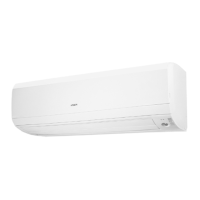
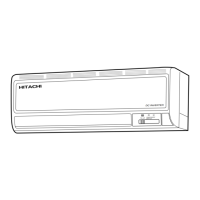
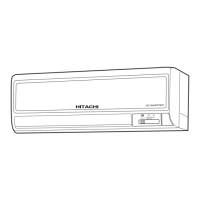
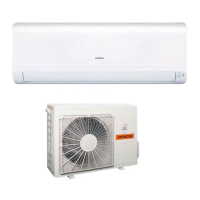
This document describes the Hitachi Split Type Air Conditioner, covering its functions, usage, and maintenance. The air conditioner consists of an indoor unit and an outdoor unit, designed for both cooling and heating operations, with specific models RAS-50YHA4 / RAC-50YHA4 and RAS-60YHA4 / RAC-60YHA4.
Safety Precautions
Before operating the unit, it is crucial to read and understand the safety precautions. Pay close attention to "Warning" and "Caution" signs. "Warning" indicates potential risks of death or serious injury if instructions are not followed, while "Caution" indicates risks of serious consequences if not observed properly. Always follow all instructions to ensure safety. Keep this manual for future reference.
Precautions During Installation
- Do not reconstruct the unit: Self-reconstruction can lead to water leakage, faults, short circuits, or fire.
- Professional installation: Always have the unit installed by a sales agent or qualified technician to prevent water leakage, short circuits, or fire.
- Earth line connection: Ensure the earth line is properly connected. Avoid placing it near water or gas pipes, lightning conductors, or telephone earth lines, as improper installation can cause electric shock or fire.
- Circuit breaker: A circuit breaker must be installed according to the mounting site to prevent electric shock.
- Flammable gas: Do not install the unit near locations with flammable gas to prevent the outdoor unit from catching fire if gas leaks.
- Drain hose: Ensure smooth water flow when installing the drain hose.
- Indoor unit placement: Do not install the indoor unit in machine shops or kitchens where oil vapor or mist can flow into the unit. Oil can deposit on the heat exchanger, reducing performance and potentially deforming or breaking plastic parts.
Precautions During Shifting or Maintenance
- Abnormal situations: If you notice any abnormal situation, such as a burning smell, stop the unit immediately and turn off the circuit breaker. Contact your agent, as continued operation under abnormal conditions can lead to faults, short circuits, or fire.
- Professional maintenance: Contact your agent for maintenance. Improper self-maintenance can cause electric shock and fire.
- Removal and reinstallation: If the unit needs to be removed or reinstalled, contact your agent. Improper self-removal or reinstallation can cause electric shock or fire.
- Supply cord: If the supply cord is damaged, it must be replaced with a special cord obtainable from authorized service/parts centers.
Precautions During Operation
- Direct airflow: Avoid prolonged direct airflow for health reasons.
- Air outlet/inlet safety: Do not insert fingers, rods, or other objects into the air outlet or inlet, as the high-speed fan can cause injury. Always stop operation and turn off the breaker before cleaning.
- Fuse wire: Never use any conductor as a fuse wire, as this can be fatal.
- Thunderstorms: During a thunderstorm, disconnect and turn off the circuit breaker.
- Spray cans and combustibles: Do not place spray cans or other combustibles within one meter of the air outlets of both indoor and outdoor units, as hot air can increase internal pressure and cause rupture.
- Intended use: Operate the product only according to manufacturer specifications and for its intended use.
- Wet hands: Do not operate the unit with wet hands, as this can cause fatal accidents.
- Airflow direction: Do not direct cool air from the air conditioner towards household heating appliances like electric kettles or ovens, as it may affect their operation.
- Outdoor unit stability: Ensure the outdoor mounting frame is always stable, firm, and free of defects to prevent the outdoor unit from collapsing.
- Water contact: Do not splash or direct water onto the unit during cleaning, as this can cause a short circuit.
- Aerosols/hair sprays: Do not use aerosols or hair sprays near the indoor unit. Chemicals can adhere to the heat exchanger fins, blocking evaporation water flow to the drain pan, causing water to splash from the indoor unit.
- Cleaning: Switch off the unit and turn off the circuit breaker before cleaning, as the high-speed fan inside the unit can be dangerous.
- Long periods of non-operation: Turn off the circuit breaker if the unit will not be operated for a long period.
- Climbing/objects: Do not climb on the outdoor unit or place objects on it.
- Water containers: Do not place water containers (like vases) on the indoor unit to prevent water from dripping into the unit, which can damage insulators and cause short circuits.
- Plants: Do not place plants directly under the airflow, as it is harmful to them.
- Open doors/windows: When operating the unit with doors and windows open (room humidity above 80%) and the air deflector facing down or moving automatically for a long time, water may condense on the air deflector and drip, wetting furniture. Avoid operating under such conditions for extended periods.
- Room temperature: If the heat in the room exceeds the unit's cooling capability (e.g., many people, heating equipment), the preset room temperature may not be achieved.
- Children and persons with reduced capabilities: This appliance can be used by children aged 8 years and above, and persons with reduced physical, sensory, or mental capabilities or lack of experience and knowledge, provided they are supervised or instructed on safe use and understand the hazards. Children should not play with the appliance. Cleaning and user maintenance should not be performed by children without supervision.
Names and Functions of Each Part
Indoor Unit
- Pre-filter: Prevents dust from entering the indoor unit. (Refer to page 20 for maintenance.)
- Front panel: The main cover of the indoor unit.
- Indoor unit indicators: Light indicators showing the operating condition. (Refer to page 5 for details.)
- Horizontal deflector / Vertical deflector (Air Outlet): Controls the direction of airflow. (Refer to page 15 for adjustment.)
- Remote controller: Sends operation signals to the indoor unit to control the entire system. (Refer to page 6 for usage.)
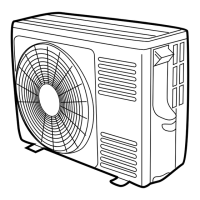
Outdoor Unit
- Drain pipe: Drains condensed water to the outside.
- Connecting cord and insulation pipe for piping: Connects the indoor and outdoor units.
- Air inlet (Back, Left side): Where air enters the outdoor unit.
- Air outlet: Where air is discharged from the outdoor unit.
Caution: During heating operation, drain or defrosted water flows out from the outdoor unit. Do not close the drain outlet in chilly areas to prevent freezing.
Indoor Unit Indicators
- Operation Lamp: Lights up during operation. Flashes during heating in two cases:
- During preheating: For about 2-3 minutes after startup.
- During defrosting: Performed approximately once every hour when frost forms on the outdoor unit's heat exchanger, lasting 5-10 minutes each time.
- Timer Lamp: Lights up when the timer function is active.
Operation Indicator
The indoor unit has a temporary switch for basic operation.
Temporary Switch
Use this switch to start and stop the unit if the remote controller is not working.
- Pressing the temporary switch initiates operation in automatic mode.
- If the power source is turned off and then on again, and operation is started using the temporary switch, the unit will operate in automatic mode.
Remote Controller
The remote controller controls the indoor unit.
- Signal range: Approximately 7 meters. The range may be shorter if an inverter lamp is used, and in some cases, the control signal may not be received.
- Mounting: The unit can be fixed on a wall using the provided fixture. Before fixing, ensure the indoor unit can be controlled from the remote controller.
- Handling: Handle the remote controller with care. Dropping it or getting it wet may impair its signal transmission capability.
- Battery replacement: After inserting new batteries, the unit may take approximately 10 seconds to respond to commands.
- Transmission Sign: Blinks when a signal is sent.
- FUNCTION Selector: Selects the operating mode (AUTO, COOL, HEAT, DEHUMIDIFY, FAN) cyclically. (Page 7)
- POWERFUL Button: Starts powerful operation. (Page 12)
- FAN SPEED Button: Selects fan speed for cooling and heating modes. (Page 11)
- START/STOP Button: Starts and stops operation.
- AUTO SWING (Horizontal) Button: Controls the angle of the horizontal air deflector. (Page 15)
- TEMPERATURE Button: Adjusts room temperature settings. Holding it down changes the value quicker.
- AUTO SWING (Vertical) Button: Controls the angle of the vertical air deflector. (Page 15)
- ECO Button: Sets the ECO mode for energy saving. (Page 13)
- RESET Button: Resets settings.
- SLEEP Button: Sets the sleep timer. (Page 14)
- OFF TIMER Button: Selects the turn OFF time. (Page 12)
- ON TIMER Button: Selects the turn ON time. (Page 12)
Precautions for Remote Controller Use
- Placement: Do not place the remote controller in direct sunlight or near a heater.
- Care: Handle carefully; do not drop or get it wet.
- Restart delay: Once the outdoor unit stops, it will not restart for about 3 minutes (unless power is cycled). This is a protective measure, not a failure.
- Mode change delay: If the FUNCTION selector button is pressed during operation, the device may stop for about 3 minutes for protection.
Various Functions
Auto Restart Control
- Power failure: If a power failure occurs, operation will automatically restart with the previous mode and airflow direction when power is resumed (if not stopped by the remote controller).
- Stopping operation: If you do not wish to continue operation after a power resumption, switch off the power supply.
- Circuit breaker: When the circuit breaker is switched on, operation will automatically restart with the previous mode and airflow direction.
- Note: If Auto Restart Control is not desired, consult your sales agent. Auto Restart Control is not available when Timer or Sleep Timer mode is set.
Automatic Operation
The device automatically determines the operation mode (HEAT or COOL) based on the current room temperature. The selected mode will change as room temperature varies. However, the mode will not change if the indoor unit is connected to a multi-type outdoor unit.
- Select AUTO mode: Press the MODE selector button until the display shows the AUTO symbol.
- In AUTO mode, the device automatically selects HEAT or COOL based on room temperature. This mode will not change if connected to a multi-type outdoor unit.
- If the automatically selected mode is unsatisfactory, manually change to HEAT, DEHUMIDIFY, COOL, or FAN.
- Set FAN SPEED: Press the FAN SPEED button to select the desired fan speed (AUTO, HIGH, MED, LOW, SILENT).
- Set room temperature: Use the TEMPERATURE buttons to set the desired room temperature.
- Start/Stop: Press the START/STOP button to start operation (a beep will sound). Press again to stop.
- Settings are stored in the remote controller's memory, so subsequent operations only require pressing START/STOP.
- Press the FAN SPEED button to select AUTO, HIGH, MED, LOW, or SILENT.
Heating Operation
- Temperature range: Use for heating when the outdoor temperature is under 27°C. Above 27°C, the heating function may not work to protect the device.
- Reliability: For device reliability, use above -15°C outdoor temperature.
- Select HEAT mode: Press the FUNCTION selector until the display shows the HEAT symbol.
- Set FAN SPEED: Press the FAN SPEED button to select the desired fan speed.
- AUTO: Fan speed changes automatically based on the air temperature discharged.
- HI: Economical, warms the room quickly, but may feel chilly initially.
- MED: Quiet.
- LOW: More quiet.
- SILENT: Silent.
- Set room temperature: Use the TEMPERATURE buttons to set the desired room temperature.
- Start/Stop: Press the START/STOP button to start operation (a beep will sound). Press again to stop.
- Settings are stored in memory, so subsequent operations only require pressing START/STOP.
Defrosting
- Frequency: Defrosting occurs approximately once an hour for 5-10 minutes when frost forms on the outdoor unit's heat exchanger.
- Indicator: During defrosting, the operation lamp blinks (3 seconds on, 0.5 seconds off).
- Duration: Maximum defrosting time is 20 minutes.
- Note: Frost is more likely to form with longer piping lengths.
Dehumidifying Operation
- Temperature range: Use for dehumidifying when the room temperature is over 16°C. The function will not work below 15°C.
- Select DEHUMIDIFY mode: Press the FUNCTION selector until the display shows the DEHUMIDIFY symbol.
- Set FAN SPEED: Press the FAN SPEED button to select LOW or SILENT.
- Start/Stop: Press the START/STOP button to start operation.
- You can change the operation mode using the FUNCTION selector.
- Desired temperature setting is available.
- The FUNCTION selector can also be used to select this operation.
Dehumidifying Function
- Target temperature: Dehumidifying targets a temperature slightly lower than the room temperature (16°C for a 16°C setting).
- Operation stop/restart: If the room temperature drops below the target, operation stops. If it rises above the target, operation restarts.
- Room conditions: The preset room temperature may not be reached depending on the number of people and room conditions.
Cooling Operation
- Temperature range: Use for cooling when the outdoor temperature is -10 to 46°C.
- Humidity: If indoor humidity is very high (over 80%), dew may form on the indoor unit's air outlet grille.
- Select COOL mode: Press the FUNCTION selector until the display shows the COOL symbol.
- Set FAN SPEED: Press the FAN SPEED button to select the desired fan speed.
- AUTO: Fan speed starts at HI and automatically switches to MED when the preset temperature is reached.
- HI: Economical, cools the room quickly.
- MED: Quiet.
- LOW: More quiet.
- SILENT: Silent.
- Set room temperature: Use the TEMPERATURE buttons to set the desired room temperature.
- Start/Stop: Press the START/STOP button to start operation (a beep will sound). Press again to stop.
- Cooling will not start if the temperature setting is higher than the current room temperature (even if the OPERATION lamp lights).
- Cooling starts when the temperature is set below the current room temperature.
- Settings are stored in memory, so subsequent operations only require pressing START/STOP.
Fan Operation
Use this function as an air circulator or to dry the indoor unit's interior at the end of summer.
- Select FAN mode: Press the FUNCTION selector until the display shows the FAN symbol.
- Set FAN SPEED: Press the FAN SPEED button to select the desired fan speed.
- HI: Strongest air blow.
- MED: Quiet.
- LOW: More quiet.
- SILENT: Silent.
- Start/Stop: Press the START/STOP button to start operation (a beep will sound). Press again to stop.
Fan Speed (AUTO) in Cooling/Heating
- Heating: Fan speed automatically changes based on discharged air temperature. A very light breeze blows when room temperature reaches the preset temperature.
- Cooling: Operation starts in "HI" mode to reach the preset temperature. Fan speed automatically switches to "LOW" as room temperature approaches the preset temperature.
Timer Reservation
Both ON Timer and OFF Timer are available.
Operation Stop at Setting Time (OFF Timer)
- Set OFF TIME: Press the OFF Timer button.
- Adjust time: The setting time changes in 1-hour intervals with each press (1 to 12 hours).
Operation Start at Setting Time (ON Timer)
- Set ON TIME: Press the ON Timer button.
- Adjust time: The setting time changes in 1-hour intervals with each press (1 to 12 hours).
Powerful Operation
- Activation: Press the POWERFUL button during HEATING, DEHUMIDIFYING, COOLING, FAN, or AUTOMATIC operation to run the air conditioner at maximum power.
- Airflow: During POWERFUL operation, cooler or warmer air is blown from the indoor unit for COOLING or HEATING, respectively.
- Indicator: The "Powerful" symbol is displayed on the LCD.
- Duration: POWERFUL operation lasts 20 minutes, then the system automatically reverts to previous settings.
- Cancellation: Press the START/STOP button or the POWERFUL button again. The "Powerful" symbol disappears.
- Notes:
- POWERFUL operation is cancelled if ECO mode is selected.
- Capacity will not increase if the air conditioner is already at maximum capacity or just before defrost operation (in heating).
- After auto restart, POWERFUL operation is cancelled, and previous operation starts.
ECO Operation
Energy-saving operation achieved by changing the set temperature and limiting maximum power consumption.
- Activation: Press the ECO button during Heating, Automatic, Dehumidifying, or Cooling operation.
- Indicator: The "ECO" symbol is displayed on the LCD.
- Function: Energy-saving operation starts by adjusting the set temperature higher or lower and reducing power consumption.
- Cancellation: Press the START/STOP button or the ECO button again. The "ECO" symbol disappears.
- Notes:
- If power consumption is already low, ECO operation will not further reduce it.
- ECO operation is cancelled if the POWERFUL button is pressed.
- After auto restart, ECO operation is cancelled, and previous operation starts.
How to Set the Sleep Timer
By pressing the SLEEP button during AUTO, HEATING, DEHUMIDIFYING, COOLING, or FAN operation, the unit adjusts room temperature and reduces fan speed.
- Sleep Timer: The device operates for a set number of hours and then turns off.
- Setting: Point the remote controller's signal window towards the indoor unit and press the SLEEP button. The timer information will display on the remote controller, and the TIMER lamp on the indoor unit will light with a beep.
- Cancellation: Press the START/STOP button (room air conditioner switches off) or press the SLEEP button again until the "Sleep" symbol and hour disappear from the display. A beep will sound, and the TIMER lamp will turn off.
- Note: If the sleep timer is set when an off-time or on-timer was already active, the sleep timer takes precedence.
Adjusting the Air Deflectors
Upward and Downward Adjustment
The horizontal air deflector automatically sets to a suitable angle for each operation. It can be swung continuously or set to a desired angle using the AUTO SWING (HORIZONTAL) button.
- Swing/Stop: Press the AUTO SWING (HORIZONTAL) button once to start swinging up and down. Press again to stop it in its current position. It may take a few seconds (about 6 seconds) for the deflector to start moving.
- Adjusting range: Use the horizontal air deflector within the shown adjusting range (e.g., about 15° to 60° for cooling/dehumidifying, about 30° to 45° for heating).
- Stopping operation: When operation stops, the horizontal air deflector moves to the position where the air outlet closes.
- Caution (Cooling): Do not keep the horizontal air deflector swinging for a long time during cooling operation, as dew may form and drip.
Left and Right Adjustment
Adjust the conditioned air to the left and right using the AUTO SWING (VERTICAL) button.
- Swing/Stop: Press the AUTO SWING (VERTICAL) button once to start swinging right and left. Press again to stop it in its current position. It may take a few seconds for the deflector to start moving.
Warning: Do not insert fingers, rods, or other objects into the air outlet or inlet, as the fan rotates at high speed and can cause injury. Always switch off operation before cleaning or adjusting deflectors.
How to Exchange the Batteries in the Remote Controller
- Remove cover: Remove the cover as shown in the figure and take out the old batteries. Push and pull in the direction of the arrow.
- Install new batteries: Install new batteries, ensuring the direction matches the marks in the case.
- Caution:
- Do not mix new and old batteries or different kinds of batteries.
- Remove batteries if the remote controller will not be used for 2 or 3 months.
- Use high-quality, high-performance AAA batteries to prevent short operating life and electrolyte leakages.
The Ideal Ways of Operation
Suitable Room Temperature
- Warning: Freezing temperatures are bad for health and waste electric power.
Install Curtain or Blinds
- It is possible to reduce heat entering the room through windows.
Ventilation
- Caution: Do not keep the room closed for long periods. Occasionally open doors and windows to allow fresh air in.
Effective Usage of Timer
- At night, use the "OFF or ON timer operation mode" with your wake-up time. This provides comfortable room temperature. Use the timer effectively.
Do Not Forget to Clean the Pre-Filter
- A dusty pre-filter reduces air volume and cooling efficiency, wasting electric energy. Clean the filter every 2 weeks.
Please Adjust Suitable Temperature for Baby and Children
- Pay attention to room temperature and airflow direction when operating the unit for babies, children, and elderly individuals who have difficulty moving.
The Air Conditioner and The Heat Source in The Room
- Caution: If the amount of heat in the room exceeds the air conditioner's cooling capability (e.g., more people, heating equipment), the preset room temperature may not be achieved.
Not Operating For A Long Time
- If the indoor unit will not be used for a long time, switch off the power from the mains. Even if the power remains "ON" and the unit is "OFF," the indoor unit still consumes about 2W in the operation control circuit.
When Lightning Occurs
- Warning: To protect the entire unit during lightning, stop operation and remove the plug from the socket.
Interference From Electrical Products
- Caution: To avoid noise interference, place the indoor unit and its remote controller at least 1m away from electrical products (e.g., inverter-type fluorescent lamps, TVs).
Attaching the Air Purifying Filters
- Open the front panel: Pull up the front panel by holding it at both sides with both hands.
- Remove the Pre-filter: Push upward to release the claws and pull out the Pre-filter.
- Attaching the air purifying filters: Attach the air purifying filters to the frame by gently compressing both sides and releasing after insertion into the Pre-filter frame.
- Caution: Do not bend the air purifying filter, as it may damage the structure. Do not smell directly from the filter source.
- Attach the Pre-filters: Attach the Pre-filters, ensuring the "FRONT" surface faces forward. After attaching, push the front panel at the three arrow portions as shown in the figure and close it.
- Note:
- Follow the above procedures for removing air purifying filters.
- Cooling capacity and speed may be slightly weakened with air purifying filters. Set fan speed to "HIGH" in this condition.
- Air purifying filters are not washable. Use a vacuum cleaner to clean them. They can be used for 1 year. The type number for ordering replacements is .
- Do not use detergent on the air purifying filter, as it may deteriorate its electrostatic performance.
Maintenance
Caution: Cleaning and maintenance must only be carried out by qualified service personnel. Before cleaning, stop operation and switch off the power supply.
Pre-filter
Clean the Pre-filter approximately every two weeks to save power. A dusty air filter reduces airflow and cooling capacity, and may cause noise.
Procedure
- Open front panel and remove Pre-filter: Gently lift and remove the air purifying filters from the air purifying filter frame.
- Clean filters: Vacuum dust from the Pre-filter and air purifying filter. If very dusty, wipe with a wet cloth or sponge. Allow filters to dry in the shade.
- Re-insert filters: Re-insert the air purifying filter into the frame. Set the Pre-filter with the "FRONT" mark facing forward and slot them into their original state. After attaching, push the front panel at the three arrow portions and close it.
- Note:
- Air purifying filters should be cleaned monthly or sooner if noticeable loading occurs.
- Over time, the deodorizing function may diminish. Replace every 1 year for maximum performance, depending on application requirements.
- Caution: Do not operate the air conditioner without the Pre-filter, as dust may enter the unit and cause faults.
Cleaning of Front Panel
- Washing: Remove the front panel and wash with clean water and a soft sponge. After using neutral detergent, rinse thoroughly with clean water.
- Wiping: If the front panel is not removed, wipe it with a soft dry cloth. Wipe the remote controller thoroughly with a soft dry cloth.
- Drying: Wipe the water thoroughly. Water remaining at indicators or the signal receiver of the indoor unit can cause trouble.
Method of Removing the Front Panel
- Hold the front panel with both hands to detach and attach it.
- When the front panel is fully opened with both hands, push the right arm inward to release it. While slightly closing the front panel, pull it out forward.
Attaching the Front Panel
- Move the projections of the left and right arms into the flanges in the unit and securely insert them into the holes.
Caution: Never use hot water (above 40°C), benzine, gasoline, acid, thinner, or a brush, as they will damage the plastic surface and coating.
Regular Inspection
Have the following points checked by qualified service personnel either every half-yearly or yearly. Contact your sales agent or service shop.
- Earth line: Is the earth line disconnected or broken?
- Mounting frame/Outdoor unit: Is the mounting frame seriously affected by rust, and is the outdoor unit tilted or unstable?
- Power plug: Is the plug of the power line firmly plugged into the socket (if used)? Ensure no loose contact.
After Sale Service and Warranty
When Asking for Service, Check the Following Points
If the remote controller is not transmitting a signal (display is dim or blank):
- Do the batteries need replacement?
- Is the polarity of the inserted batteries correct?
When it does not operate:
- Is the fuse all right?
- Is the voltage extremely high or low?
- Is the circuit breaker "ON"?
- Is the setting of operation mode different from other indoor units?
When it does not cool well / When it does not hot well:
- Is the air filter blocked with dust?
- Does sunlight fall directly on the outdoor unit?
- Is the airflow of the outdoor unit obstructed?
- Are the doors or windows opened, or is there any source of heat in the room?
- Is the set temperature suitable?
- Are the air inlets or air outlets of indoor and outdoor units blocked?
- Is the fan speed "LOW" or "SILENT"?
Notes
- Normal phenomena: In quiet or stop operation, slight flowing noise of refrigerant or slight rubbing noise from the fan casing (due to cooling/warming) may occur. These are not abnormal.
- Odor: Odor may be emitted from the room air conditioner due to various odors (smoke, foodstuffs, cosmetics) sticking to it. Regularly clean the air filter and evaporator to reduce odor.
If the air conditioner still fails to operate normally after these inspections, contact your sales agent. Provide the model, production number, and installation date, and describe the fault.
- Power supply: The power supply must be connected at the rated voltage; otherwise, the unit may break or not reach its specified capacity.
- Supply cord: If the supply cord is damaged, it must be replaced with a special cord obtainable at authorized service parts centers.
Note on Brightness Fluctuation
- On switching on the equipment, especially when the room light is dimmed, a slight brightness fluctuation may occur. This is not a consequence of a fault. Observe the conditions of local Power Supply Companies.
Note on Operating Temperatures
- Avoid using the room air conditioner for cooling operation when the outside temperature is below -10°C (14°F).
- The recommended maximum and minimum operating temperatures for the hot and cold sides are provided in a table.

 Need help?
 General

 To Next Page