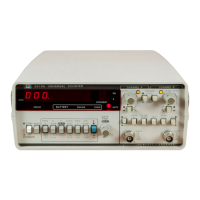
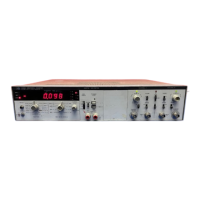
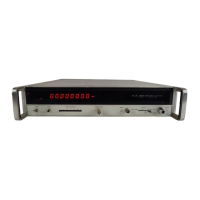
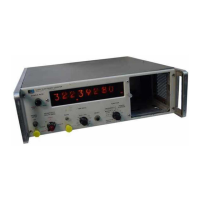
The Hewlett-Packard AC-4A Decade Counter is a fundamental component in electronic counting systems, designed to accurately count and display electrical pulses. This application note provides comprehensive details on its function, integration into various circuits, and associated operational and maintenance procedures.
Function Description:
The AC-4A Decade Counter serves as a building block for electronic counters, capable of registering and displaying numerical counts. In a typical setup, multiple AC-4A units are cascaded to form a multi-digit counter, handling units, tens, hundreds, thousands, and so on. Each AC-4A unit displays a single digit (0-9) using a neon lamp, providing a clear visual indication of the current count.
The core functionality of the AC-4A relies on processing electrical pulses. When integrated into a complete electronic counter, it receives input pulses from an Amplitude Discriminator, which conditions the incoming signal to ensure consistent and reliable triggering. A GATE circuit controls when the AC-4A units are actively counting. When the GATE is open, pulses are counted; when closed, the AC-4A units hold their last count indefinitely.
Reset functionality is crucial for any counter. The AC-4A can be reset to zero, or in some configurations, to nine (effectively -1), either manually via a pushbutton switch or automatically using electrical reset pulses generated by thyratron circuits. This allows for new counting cycles to begin from a known state.
Beyond simple counting, the AC-4A offers remote readout capabilities. The staircase output voltage from the base of the AC-4A unit is directly proportional to the digit indicated. This analog voltage can be utilized to drive printing systems, remote DC meters, or ink recorders, enabling external display or recording of the counter's state.
Important Technical Specifications:
- Counting Rate: The AC-4A Decade Counter, when driven by the 522B-58B Amplitude Discriminator, can count at a maximum rate of 120 kc or more.
- Power Requirements (per AC-4A unit):
- +300 volts DC at 15 mA
- 6.3 volts AC at 1.2 amps
- Power Requirements (for 522B-58B Amplitude Discriminator):
- +210 volts regulated at 10 mA
- -105 volts regulated at 3 mA
- 6.3 volts AC at 0.6 amp
- Input Signal Characteristics (for Amplitude Discriminator): Can accept sine wave, square wave, or pulse inputs. The Amplitude Discriminator conditions these signals to produce a consistent driving pulse for the AC-4A, irrespective of the input signal's amplitude and rise time.
- Triggering Levels (522B-58B Amplitude Discriminator):
- Plate Pin 1 of V2 cuts off when DC level at INPUT crosses approximately -0.4 volt going negative.
- Plate Pin 1 of V2 conducts again when DC level at INPUT crosses approximately -0.2 volts going positive from a negative peak.
- Positive DC levels at the INPUT (Pin 5) will NOT trigger the discriminator.
- Remote Readout Staircase Output Voltage:
- Between base Pin 8 and GND.
- Ranges from +135V at count of 0 to +55V at count of 9 (approximately equal steps).
- Tolerance on any step is ±1 volt.
- The output voltage is proportional to the digit indicated by the AC-4A.
- The load on this output, including a short, does not affect the operation of the AC-4A Counter.
- Equivalent circuit has an internal resistance (Rg) of approximately 700k.
- The staircase output voltage will vary with the unregulated +300 volt supply to the AC-4A's.
- It's possible to reverse the voltage range (e.g., +55V at count of ZERO, +135V at count of NINE) by changing specific resistors (R11, R14, R27, R38) to the opposite plate in each binary within the AC-4A.
- Reset Pulse Characteristics (to ZERO): A 150-volt positive reset pulse with fast rise and slow fall is delivered to reset all AC-4A Decade Counters simultaneously.
- Reset Pulse Characteristics (to NINE): A 200-volt negative reset pulse with fast fall and slow rise is delivered to reset all AC-4A Decade Counters to NINE simultaneously.
Usage Features:
- Modular Design: The AC-4A is designed as a modular unit, allowing users to build multi-digit counters by cascading multiple units. This provides flexibility in designing counters for various digit requirements.
- Visual Display: Each AC-4A unit features a neon lamp display for its respective digit, offering immediate visual feedback of the current count.
- Gate Control: The inclusion of a GATE circuit allows for precise control over the counting period, enabling the counter to start and stop counting at specific times or events. This GATE can be a simple ON-OFF switch, relay contacts, or more complex vacuum tube or diode arrangements depending on the application's speed and accuracy needs.
- Manual and Automatic Reset: The AC-4A supports both manual reset via a pushbutton and automatic reset via electrical pulses. This versatility caters to different operational scenarios, from simple manual operations to integrated automatic counting equipment.
- Remote Readout: The staircase output voltage provides a convenient way to integrate the counter into larger systems for remote display, printing, or recording. This feature is particularly useful for data logging or automated control applications.
- Sensitivity Adjustment: The Amplitude Discriminator includes a sensitivity control (R12) that can be adjusted to optimize operation across a range of input voltages and frequencies, ensuring reliable triggering even with varying signal characteristics.
- Triggering Flexibility: The Amplitude Discriminator can be configured with an attenuator and a DC buck-out voltage in its input circuit, allowing the user to trigger the counter at a specific point on the input waveform.
Maintenance Features:
- Component Accessibility: While not explicitly detailed, the schematic diagrams suggest that individual components within the Amplitude Discriminator and power supply are accessible for troubleshooting and replacement.
- Adjustment Procedures: Clear instructions are provided for adjusting the R12 sensitivity control in the Amplitude Discriminator, which is a key step in ensuring accurate and stable counting performance.
- Power Supply Considerations: The documentation specifies the required power supply voltages and currents for both the AC-4A units and the Amplitude Discriminator, which is essential for designing or maintaining the power source for the entire counting system.
- Troubleshooting Guidance: The description of triggering levels and the effects of different input conditions (e.g., positive DC levels not triggering) provides valuable information for diagnosing issues related to input signal processing.
- Reset Circuit Options: The availability of different reset circuits (to ZERO or to NINE) with detailed schematics allows for tailored maintenance and modification based on specific application requirements. The notes on adjusting R18/R19 and R20/R21 for optimal reset pulse characteristics are crucial for reliable operation.
- Remote Readout Calibration: Procedures for calibrating remote readout meters (adjusting R15 or R16/R17) are provided, ensuring that external displays accurately reflect the counter's state.

 Need help?
 General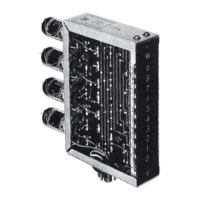

 To Next Page