Need help?
Do you have a question about the Huawei JKM-LX1 and is the answer not in the manual?
Identifies and describes the physical components of the device, including sensors, cameras, ports, and buttons.
Step-by-step instructions for inserting a single SIM card and microSD card into the device.
Step-by-step instructions for inserting dual SIM cards and a microSD card into the device.
Links to Huawei's website for device information, FAQs, support, and legal/safety details.
Guidelines for safe device operation, environmental conditions, and potential health risks.
Information on proper disposal and recycling of the device, battery, and accessories according to local regulations.
Details on the device's compliance with regulations for restricted hazardous substances.
Information on EU regulatory conformance for specific device models JKM-LX1 and JKM-LX2.
Specific Absorption Rate (SAR) values for ear and body worn operation, and usage proximity.
FCC compliance details, including interference guidelines, operational conditions, and cautions.
Information on trademarks, registered trademarks, and licenses for technologies used in the device.
Details on how Huawei protects user personal information and its privacy policy.
This document provides a Quick Start Guide for the JKM-LX1, JKM-LX2, and JKM-LX3 models, offering essential information for getting started with your device, understanding its features, and ensuring safe operation.
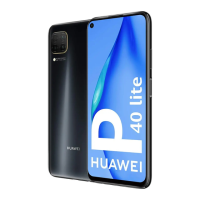
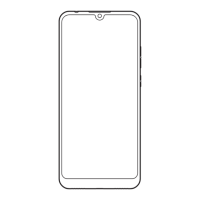
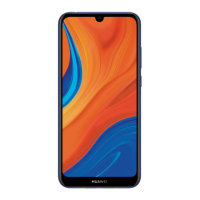
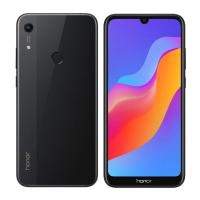
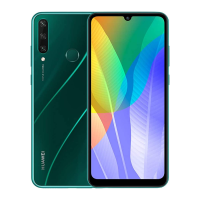
The device features a comprehensive layout designed for intuitive use. On the front, you'll find a light sensor, front camera, and earpiece. The rear houses the rear camera, flash, and fingerprint scanner. Along the sides, you'll locate the volume button, power button, and status indicator. The bottom of the device includes a Micro-USB port and headset jack, while a primary microphone is also present. A secondary microphone is also integrated into the device.
To power on your device, press and hold the power button until the screen illuminates. To power off, press and hold the power button, then tap the power off icon. If you need to restart the device, press and hold the power button and then tap the restart icon. In cases where the device becomes unresponsive, you can perform a forced restart by pressing and holding the power button for 10 or more seconds.
Setting up your device involves carefully inserting the SIM and/or microSD cards. It is crucial to ensure the device is powered off before inserting or removing any cards. Always make sure the card is correctly aligned and the card tray is level to prevent damage. Exercise caution when using the eject pin to avoid scratching your device or causing injury. Keep the eject pin out of reach of children to prevent accidental swallowing.
Avoid using cut or modified SIM or microSD cards, as these may not be recognized and could damage the card tray. If your SIM card is incompatible with your device, contact your carrier for assistance. The guide provides clear illustrations for both single-SIM and dual-SIM setups, demonstrating the proper insertion of nano-SIM and microSD cards into the tray.
For dual-SIM devices, it's important to understand the "dual card dual standby single pass" functionality. This means that while both SIM cards are active on standby, you cannot use both for calls or data services simultaneously. For example, if you are on a call using SIM card 1, SIM card 2 will be unavailable for incoming or outgoing calls. Callers to SIM card 2 will hear a message indicating that the subscriber is unavailable. Similarly, if you are using SIM card 1 for data services, SIM card 2's data service will be disabled.
This single pass feature is designed to optimize power consumption and extend standby time. It is not related to your service provider's network conditions. To manage potential conflicts, you can enable call forwarding between SIMs by navigating to Settings > Wireless & networks > Dual SIM settings.
Should you encounter any issues or require further details, several resources are available. You can access "Tips" on your device for function details and usage tips. For general device information, frequently asked questions, and other relevant content, visit http://consumer.huawei.com/en. For the most up-to-date contact information for support in your country or region, visit http://consumer.huawei.com/en/support.
Legal information for your product can be found by going to Settings > System > About phone > Legal. For safety information, navigate to Settings > System > About phone > Legal > Safety information. Regulatory information is available under Settings > System > About phone > Authentication info. Additionally, you can view more information on certification logos by going to Settings > System > Certification logos.
It's important to note that all images and illustrations in this guide, including device color, size, and display content, are for reference only, and the actual device may vary. This guide does not constitute a warranty of any kind, express or implied.
Prioritizing safety, it is crucial to read all safety information carefully to ensure proper operation and disposal of your device.
Operation and safety: To prevent hearing damage, avoid listening at high volume levels for extended periods. Using unapproved or incompatible power adapters, chargers, or batteries can damage your device, reduce its lifespan, or lead to fire, explosion, or other hazards. The ideal operating temperature for the device is between 0 °C and 35 °C, while ideal storage temperatures range from -20 °C to +45 °C.
If you use a pacemaker, maintain a minimum distance of 15 cm between the device and the pacemaker to prevent potential interference. Hold the device on the side opposite the pacemaker and avoid carrying it in your front pocket. Keep the device and battery away from excessive heat and direct sunlight, and do not place them on or in heating devices like microwave ovens, stoves, or radiators.
Always observe local laws and regulations when using the device. To minimize accident risks, do not use your wireless device while driving. When flying or immediately before boarding an aircraft, only use your device according to provided instructions, as wireless device use in an aircraft can disrupt wireless networks, pose a hazard to aircraft operation, or be illegal.
To protect your device's internal components, avoid using it in dusty, smoky, damp, or dirty environments, or near magnetic fields. When charging, ensure the power adapter is plugged into an easily accessible socket near the device. Unplug the charger from electrical outlets and the device when not in use. Do not use, store, or transport the device where flammables or explosives are present, such as gas stations or oil depots, as this increases the risk of explosion or fire.
Disposal and recycling information: Dispose of the device, battery, and accessories according to local regulations. They should not be discarded with normal household waste. Improper battery use can lead to fire, explosion, or other hazards. The crossed-out wheeled-bin symbol on your product, battery, literature, or packaging indicates that all electronic products and batteries must be taken to separate waste collection points at the end of their working lives. It is the user's responsibility to dispose of equipment using a designated collection point or service for separate recycling of waste electrical and electronic equipment (WEEE) and batteries in accordance with local laws. Proper collection and recycling help conserve valuable materials, protect human health, and safeguard the environment. For more information on EEE waste disposal, contact your local authorities, retailer, or household waste disposal service, or visit http://consumer.huawei.com/en/.
Reduction of hazardous substances: This device and its electrical accessories comply with local applicable rules on the restriction of certain hazardous substances in electrical and electronic equipment, including EU REACH, RoHS, and Batteries regulations. For declarations of conformity regarding REACH and RoHS, visit http://consumer.huawei.com/certification.
EU regulatory conformance (only applies to JKM-LX1 / JKM-LX2): Body worn operation: The device complies with RF specifications when used near your ear or at a distance of 0.50 cm from your body. Ensure that device accessories, such as cases and holsters, do not contain metal components. Maintain the specified distance from your body to meet RF exposure requirements.
Statement: Huawei Technologies Co., Ltd. declares that the JKM-LX1 / JKM-LX2 device complies with the essential requirements and other relevant provisions of Directive 2014/53/EU. The most recent and valid Declaration of Conformity (DoC) can be viewed at http://consumer.huawei.com/certification. This device may be operated in all EU member states, but national and local regulations must be observed. Device use may be restricted depending on the local network.
Restrictions in the 2.4 GHz band: In Norway, this subsection does not apply to the geographical area within a 20 km radius from the center of Ny-Ålesund.
Frequency Bands and Power: The radio equipment operates in specific frequency bands, some of which may not be available in all countries or areas; contact your local carrier for details. The maximum radio-frequency power transmitted in these bands is below the highest limit specified in the related Harmonized Standard. The nominal limits for frequency bands and transmitting power (radiated and/or conducted) applicable to this radio equipment are provided.
Accessories and Software Information: Some accessories are optional and may vary by country or region. Optional accessories can be purchased from a licensed vendor. Recommended accessories include specific adapter models (HW-050200X01, HW-050200X02, with various plug types), battery model HB406689ECW, and earphone models (MEMD1532B528A00, HA1-3W, EPAB542-2WH03-DH, 1293-3283-3.5mm-300, MEND1532B528A02, 1293-3283-3.5mm-322). The product software version for JKM-LX1 is JKM-LX1 5.0.1.20(C900), and for JKM-LX2 is JKM-LX2 5.0.1.20(C900). Software updates will be released by the manufacturer to fix bugs or enhance functions, and all released software versions comply with relevant rules. All RF parameters (e.g., frequency range, output power) are not user-accessible or modifiable. For the latest information on accessories and software, refer to the DoC at http://consumer.huawei.com/certification.
FCC Regulatory Compliance (only applies to JKM-LX3): Body worn operation: The device complies with RF specifications when used near your ear or at a distance of 1.50 cm from your body. Ensure that device accessories, such as cases and holsters, do not contain metal components. Maintain the specified distance from your body to meet RF exposure requirements.
Certification information (SAR): This device is designed to meet the requirements for exposure to radio waves established by the Federal Communications Commission (USA). The SAR limit adopted by the USA is 1.6 W/kg averaged over one gram of tissue, and the highest SAR value reported for this device type complies with this limit. The highest SAR values reported for this device type when used at the ear, properly worn on the body, and using the Wi-Fi hotspot function are provided.
FCC statement: This equipment has been tested and found to comply with the limits for a Class B digital device, pursuant to Part 15 of the FCC Rules. These limits are designed to provide reasonable protection against harmful interference in a residential installation. This equipment generates, uses, and can radiate radio frequency energy. If not installed and used according to instructions, it may cause harmful interference to radio communications. There is no guarantee that interference will not occur in a particular installation. If this equipment causes harmful interference to radio or television reception (which can be determined by turning the equipment off and on), the user is encouraged to try to correct the interference by reorienting or relocating the receiving antenna, increasing the separation between the equipment and receiver, connecting the equipment to an outlet on a different circuit, or consulting the dealer or an experienced radio/TV technician. This device complies with Part 15 of the FCC Rules. Operation is subject to two conditions: (1) this device may not cause harmful interference, and (2) this device must accept any interference received, including interference that may cause undesired operation.
Caution: Any changes or modifications to this device not expressly approved by Huawei Technologies Co., Ltd. for compliance could void the user's authority to operate the equipment.
Trademarks and Permissions: HUAWEI and the HUAWEI logo are trademarks or registered trademarks of Huawei Technologies Co., Ltd. Android™ is a trademark of Google Inc. LTE is a trademark of ETSI. The Bluetooth® word mark and logos are registered trademarks owned by Bluetooth SIG, Inc., and any use of such marks by Huawei Technologies Co., Ltd. is under license. Wi-Fi®, the Wi-Fi CERTIFIED logo, and the Wi-Fi logo are trademarks of Wi-Fi Alliance.
Privacy Policy: To understand how personal information is protected, please refer to the privacy policy at http://consumer.huawei.com/privacy-policy.
Copyright: Copyright © Huawei Technologies Co., Ltd. 2018. All rights reserved. This document is for informational purposes only and does not constitute any kind of warranties.
 General
| Model | JKM-LX1 |
|---|---|
| SIM | Dual SIM (Nano-SIM, dual stand-by) |
| Display type | IPS LCD |
| WLAN | Wi-Fi 802.11 b/g/n, Wi-Fi Direct, hotspot |
| Bluetooth | 4.2, A2DP, LE |
| GPS | Yes, with A-GPS, GLONASS, BDS |
| NFC | No |
| Radio | FM radio |
| Sensors | Fingerprint (rear-mounted), accelerometer, proximity, compass |
| Card slot | microSDXC |
| Secondary camera | 16 MP |
| USB | microUSB 2.0 |
| Battery | Non-removable Li-Ion 4000 mAh battery |
| Colors | Midnight Black |
| Primary camera | 2 MP, depth sensor |

 To Next Page