Need help?
Do you have a question about the Huawei PAR-LX9 and is the answer not in the manual?
Essential safety practices for device operation, handling, and usage environments.
Huawei's declaration of compliance with essential requirements and provisions of Directive 2014/53/EU.
Specific usage restrictions for the 2.4 GHz frequency band in certain geographical areas.
Usage restrictions for the 5 GHz frequency band in specific EU member states and indoor use limitations.
Information on operating frequency bands and maximum radio-frequency power transmitted by the device.
Device compliance with RF specifications for body-worn use, meeting FCC requirements.
Information on meeting FCC requirements for radio wave exposure (Specific Absorption Rate).
Details on equipment testing, compliance with FCC rules, and measures to correct interference.
Information on trademarks and permissions related to the device and its software.
Details on how personal information is protected by Huawei and where to find the policy.
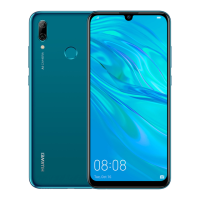
This document serves as a Quick Start Guide for the PAR-LX9 device, offering essential information for its initial setup, operation, and safety. It provides a comprehensive overview of the device's physical components, guides users through the process of getting started, and outlines important safety and regulatory information.
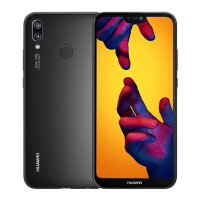
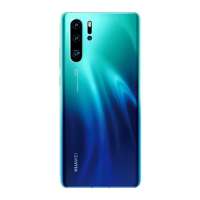
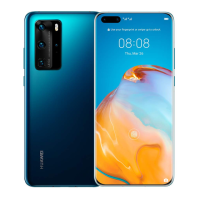
The PAR-LX9 is a mobile communication device designed for various functions, including making calls, sending messages, and accessing data services. It supports dual card dual standby single pass functionality, meaning it can accommodate two SIM cards, but only one can be actively used for calls or data services at any given time. This design aims to optimize power consumption and extend standby time. The device is equipped with a range of sensors and components to facilitate its operations, such as a light sensor for automatic screen brightness adjustment, a fingerprint scanner for secure authentication, and front and rear cameras for photography and video recording. It also includes standard connectivity options like USB-C for charging and data transfer, and a headset jack for audio output. The device's software is designed to provide a user-friendly interface, with regular updates released by the manufacturer to enhance functionality and address any issues.
The device offers straightforward usage features for a seamless user experience. To power on the device, users simply press and hold the power button until the screen illuminates. Powering off or restarting the device follows a similar procedure, involving pressing and holding the power button and then selecting the appropriate on-screen option. For instances where the device becomes unresponsive, a forced restart can be initiated by holding the power button for 10 or more seconds.
Setting up the device involves inserting SIM and/or microSD cards into the designated card slot. The guide provides clear visual instructions for both single-SIM and dual-SIM configurations, emphasizing the importance of correct card alignment and ensuring the card tray is level during insertion. Users are advised to use the included eject pin for safe card tray removal and insertion, and to avoid using cut or modified cards to prevent damage to the device.
The dual-SIM functionality, while offering the convenience of two numbers, operates under a single pass system. This means that if one SIM card is active on a call, the other SIM card cannot receive or make calls. Similarly, if one SIM card is being used for data services, the other SIM card's data service will be temporarily disabled. To mitigate potential conflicts arising from this single pass feature, the device offers a setting to enable call forwarding between SIMs, which can be configured through the device's settings menu under "Wireless & networks" and "Dual SIM settings."
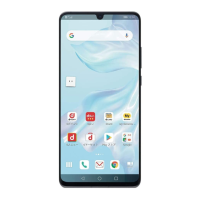
For general operation, the device is designed to be intuitive. Users can navigate through the interface, access applications, and manage settings. The volume button allows for adjustment of audio levels, while the status indicator provides visual cues about the device's current state, such as charging or notifications. The device's display and overall content are for reference, and actual device appearance or features may vary.
Maintaining the PAR-LX9 involves adhering to several guidelines to ensure its longevity and safe operation. Users are cautioned against inserting or removing the SIM card while the device is powered on, as this could potentially damage the device or the card. Proper handling of the eject pin is also emphasized, with a recommendation to store it out of reach of children to prevent accidental swallowing.
The device is designed to operate within specific temperature ranges, with ideal operating temperatures between 0 °C and 35 °C, and ideal storage temperatures between -20 °C and +45 °C. Exposing the device to extreme heat or direct sunlight, or placing it near heating devices like microwave ovens or stoves, should be avoided to prevent damage to the device and its battery.
When charging the device, it is crucial to use approved or compatible power adapters, chargers, and batteries to prevent damage, shorten lifespan, or cause hazards like fire or explosion. The power adapter should be plugged into an easily accessible socket near the device. Users are advised to unplug the charger from electrical outlets and the device when not in use.
The device should be kept away from dusty, smoky, damp, or dirty environments, as well as strong magnetic fields, to prevent damage to its internal components. Regular software updates, released by the manufacturer, are an important maintenance feature, as they provide bug fixes and enhance functions, ensuring the device remains compliant with relevant rules. Users are informed that all RF parameters, such as frequency range and output power, are not user-accessible or changeable, indicating that these aspects are managed by the manufacturer to ensure optimal performance and compliance.
Disposal and recycling information is provided to guide users on environmentally responsible practices. The crossed-out wheeled-bin symbol on the product signifies that it, along with its battery and accessories, should not be disposed of with normal household waste. Instead, they should be taken to designated waste collection points for separate recycling. This practice helps conserve valuable materials, protects human health, and safeguards the environment from potential harm caused by improper handling or recycling. The guide also highlights the device's compliance with regulations on hazardous substances, such as EU REACH, RoHS, and Batteries, further underscoring its commitment to environmental responsibility.
 General
| Model | Huawei PAR-LX9 |
|---|---|
| Network | GSM / HSPA / LTE |
| Display Type | IPS LCD |
| RAM | 4GB |
| Internal Storage | 64GB |
| Operating System | Android 8.1 (Oreo) |
| CPU | Octa-core |
| Main Camera | 2 MP, depth sensor |
| Front Camera | 16 MP |
| Colors | Black, Blue |

 To Next Page