Need help?
Do you have a question about the Huazheng HZ-600A and is the answer not in the manual?
Details the sequential steps for system operation, from grounding to test completion.
Describes the necessary preliminary steps and computer/OS setup before conducting tests.
Covers panel layout, wiring modes, and specific connection diagrams for testing.
Instructions for launching and navigating the SFRA test software interface.
Details the steps for performing the frequency response method test.
Explains how to perform and interpret correlation analysis of test curves.
Describes how to recall and review saved test data and results.
Specifies the default location and format for saving test reports.
Provides guidance on routine cleaning and proper storage of the tester.
Indicates that advanced maintenance should be performed by professional technicians.
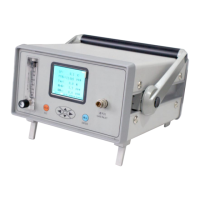
The HZ-600A Sweep Frequency Response Analyzer is a specialized instrument designed for assessing the deformation of power transformer windings. It is applicable to transformers with a voltage grade of 6kV and above, as well as other special-purpose transformers. The device utilizes the frequency response analysis method, adhering to the national standard DL/T911-2016/IEC60076-18, to detect amplitude-frequency response characteristics of each transformer winding. This allows for the identification of permanent deformations such as local distortion, swell, or dislocation, which can arise from impulse short-circuit currents or physical collisions during operation and transportation. The instrument aims to provide an efficient and automated solution for testing and analysis, with an emphasis on ease of use, encapsulated by the phrase "Just a light press, the test will be completed automatically."
The primary function of the HZ-600A is to measure the characteristics of transformer windings using the frequency sweep method. It detects amplitude-frequency response characteristics to identify deformations like distortion, swell, or displacement in 6kV and above transformers, eliminating the need for lifting the transformer enclosure or disintegration. The analysis software is robust, offering powerful functions and indicators that meet the DL/T911-2016/IEC60076-18 standard. The software's humanized management allows for all measurements to be completed with a single click after setting parameters. It provides a concise and vivid interface with clear menus for analysis, saving, report export, and printing. The system supports Windows 2000/XP/7/8/10 platforms and uses a database for efficient data management. It can load up to 9 curves simultaneously, automatically calculate parameters, and diagnose winding deformations, offering a reference diagnosis conclusion. The software also boasts powerful management features, including automatic saving of measurement data and export to Word or JPG format for test reports. Measuring conditions are mostly pre-set options, simplifying operation and reducing manual input.
The operation flow of the system involves grounding the collector, connecting it to the transformer winding and computer, starting the computer, powering on the collector, logging into the software, inputting information, selecting end-frequency and adjusting testing parameters, selecting the winding, starting the test, replacing the test winding, and repeating the process until all windings are tested. Data analysis and report export follow.
The software interface is divided into seven parts:
The system supports various wiring modes, including YN Wiring, Y Wiring, Interior Connection Δ Wiring, Exterior Connection Δ Wiring, and Transformer with Balance Winding. It is recommended to input the frequency sweep signal from the tail end of the winding and output from the initial end, with non-tested windings suspended.
The software allows for information input based on the transformer nameplate, which is automatically saved with test results. Sweeping mode and parameters can be confirmed and modified. The "Stop Frequency" key allows selection of the test stop frequency, and the system automatically sets other parameters. Default settings can be readjusted via a function menu.
After setting basic test information, data measurement can be initiated by clicking the "START" key. The system automatically completes the frequency sweep. The test can be paused by clicking the signal curve display area. Upon completion of a test item, the wiring mode and software settings can be changed for the next item. Double-clicking the test curve display area (A) during a test unfolds the waveform display area, showing input/response voltage peak values, amplification factor, and X-coordinate time information for signal research.
For correlation analysis, curves in area E are automatically grouped (1-3, 4-6, 7-9). Clicking "DSA analysis" after curve selection brings up a report display window. The operator can reconfirm and re-input information, then click "Export" to save the report as a Word document or JPG photo in the "FRA_data" folder on disk D. The system also supports data echo, allowing retrieval of saved test results based on power station, transformer, test category, and time.
The manual provides basic maintenance guidelines:
The device uses correlation coefficients (RLF, RMF, RHF) to analyze the degree of transformer winding deformation, adhering to DL/T911-2016.
Where:
 General
| Brand | Huazheng |
|---|---|
| Model | HZ-600A |
| Category | Measuring Instruments |
| Language | English |

 To Next Page