5-
27
5-4. Electromechanical Switching Components
Switches are electrical devices that either stop or allow current to flow in a circuit. They are either
in an on or off state. Switching devices come in all types and sizes. There are simple
mechanical switches, relays, optical switches, and many kinds of semiconductor switches. They
are different because each uses a different kind of stimulus to turn them on or off. Because there
are so many kinds of switching devices, there is no single testing procedure that will test them all
completely. With the Tracker 2700, the test signal can be setup so that the switch's Tracker
signature will verify its switching function. The goal of this section is to develop a test strategy
using TSA to test the switching function. This is not a complete test, but it will be enough to
determine whether or not the device is functioning as a switch.
Manually Operated Mechanical Switches
A mechanical switch has two states: it is either open or closed. When open, no current can flow;
when closed, it acts as a short and allows current to flow. The Tracker 2700 can test the
switching function of mechanically activated switches easily. Unlike the DVM that samples and
gives a continuity measurement, the Tracker 2700 displays real time activity. If a switch has
noisy, resistive or intermittent operation, its Tracker signature on Tracker 2700's display will
reflect these conditions.
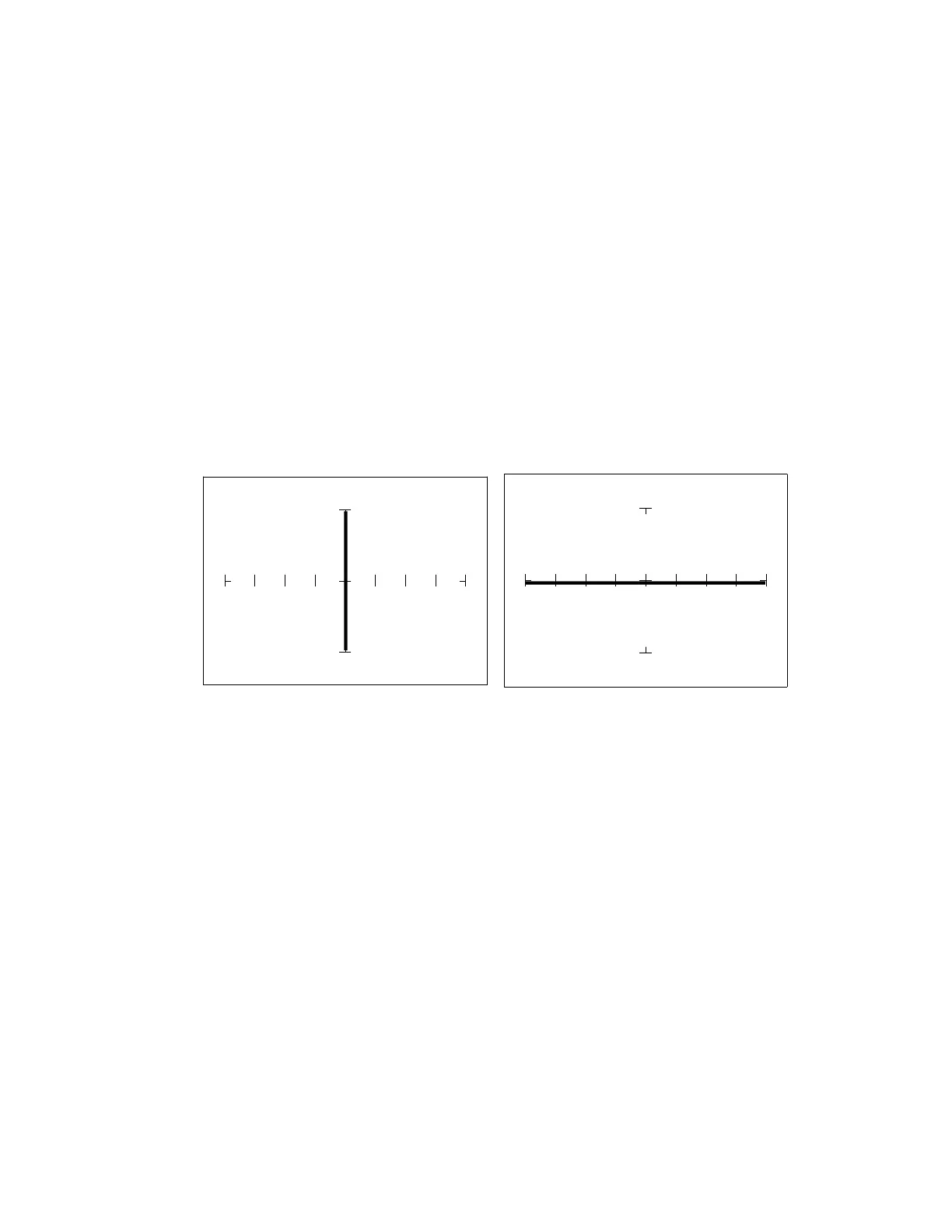
10V,100Ω
ΩΩ
Ω. Switch “On” 10V, 100Ω
ΩΩ
Ω. Switch “Off”
Figure 5-32. Signatures of a Push-button Switch. SPST Type
Review
• The switch displays an open or short circuit signature.
• Dirty or damaged switch contacts will show a resistive or erratic signature.


 To Next Page
 Loading...
