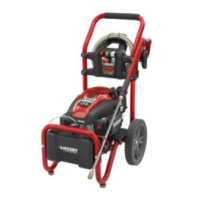
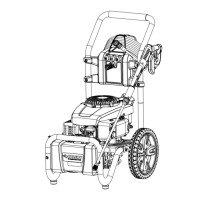
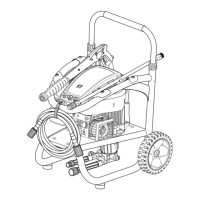
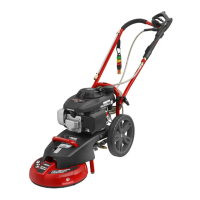
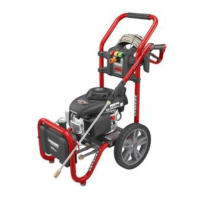
This document is the operator's manual for the Husky HU80722 Gasoline Pressure Washer, designed for dependability, ease of operation, and operator safety. It provides comprehensive instructions for assembly, operation, and maintenance, ensuring years of rugged, trouble-free performance when properly cared for.
The pressure washer is intended for various cleaning tasks, including removing dirt and mold from decks, cement patios, and house siding, as well as cleaning cars, boats, motorcycles, outdoor furniture, and grills.
Before using the pressure washer, users must read and understand all instructions to reduce the risk of injury, electric shock, fire, or carbon monoxide poisoning. Key safety precautions include keeping children and visitors away from the work area, operating the engine in a well-ventilated space to avoid carbon monoxide fumes, and wearing safety glasses with side shields. Users should also avoid operating the equipment while barefoot or wearing sandals, and always maintain proper footing and balance. The manual emphasizes using only recommended accessories and following all maintenance instructions.
The pressure washer features a recoil starter for engine ignition and an engine switch for starting and stopping. It is equipped with a fuel tank for unleaded automotive gasoline. For high-pressure cleaning, the unit includes a high-pressure hose and a trigger handle with a lock-out mechanism to prevent unauthorized use. The trigger handle has a gripping surface for added control and reduced fatigue.
A notable feature is the Soap Blaster™ nozzle, which can be easily adjusted for long-range or short-range detergent application, enhancing cleaning versatility. The pump incorporates a thermal relief valve to prevent water temperatures from reaching harmful levels by releasing a small amount of water, which then resets itself.
Assembly involves attaching the wheel assembly, installing the handle, connecting the injection hose for detergent application, and assembling the trigger handle with the spray wand. Users must also connect the high-pressure hose to the pump and the garden hose to the pressure washer, ensuring all connections are secure and leak-free.
Before starting the engine, users must ensure all hoses are connected, check fluid levels (lubricant and gas), and turn on the garden hose while squeezing the trigger to release air pressure until a steady stream of water appears. The starting procedure involves turning the fuel valve and engine switch to the ON position, pulling the choke, and then giving the recoil starter a brisk pull. After starting, the choke should be pushed in. To stop the engine, the engine switch and fuel valve should be turned to the OFF position.
The spray wand trigger is designed for greater control and safety, requiring both hands during operation. The lock-out feature can be engaged or disengaged to prevent accidental spraying. For effective cleaning, the spray nozzle should be held between 8 and 24 inches from the surface, as closer proximity can cause damage.
The pressure washer uses quick-connect nozzles with different spray patterns: 25° for general purpose or large surfaces, 15° for tough jobs, 0° for spot cleaning or high-to-reach areas, and the Soap Blaster™ nozzle for detergent application. Users are warned never to change nozzles without locking out the trigger handle and never to point the wand at people or faces due to the force of the small springs. Changing nozzles is made easy with the quick-connect collar.
When washing with detergent, users should only use detergents designed for pressure washers, as household detergents or other harsh chemicals can damage the pump. The process involves pouring detergent into the container, installing the Soap Blaster™ nozzle, and spraying the detergent on a dry surface using long, even, overlapping strokes to prevent streaking. For long-range application, the nozzle is pulled up until it clicks, and for short-range, it is pushed down. Before shutting off the engine, the injection hose should be placed in clean water and flushed for 1-2 minutes to clear the system.
Rinsing with the pressure washer involves turning off the unit, shutting off the water supply, and pulling the trigger to release pressure. The nozzle is then removed, and an appropriate quick-connect nozzle (medium pressure for cars/boats, higher pressure for stripping paint/degreasing) is selected. Users are advised to test a small area first to avoid surface damage and to start rinsing from the top of the area, working down with overlapping strokes.
For moving the pressure washer, users should turn off the unit, tilt it back onto its wheels, and roll it to the desired position, never lifting or carrying it by the moving handle.
Maintenance is crucial for the longevity and safe operation of the pressure washer. Users are instructed to use only identical replacement parts for servicing and to wear safety goggles during dusty operations. Before any inspection, cleaning, or servicing, the engine must be shut off, all moving parts stopped, and the spark plug wire disconnected to prevent accidental starting.
General maintenance includes avoiding solvents on plastic parts, ensuring all bolts and nuts are securely tightened, checking and cleaning the air filter, and verifying engine lubricant and fuel tank levels. If excessive noise or vibration occurs, the unit should be stopped immediately.
Nozzle maintenance is important to prevent excessive pump pressure caused by clogging. This involves turning off the pressure washer, shutting off the water supply, removing the nozzle, using the nozzle cleaning tool to clear debris, and back-flushing the nozzle with a garden hose.
Storing the pressure washer properly is essential, especially in frost-free areas. The gas tank should be empty, and the unit allowed to cool down for 30 minutes before storage. All water should be emptied from hoses, the pump, and the detergent bucket. Using a fuel stabilizer and pump saver is recommended to enhance performance and extend machine life. Fuel should be drained completely, and engine lubricant replaced with fresh, clean lubricant. For spark plug maintenance, the spark plug wire is disconnected, and a small amount of four-cycle lubricant is poured into the combustion chamber, followed by pulling the starter cord to coat the cylinder wall. The spark plug should be inspected, cleaned, or replaced as needed, then reinstalled with the wire disconnected. The air filter should be cleaned, and the injection hose flushed with clean water before removing all hoses and emptying the pump by pulling the recoil starter.
Preparation for use after storage involves pulling the recoil starter to clear lubricant from the combustion chamber, wiping lubricant from the spark plug, reconnecting the spark plug wire, and refilling the machine with fuel.
The manual also includes a troubleshooting guide to address common issues such as the engine failing to start, hard starting, lack of power, detergent not mixing with spray, pump not producing pressure, and the machine not reaching high pressure. Solutions range from checking fuel and spark plugs to cleaning air filters, ensuring proper hose connections, and cleaning nozzles.
Finally, the manual provides warranty information, stating that the Husky® brand pressure washer is warranted against defects in material and workmanship for two years for personal, family, or household use. It outlines conditions for warranty claims, emphasizing that misuse, neglect, commercial use, or unauthorized modifications are not covered. It also lists wear items not covered by the warranty, such as air filters, spark plugs, hoses, nozzles, and wheels. For service, users are directed to contact an Authorized Service Center.


 To Next Page
 General