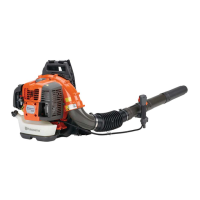
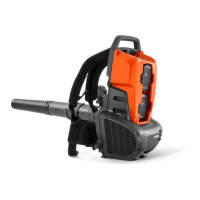
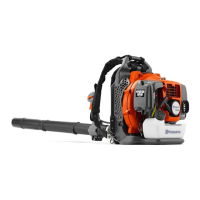
This document serves as an operator's manual for a Husqvarna blower, specifically models 350BT and 530BT. It provides comprehensive instructions for safe and effective operation, maintenance, and assembly of the device.
The primary function of this Husqvarna blower is to generate a powerful stream of air to move leaves, debris, and other light materials from surfaces such as lawns, pathways, and asphalt roads. It is designed for outdoor use and is not intended for indoor operation due to exhaust fumes and potential fire hazards. The blower is a backpack-type unit, meaning it is carried on the operator's back using a harness, which helps distribute its weight and facilitates maneuverability during use. The air jet speed is controlled via a throttle on the handle, allowing the operator to adjust the intensity of the airflow to suit different tasks.
Key usage features emphasize safety and efficiency. Operators are strongly advised to wear approved personal protective equipment, including hearing protection, eye protection (goggles or a visor), sturdy non-slip boots, and protective gloves. A breathing mask is recommended when there is a risk of dust. The manual highlights the importance of maintaining a safe working distance of at least 15 meters from other people and animals, as the blower can forcibly throw objects, potentially causing serious injury. Before starting, operators must ensure the machine is placed on a flat surface, away from refueling points, and that all guards are fitted. The starting procedure involves holding the machine body against the ground with one hand and pulling the starter cord firmly with the other. For cold engines, a choke control is used, and a primer bulb is pressed to fill the fuel bulb. Once started, the engine should be allowed to warm up for a few minutes before use. The throttle control allows for variable speed, and the manual suggests using the lowest possible throttle setting for most tasks to reduce noise and dust. The design incorporates a stop switch to quickly shut off the engine in emergencies or for maintenance. The blower is not to be used on ladders or scaffolding due to the risk of severe injury. Working with the wind direction is advised to make tasks easier, and moving large piles of debris with the blower alone is discouraged as it can be time-consuming and noisy.
Maintenance features are crucial for ensuring the longevity and safe operation of the blower. Regular cleaning of the machine's exterior is recommended. The throttle control and stop switch should be checked for proper function. The air filter requires frequent cleaning and replacement if damaged or deformed, as a clogged filter can lead to engine damage. For dusty conditions, soaking the air filter in oil is advised. The spark plug's condition should be regularly inspected, and its electrode gap adjusted to 0.6-0.7 mm, or replaced if necessary. The spark plug must be fitted with a suppressor. The muffler, which reduces noise and directs exhaust gases away from the user, contains a spark arrestor mesh that needs monthly cleaning with a wire brush to prevent overheating and potential fire hazards. The cooling system, consisting of cylinder fins and an air intake screen, must be kept clean to prevent engine overheating. The air intake screen should be checked for blockages, such as leaves or rubbish, which can reduce blowing capacity and increase engine temperature. The vibration damping system, designed to minimize vibrations, should be checked for cracks or deformation. Fuel handling instructions emphasize using a specific mixture of petrol and two-stroke oil, with precise measurements to avoid engine damage. Refueling should always be done in a well-ventilated area, away from hot objects or open flames, and only when the engine is stopped and cooled. The fuel tank should be emptied and cleaned if the machine is stored for long periods. The harness, if applicable (350BT model), must be correctly adjusted for comfort and safety, ensuring the waist belt is closed and tightened to support the blower's weight on the operator's hip. The manual also provides a detailed maintenance schedule, outlining daily, weekly, and monthly checks and tasks to be performed.



 To Next Page
 General