E & OE Instructions Part number IN1141 Ed B
7
© EUROHEAT DISTRIBUTORS (H.B.S) LTD. Nov 2006
Stove Controls
Burn Rate Control
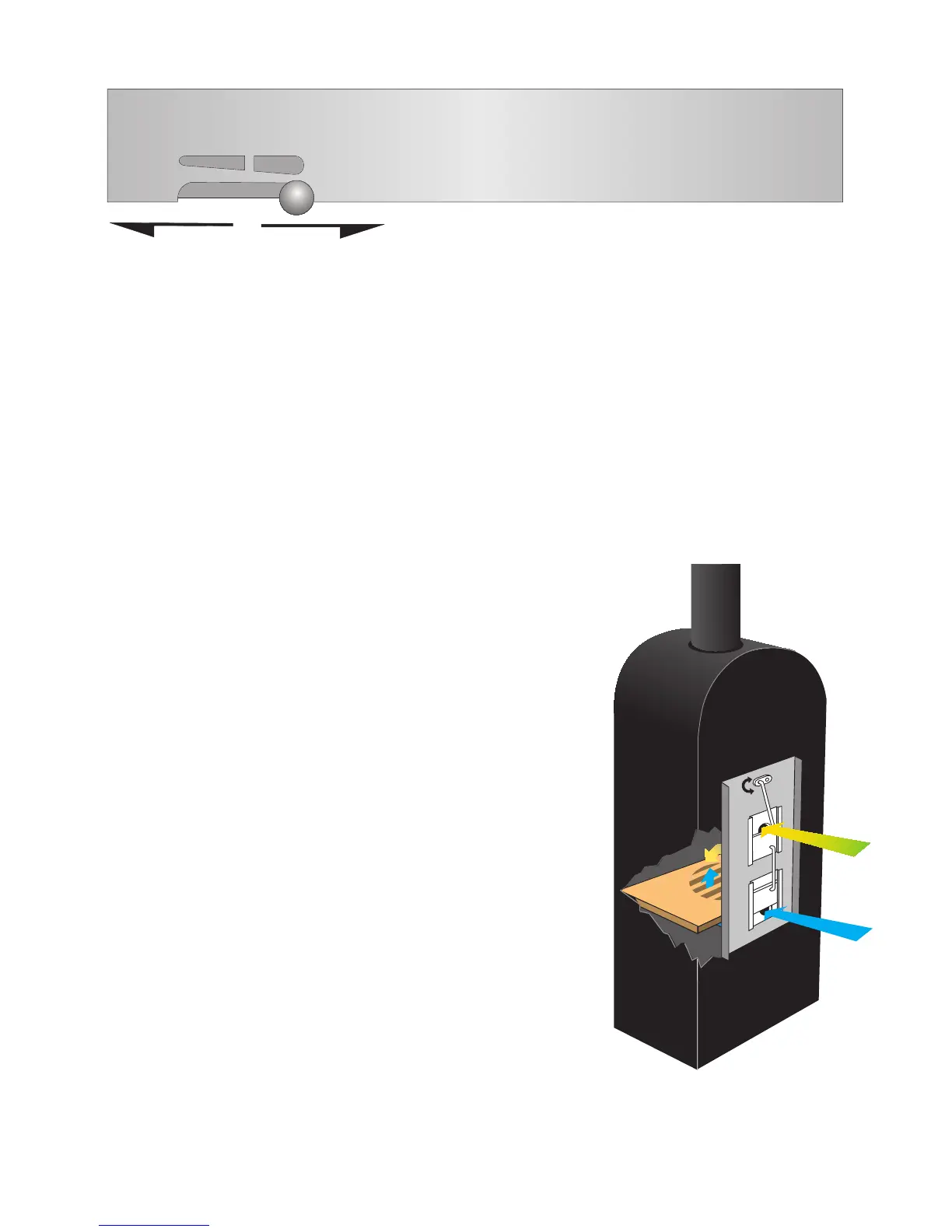
The rate at which the stove burns is controlled by adjusting the air entering the stove. Moving the control from
minimum to maximum increases the size of the air inlets, primary or secondary air, in the automatic combustion
system.
For the position of this control on the various stoves see the following pages which describe the lighting and
operating of the stoves.
The Automatic Combustion System
A bi-metalic coil heated by the flue gases moves a cam which raises
and lowers, dependant upon the heat of the flue gases, a plate or
plates which exposes or closes the Primary air (lower inlet) and the
Secondary air (upper inlet).
The three phases of a fire:
1) The lighting phase, where there must be an air supply at the top
and bottom of the fire (secondary and primary air, respectively).
2) The combustion phase. At the ideal temperature of between 1000-
1200° Celsius there is only a need for air above the fire, i.e. secondary
air.
3) The burning-out phase. The temperature falls, the air supply
above the fire is gradually reduced, and the lower damper opens, i.e.
primary air.


 To Next Page