The HYXIPOWER E50/100/150/200-H is a high-voltage battery system designed for energy storage applications. It offers a variety of operating modes, including self-generation, peak-shaving, and battery priority. The system is available in different models, including HYX-EBDU-H, HYX-E50B-H, HYX-E50-H, HYX-E100-H, HYX-E150-H, and HYX-E200-H, with varying voltage levels, capacities, and battery models.
Function Description:
The HYXIPOWER battery system serves as a high-voltage stacker for energy storage. It is designed to integrate with inverters for comprehensive energy management. The system includes a Battery Energy Distribution Unit (BDU) that manages the battery packs and facilitates communication with external devices. Key functions include:
- Energy Storage: Stores electrical energy for later use, supporting self-consumption, grid interaction, and backup power.
- Power Distribution: The BDU manages the flow of energy between the battery packs and the inverter.
- Communication: Features multiple communication interfaces (COM, CAN, RS485) for seamless integration with inverters and other system components.
- Monitoring: Provides LED indicators for system status (RUN, ALM, SOC) and uploads battery data to the inverter for online monitoring.
- Safety Features: Incorporates various safety mechanisms, including protection against overcurrent, over/under voltage, high/low temperature, and communication loss.
Important Technical Specifications:
The technical specifications vary depending on the module number (1, 2, 3, or 4 modules), which corresponds to different models (HYX-E50-H, HYX-E100-H, HYX-E150-H, HYX-E200-H).
- Nominal Battery Energy (kWh):
- 1 Module: 5.3 kWh
- 2 Modules: 10.6 kWh
- 3 Modules: 15.9 kWh
- 4 Modules: 21.2 kWh
- Available Energy (kWh):
- 1 Module: 4.5 kWh
- 2 Modules: 9.0 kWh
- 3 Modules: 13.5 kWh
- 4 Modules: 18.0 kWh
- Nominal Voltage (V):
- 1 Module: 102.4 V
- 2 Modules: 204.8 V
- 3 Modules: 307.2 V
- 4 Modules: 409.6 V
- Working Voltage (V):
- 1 Module: 86.4 ~ 115.2 V
- 2 Modules: 172.8 ~ 230.4 V
- 3 Modules: 259.2 ~ 345.6 V
- 4 Modules: 345.6 ~ 460.8 V
- Rated Output Power (kW):
- 1 Module: 3.0 kW
- 2 Modules: 6.0 kW
- 3 Modules: 9.0 kW
- 4 Modules: 12.0 kW
- Cell Type: LFP
- Max. Charging/Discharging Current (A): 35 A
- SOC Indicator: 4*LED (25%, 50%, 75%, 100%)
- State Indicator: 2*LED (work, alarm)
- Communication: CAN, RS485
- Working Temperature (°C): 0 ~ 50 (heating version: -20 ~ 50)
- Ingress Protection Rating: IP65
- Working Humidity (RH): 5 ~ 95%
- Working Altitude (m): 4,000 m
- Calendar Life: > 6,000 (70%EOL)
- Dimension (W*H*D, mm):
- 1 Module: 700*600*200 mm
- 2 Modules: 700*950*200 mm
- 3 Modules: 700*1300*200 mm
- 4 Modules: 700*1650*200 mm
- Net Weight (kg):
- 1 Module: 65 kg
- 2 Modules: 115 kg
- 3 Modules: 165 kg
- 4 Modules: 215 kg
- Alarms: Over charge / Over discharge / Over current / Over temperature / Short Circuit
Usage Features:
- Installation: The system is designed for floor installation with anti-tilting brackets and wall-mounted tie rods. It requires careful planning for location, ensuring adequate space, proper ventilation, and protection from extreme environmental conditions (e.g., temperatures exceeding 140°F (60°C), direct sunlight, moisture, liquids, high pressures, and open flames). Two or more people are required for lifting and transporting the battery due to its weight.
- Electrical Connection: Connections include PACK-PACK for multiple battery modules, PACK-BASE, and BDU-INV for inverter communication. Specific pins are designated for power (PACK-, PACK+, 12V+, 12V-), communication (CANH, CANL, BAS_CANH, BAS_CANL, 485A, 485B), and equipotential connection (PE).
- Operation: The system is switched on by activating the "12V" button and "Power" button on the BDU once all connections are made.
- Emergency Response: In case of electrolyte leakage, direct contact should be avoided. Users are advised to evacuate contaminated areas, rinse eyes with flowing water for 15 minutes, wash affected skin with soap and water, and induce vomiting if ingested, seeking medical attention immediately in all cases. A Class ABC or carbon dioxide fire extinguisher should be kept nearby.
- Safety Precautions: Emphasizes reading the manual thoroughly, observing all safety warnings, and ensuring installation and operation by professional or trained personnel. Prohibits disassembly, modification, or exposure to extreme conditions.
Maintenance Features:
- Daily Maintenance:
- Product Cleaning: Gently wipe the surface with a soft microfiber cloth to remove dust or debris. For stubborn stains, a cloth with neutral detergent can be used, ensuring no excess water. Finally, wipe off all water from the surface with a dry microfiber cloth.
- Caution: The cleaning process should be carried out away from electrical connections to prevent water from getting inside the product housing, connection ports, etc. Do not wipe the product with reagents other than water (H2O).
- General Troubleshooting:
- Battery Communication Failure: If CAN communication or 485 communication fails, check the communication line for good contact.
- Battery Over-Undervoltage Fault: If voltage range is not compatible with the battery and the energy battery is insufficient, check the battery voltage, PV, or whether it will be charged automatically when there is grid.
- Overload Fault: If the load is too large, check whether the load exceeds the machine power, and then turn off part of the load.
- Output Short Circuit Fault: If a short circuit working condition on the load side occurs, power down, check the power indicator, and then power up after troubleshooting.
- Alarm Description: The manual provides a comprehensive list of alarms (e.g., battery discharge/charging overcurrent/overvoltage/undervoltage, high/low temperature, communication loss, pre-charge fault, BMS self-test fault, low insulation resistance) with corresponding actions and recovery conditions. These typically involve turning off loads, restarting the device, checking connections, or contacting Hyxi after-sales staff.
- Online Monitoring: All battery data is uploaded to the inverter, and monitoring is performed from the inverter side.

 Need help?
 General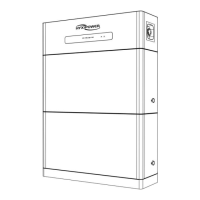

 To Next Page