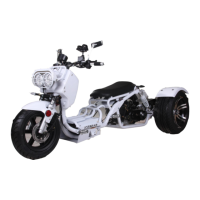
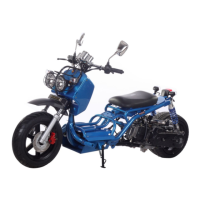
This document serves as a comprehensive manual for the PST300C, PST300R, PST300-20, and PST300-21 motorcycle models, manufactured by HUZHOU DAIXI ZHENHUA TECHNOLOGY TRADE CO., Ltd. and distributed by PACIFIC RIM INT'L WEST INC.USA. It covers essential information for safe operation, maintenance, and troubleshooting.
Function Description
The motorcycles described in this manual are designed as an ideal foot-substitute and transport tool, offering convenience and pleasure to the rider's life. They are equipped with a single-cylinder, four-stroke, water-cooled engine and feature an Electronic Control Unit (ECU) that manages injection and ignition processes for optimized fuel consumption, power, and emission. The manual emphasizes the importance of proper break-in procedures to ensure maximum life and performance of the motorcycle.
Important Technical Specifications
The manual provides detailed specifications for the engine and other components:
- Engine Type: Single cylinder, four-stroke, water-cooled.
- Bore: 72.5mm
- Stroke: 66.8mm
- Piston Displacement: 275ml
- Compression Ratio: 10:3:1
- Carburetor: Piston type
- Air Cleaner: Polyurethane foam filter
- Starter System: Pull and electricity
- Lubrication System: Pressure and splash combined
- Max. Speed: 90km/h
- Max Oil Consumption: 3.0L/100km
- Max Power: 13kw (6500r/min)
- Standard Power and Rotation: 14kw (6500r/min)
- Max Torque: 21N.m (5500r/min)
- Idling: 1500r/min
- Fuel Tank Capacity: 11 L (including 1.6 L reserve capacity)
- Accumulator Voltage: 12V (normal voltage > 12.8V)
- Spark Plug Gap: 0.6-0.7 mm
- Tire Pressure (Cold Inflation):
- Front tire: 225KPa
- Rear tire: 241KPa
- Tire Size:
- Front tire: 130/60-13 M/C
- Rear tire: 190/50-12
- Minimum Tread Depth:
- Front tire: 1.6 mm
- Rear tire: 2 mm
Usage Features
The manual outlines several key usage features and safety precautions:
- Starting the Engine: For a cold engine, turn the fuel cock to "ON," insert the key into the electric switch and turn to "ON," keep the throttle opening less than 1/8, and press the kick starter lever. Release the lever quickly once the engine starts. In cold areas, push the electric button to "OFF," close the choke valve, open the throttle, and press the starting lever several times before starting.
- Stopping and Parking: To stop, twist the throttle grip away completely. Use front and rear brakes evenly. To park, turn the key to "OFF," lock the steering, and pull out the key.
- Steering System: The motorcycle uses a key to control the spark switch, steering lock, cap lock, and helmet-pole lock. The spark switch has "OFF" and "IGNITION" positions.
- Throttle Grip: Used to control engine speed; twist towards the rider to increase speed, away to decrease.
- Brakes: Equipped with hydraulic disc front and rear brakes. Emphasizes using both brakes evenly and avoiding sharp braking, especially on wet or rugged roads.
- Reversing Gear Device: A lever allows pulling from A to B for reversing.
- Instrument Panel: Includes a speedometer (shows running speed in km/h), odometer (shows total kilometers driven), water temperature indicator, and neutral indicator.
- Lighting: Left handlebar controls include variable switch for night riding (headlights, backlights, parking lights, dashboard lights), left-right turning signal button, and horn button. Right handlebar includes light button for various lighting configurations.
- Engine Stop Switch: An emergency stop switch that cuts off electricity to the engine.
- Fuel: Recommends unleaded petrol with an octane number of 91 or higher. Overfilling the fuel tank should be avoided to prevent fire.
- Accessories: Advises choosing high-quality, suitable accessories and ensuring they are properly fastened and do not hinder operation or affect balance.
Maintenance Features
The manual details a comprehensive maintenance schedule and procedures:
- Break-in Period: The first 1600 km are crucial. During this time, avoid excessive heat and high speeds. The throttle opening should be less than 1/2 for the first 800 km and less than 2/3 for 800-1600 km. Vary engine speed and allow sufficient idling time before applying load.
- Periodic Maintenance: A chart outlines inspection, adjustment, cleaning, replacement, and tightening tasks at specified kilometer intervals (1000, 4000, 8000, 12000, 18000 km) and daily checks. Key items include engine oil, spark plug, engine bolt, gear oil, air cleaner, drive chain, EFI components, throttle operation, brake shoes/pads, brake system, brake light switch, brake liquid, suspension, nuts, bolts, fasteners, wheel/tire.
- Engine Oil: Recommends good quality 10W/40 engine oil, specifically Zhenhua special engine oil (four-stroke 15w/40). Regular checking of oil level and replacement are essential. The oil level should be between the upper and lower marks on the dipstick.
- Oil Replacement: Should be done when the engine is warm. Drain dirt oil by unscrewing the drain bolt. Replace the oil filtering net and ensure spring and sealing washer are installed. Pour 0.8L of recommended oil, run the engine for 2-3 minutes, then check the level.
- Air Cleaner: Uses a polyurethane foam filter. Clean periodically, more frequently in dusty conditions. Never operate the engine without the air cleaner.
- Spark Plug: Recommends NGK DR8EA. Clean carbon deposits and readjust the gap to 0.6-0.7 mm periodically. Ensure the washer is connected during installation.
- Drive Chain: Inspect and adjust before riding. Check for loose pins, dry/rusty links, twisted/bonded links, damaged sprocket, excessive wear, or incorrect adjustment. Clean with detergent and lubricate with special chain oil or engine oil.
- Brake Fluid: Check fluid level regularly; it should be above the "LOWER" mark. Use DOT3 brake fluid. Avoid contact with skin/eyes and prevent splashing on painted surfaces or rubber.
- Brake Pads: Check for dripping, cracks, recovery, and wear. New brake pads require careful initial use.
- Tires: Check for wear, inflation pressure, cuts, nails, and sharp materials. Adjust pressure when tires are cold. Replace tires if tread depth is below 1.6 mm (front) or 2 mm (rear).
- Fuses: Located beside the storage cell. Check if the motorcycle is dead. If a fuse is burned out, it indicates an overload or short circuit.
- Cleaning: Periodically clean the motorcycle to protect painted surfaces. Avoid high-pressure current on certain parts (ignition switch, instrument carburetor, drive chain, entrance of silencer bottom of fuel tank, switch of steering bar, seat bottom). Clean plastics with a soft cloth and clean water. Lubricate the drive chain after cleaning.
- Aluminum Tire Maintenance: Clean and dry with a soft cloth to prevent corrosion. Avoid abrasive detergents.
- Storage: For extended storage, change engine oil, drain fuel tank and carburetor, spray rust-inhibiting oil into the tank, and reinstall the cap. Discharge the storage cell and store it in a place without freezing or direct sunlight, charging every six months. Wash, dry, and wax the motorcycle. Lubricate the drive chain. Inflate tires to recommended pressure and place the motorcycle on blocks to raise tires off the ground.
- Removal from Storage: Uncover and clean the motorcycle. Replace engine oil if stored for more than 4 months. Charge and reinstall the storage cell. Drain rust-preventing oil and fill with fresh petrol. Perform pre-ride inspection checks.
- EFI System Maintenance: The ECU controls engine injection and ignition. The manual includes troubleshooting tables for main faults (hard to start, flameout, powerless, others) and ECU signal lamps. It also describes how to reset the ECU to factory settings and provides a pin assignment diagram for the ECU socket.
- Fault Alarm Lamp Flash Code Table: Provides flash codes for various faults (idling intake air, electromagnetic interference, crankshaft position sensor, battery voltage, oxygen sensor, cylinder head temperature, injector, fuel pump, igniter, throttle position sensor, ECU, intake air temperature) and their corresponding remedies.

 Need help?
 General

 To Next Page