Need help?
Do you have a question about the IDENTEC SOLUTIONS ILR 350 Series and is the answer not in the manual?
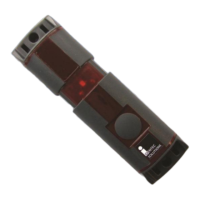
The ILR 350 Series is a range of robust, intelligent long-range RFID tags designed for a variety of asset tracking and monitoring applications. These tags, including models i-Q350, i-Q350T, i-Q350L, and i-Q350TL, leverage advanced radio frequency identification (RFID) technology to provide reliable communication and data collection capabilities. The core function of these devices is to enable the identification, tracking, and, in some models, environmental monitoring of assets over significant distances, making them suitable for demanding industrial and logistical environments.
At its heart, the ILR 350 Series operates as an active RFID tag, meaning it contains its own power source (a non-replaceable lithium battery) to actively broadcast its identification and other relevant data. This active nature allows for much longer read ranges compared to passive RFID systems, making it ideal for applications where assets are spread across large areas or are in motion. The tags support both Long-Range RFID (ILR, Response Technology) and Long-Range RFID (ILR, Beacon Technology) communication modes.
In the Response Technology mode, the tags can be queried by a reader, and they respond with their data. This mode is particularly useful for applications requiring precise, on-demand identification and data retrieval, such as inventory management in warehouses or tracking vehicles entering and exiting specific zones. The tags are capable of handling multiple tags simultaneously within a read zone, ensuring efficient data collection even in high-density environments.
The Beacon Technology mode allows the tags to autonomously transmit marker information at regular, user-definable intervals. This "ping rate" can be adjusted, offering flexibility for different tracking needs, from frequent updates for critical assets to less frequent pings for stationary or less time-sensitive items. This broadcast functionality is excellent for continuous monitoring and presence detection, such as tracking equipment across a large yard or monitoring personnel movement in a facility.
Beyond basic identification, some models within the ILR 350 Series, specifically those with 'T' in their model name (i-Q350T, i-Q350TL), incorporate temperature logging capabilities. These tags are equipped with internal and/or external temperature sensors, allowing them to record and store temperature data over time. This feature is invaluable for monitoring temperature-sensitive assets, such as perishable goods, pharmaceuticals, or industrial components that require specific environmental conditions. The tags can store a significant number of temperature samples, with user-definable logging and measuring intervals, providing a detailed historical record of temperature exposure. This data can then be retrieved wirelessly, offering critical insights for quality control, compliance, and damage prevention.
The tags also support communication with an Inductive Loop (Marker) system, allowing them to receive marker ID numbers and transmit marker information multiple times. This capability enhances their versatility, enabling more localized and precise interactions within specific zones, such as gate control or specific workstation identification.
The ILR 350 Series tags are designed for straightforward mechanical installation and robust operation in challenging environments. Their physical design, with dimensions of 131 mm x 28 mm x 21 mm and a weight of 50g, makes them compact yet durable. The enclosure is rated IP 65, indicating protection against dust ingress and low-pressure water jets, which is crucial for outdoor and industrial applications. The tags are constructed from plastic (Qinnacryl), providing a good balance of strength and weight.
Mounting the tags is facilitated through two primary methods: rivets and screws. For rivet mounting, the manual emphasizes the importance of maintaining a minimum temperature of +10 °C (+50 °F) during installation to prevent casing cracks. It also advises proper positioning of the blind-rivet gun and suggests using large-head rivets or washers to distribute pressure and improve access to the rivet socket. This attention to detail ensures a secure and damage-free installation.
For screw mounting, the tags are designed to accommodate #10 cylinder head or lenticular head screws. The manual specifically cautions against using countersunk screws unless a suitable cushioning disc is employed. It also highlights the need for self-locking nuts, spring washers, or Nordlock washers to prevent screws from loosening, especially in vibrating environments. Similar to rivet mounting, a minimum temperature of +10 °C (+50 °F) is recommended during installation. The maximum tightening torque for screws is specified to prevent overtightening and potential casing damage. For outdoor or damp environments, all mounting parts should be made of stainless steel or other non-rusting materials to ensure longevity and prevent corrosion.
A critical usage consideration for both mounting methods is the proximity to metal surfaces. Metal in direct proximity to the tag can significantly reduce its range of function. Therefore, users are advised against mounting tags in metal recesses or corners to optimize performance. After mounting, it is recommended to test the tag's function using a handheld device and the "ILR Pocket Demo" software to confirm proper operation.
The tags are designed to operate across a wide range of environmental conditions, with an operating temperature range of -40 °C to +85 °C (-40 °F to +185 °F). They can withstand significant shock (50 G, 3 times DIN IEC 68-2-27) and vibration (3 G, 20 sine wave cycles, 5 Hz to 150 Hz, DIN IEC 68-2-6; 5 G, noise 5 Hz to 1000 Hz, 30 minutes, DIN IEC 68-2-64), making them suitable for harsh industrial settings, including those with heavy machinery or vehicles. The humidity tolerance of 10% to 95% relative humidity at 30 °C further underscores their robustness.
The ILR 350 Series is largely designed to be maintenance-free, offering reliable operation for many years when correctly installed. However, the manual outlines precautionary maintenance steps to ensure continued optimal performance and longevity.
Regular checking of all ports and cables belonging to the system is recommended. While the tags themselves do not have external ports or cables in the traditional sense for user interaction, this advice pertains to the overall ILR system components, including readers and associated infrastructure. Unstable connections within the broader system can lead to damage and malfunctions, so prompt repair is advised.
A brief checklist is provided for precautionary maintenance, which includes:
The tags contain a non-replaceable lithium battery, which means there are no user-serviceable parts inside the housing. The device is not designed to be opened by the user, and initial setup and configuration are performed wirelessly via the built-in air interface. This design philosophy minimizes the need for physical intervention and reduces the risk of damage during maintenance.
Handling safety is also addressed, particularly concerning temperature. Due to potential high operating temperatures (up to 80 °C / +176 °F), care must be taken if tags are heated; users should wait for them to cool or use gloves to avoid burns. Conversely, at temperatures below 0 °C (+32 °F), tags can become iced, requiring warming or the use of gloves.
The manual also includes a warning regarding the internal battery: "Fire, explosion and burn hazard. Risk of explosion if battery is replaced by an incorrect type. Do not recharge, short circuit, crush, disassemble, heat above 100 °C (212 °F). Do not incinerate, or expose contents to water." This underscores the importance of not attempting to open or tamper with the tag.
In case of returns for repair or exchange, parts or main components must be handled with great care. PC cards (if part of the broader system) should be returned in appropriate ESD-protecting packaging material. All returns should include a completed returns form and be sent to the local distributor or IDENTEC SOLUTIONS AG Service Department.
The ILR 350 Series is designed for long-term data retention, with data remaining secure for over 10 years without power. The memory allows for 100,000 writes to a tag, and 10,000 Bytes of user-definable memory are available, ensuring ample capacity for application-specific data.
 General
| Operating Temperature | -20°C to +55°C |
|---|---|
| IP Rating | IP67 |
| Modulation | FSK |
| Power Supply | 10 - 30 VDC |
| Communication Interface | RS232, RS485, Ethernet |


 To Next Page