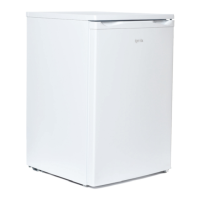
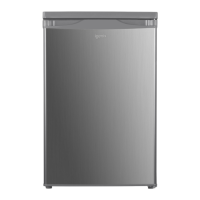
10
Exterior
Use a clean, damp soft cloth to wipe the exterior surface of the refrigerator and dry thoroughly.
WARNING: Do not use abrasive cloths, powders, household cleaners, bleach or wax polish to clean
the refrigerator as these can leave a smell in the refrigerator and can damage the exterior.
Use a vacuum cleaner to remove dust from underneath the refrigerator and from around the
compressor which is situated at the back of the refrigerator, regularly to maintain adequate ventilation.
Use caution not to damage the coolant system.
Door Seal
Use a clean, damp soft cloth to wipe the door seal and in between the creases, avoid damaging the door
seal as this will affect the performance of your refrigerator.
Drainage Channel
The drainage channel must be cleaned regularly to prevent a build-up of impurities; this can be found on
the interior back wall of your refrigerator. Use a damp clean cloth and wipe the channel clean, then use a
pipe cleaner or similar exible object to clean the drainage hole to prevent blockages
Going away
If you are going away and do not want to leave the fridge left on, switch off at the socket and remove
the plug from the mains sockets ensuring not to pull the cord. Remove any food and follow the cleaning
instructions in the “Cleaning and Maintenance” section.
Note: Leave the door ajar as this will prevent odours and mould accumulating in the refrigerator and
will allow the refrigerator to dry completely.
Power Cut
In the event of a power cut keep the refrigerator door closed to maintain the temperature inside.
Operating Sounds
You may notice some unusual noises from your refrigerator, these are perfectly normal, but you should
be aware of them.
The compressor can make a buzzing or humming sound when it is running. This can be louder when the
refrigerator is rst switched on but should become quieter in a few months.
Gases owing through the cooling systems can causer gurgling, bubbling or similar sounds. These noises
are normal and have become more pronounced since the introduction of CFC free gases.
Expansion and contraction of parts inside the refrigerator can produce a cracking noise as they rapidly
change temperature.
Changing the bulb
Disconnect the refrigerator from the mains supply. Remove the lamp cover and then unscrew the bulb,
in an anti-clockwise direction and remove bulb. Replace the bulb with a new bulb of the correct size and
type. Replace the lamp cover and then plug back into the mains supply.
Disclaimer
Updates to hardware components are made regularly. Therefore some of the instructions, specications
and pictures in this documentation may differ slightly from your particular appliance. All items described
in this guide are for illustration purposes only and may not apply to your appliance. No legal right or
entitlements may be obtained from the description made in this manual.


 To Next Page