9
Using your Fridge Efciently
• Avoid opening the door for long periods or unnecessarily.
• To maintain adequate air circulation, do not over ll the refrigerator.
• Allow hot or warm foods to cool to room temperature before storing in the refrigerator.
Storing Food in your Fridge
• Pack and store cooked and fresh food separately
• Wrap raw or defrosting meats and poultry in polythene or foil and ensure they are stored below
any cooked meats to avoid contamination from any juices that may drip.
• Keep foods covered to help retain moisture and to help prevent odour. Plastic bags, aluminium foil,
plastic food wrap and containers with lids are ideal.
• Empty left over tinned food into plastic containers. Do not store foods in tins in the fridge.
• Position food in the fridge to allow cold air to circulate freely, making sure that nothing touches
the back wall of the fridge.
Defrosting the Chill Box
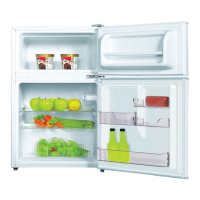
After a period of time frost will build up in the chill box. Regular defrosting will therefore be necessary
to maintain the efciency of the refrigerator. Defrosting should be carried out if the frost build-up begins
to interfere with the food storage. The best time to defrost your cool box is when the amount of food
stored is low. To defrost the cool box, please follow the steps below:
1. Take out the frozen food and store in either a spare freezer, refrigerator or wrap well and store in a
cool dry place. Unplug the appliance from the mains supply, making sure not to pull the cord.
Leave the door open, to speed up the defrosting process, bowls of hot water can be placed inside
the refrigerator to raise the temperature.
2. Remove the ice with an ice scrapper. DO NOT use pointed or sharp edged objects such as knives,
forks or screw drivers to remove the ice.
3. When all traces of ice have been removed and defrosting is completed, clean away any water and
wipe your refrigerator dry.
4. Clean your refrigerator as described below, plug in and switch back on, setting between 3 and 4
on your temperature control. Allow at least 4 hours for the temperature to return to the adequate
temperature before putting the food back into the refrigerator.
NOTE: Do not use any mechanical devices or other means to accelerate the defrosting process other
than those recommended by the manufacturer.
CLEANING AND MAINTENANCE
Switch off the electrical supply and remove the plug from the mains socket before cleaning.
Interior
1. Remove all food from the refrigerator and cover to help keep cool.
2. Remove all the shelves and salad crisper carefully from the fridge and wash in warm soapy water
with a soft cloth and dry thoroughly. Never replace the shelves or salad crisper into the refrigerator
if wet.
3. Wipe the interior of the refrigerator with a damp clean cloth. For extra cleaning use a solution of
one teaspoon of bicarbonate of soda to one pint of water.
4. Dry the interior thoroughly with a clean cloth and replace the shelves.
5. Plug in and switch on and allow the temperature in the refrigerator to drop back to an
adequate temperature.
6. Replace the food in the refrigerator.
NOTE: Avoid getting water into the electric components of the refrigerator i.e. the thermostat) as this
may damage your unit.


 To Next Page
 Loading...