11
USING YOUR DRYER
Loading suggestions
The chart below provides some guidelines on various types of drying loads. Load clothes loosely into the
dryer. Do not pack the dryer; allow space for clothes to tumble freely.
LOADING
Heavy Work Clothes
3 pair pants
3 shirts
4 pair jeans
1 coverall
1 overall
Towels
10 bath towels
10 hand towels
14 wash cloths
1 bath mat
Mixed Load
3 double sheets
4 pillowcases
8 T-shirts
6 pair shorts
2 shirts
2 blouses
8 handkerchiefs
Delicates
3 camisoles
1 quilted robe
4 slips
4 panties
2 bras
2 nighties
1 baby’s dress
CYCLE DESCRIPTIONS
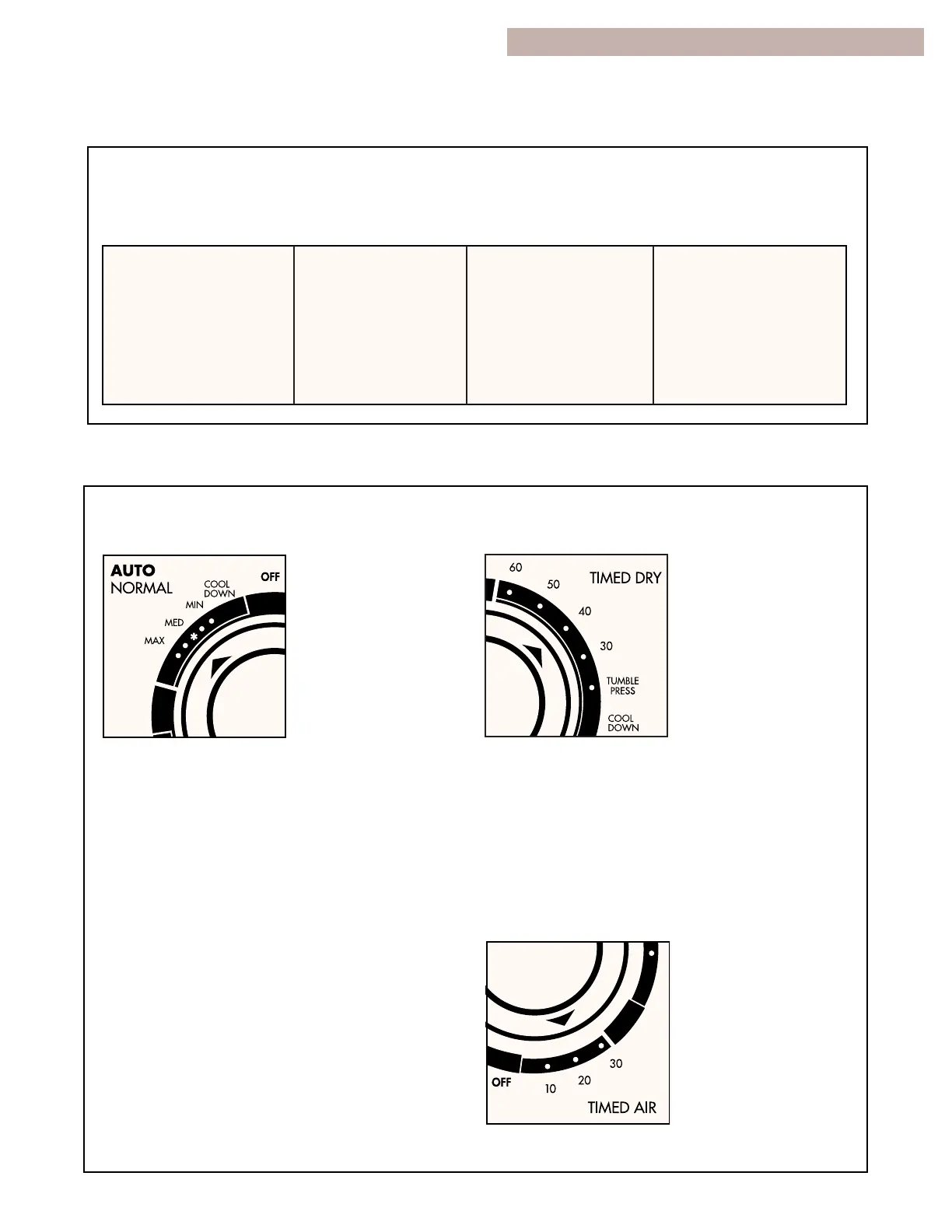
Auto
Use an Auto cycle to dry most loads. Select the cycle
that matches care label
directions. Depending
on your model, the Auto
cycle uses either an
electronic or automatic
control that senses the
moisture in the load and
shuts off the dryer when
the selected dryness is
reached. The Cycle
Control knob does not
move until the load is almost dry. After the cool-
down, the knob
automatically turns to an Off area and
tumbling stops.
•
If the load is drier than you like, select a setting
closer to MIN the next time you dry a similar load.
•
If the load is not as dry as you like, complete
drying using a Timed Dry cycle. Select a setting
closer to MAX the next time you dry a similar load.
Drying time with an Auto cycle varies according to
the type of fabric, size of load, and dryness setting.
Your model may not have all heat settings listed.
Some general guidelines are:
•
Use a high heat setting for drying heavyweight
items, such as towels and work clothes.
•
Use a medium heat setting for drying medium-
weight items, such as sheets, underwear,
permanent press clothes, and some knits.
•
Use a low heat setting for drying lightweight items
such as lingerie, blouses, dresses and some knits.
NOTE: If you have any questions about drying temp-
eratures for various loads, refer to care label directions.
Timed Dry
Use a Timed Dry cycle to complete drying if some
items are damp after the
Auto cycle. A Timed Dry
cycle is also useful for:
•
Heavyweight and
bulky items, such as
bed spreads and work
clothes, and large loads
that require a long drying
time. Set your dryer to a
heat setting that matches
the care label directions.
•
Lightweight items, such as lingerie, blouses, and
knits that require a short drying time. Set your dryer
for Low heat.
Drying time and temperature will depend on your
dryer model.
Timed Air
(on some models)
Use the unheated Timed Air cycle for items that
require drying without
heat. The chart in the
“Timed air cycle” section
includes examples of
items that require air
drying.
continued on next page


 To Next Page