
 Need help?
Do you have a question about the Inland JW9851 and is the answer not in the manual?
Provides stable operation in complex surroundings on the 2.4GHz frequency.
Up to 8-10m working distance for flexible use.
Good performance with smooth movement.
Features 16 auto hopping channels with 65K ID for reliable connection.
Low power consumption and click wake up from sleep mode.
Compatible with PC or Mac systems.
107 keys with tracking speed up to 14 inches/second.
Input power 1.5V x 1 AA, consumption 12mA.
Dimensions: 413*163*33MM.
68 channels, 2405-2472MHz carrier frequency, GFSK modulation, ID 65536.
Up to 10m transmission range with 360-degree coverage.
Input power 5V DC, 30mA; USB2.0 interface; dimensions 19x15x7mm.
Compatible with IBM PC and Windows 98/2000/ME/XP/Vista/7/MAC.
Instructions for installing battery, connecting receiver, and normal use.
Equipment complies with FCC Part 15 limits for digital devices.
User guidance to correct potential radio frequency interference.
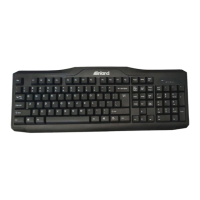
This document describes the JW9851 Wireless Keyboard, a peripheral designed for use with both PC and Mac systems.
The JW9851 is a wireless keyboard that utilizes 2.4GHz wireless technology to provide a stable and reliable connection. It is designed to prevent interference from complex surroundings, ensuring consistent performance. The keyboard is compatible with a wide range of operating systems, including Windows 98/2000/ME/XP/Vista/7 and MAC. It comes with a micro receiver that plugs into a USB 2.0 port on the computer.
Keyboard:
Radio Frequency Specifications:
Receiver:
System Requirements:
The JW9851 keyboard offers several user-friendly features:
The manual provides basic instructions for setting up and maintaining the 2.4G connection:
The device complies with Part 15 of the FCC Rules, indicating that it has been tested and found to meet the limits for a Class B digital device. This ensures reasonable protection against harmful interference in a residential installation. Users are advised that any changes or modifications not expressly approved by the responsible party could void their authority to operate the equipment.
In case of harmful interference, the user is encouraged to try the following measures:
The device's operation is subject to two conditions: (1) it may not cause harmful interference, and (2) it must accept any interference received, including interference that may cause undesired operation.

 To Next Page
 General