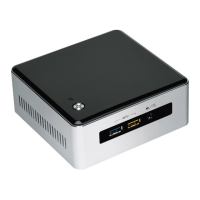
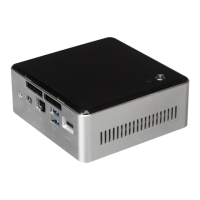
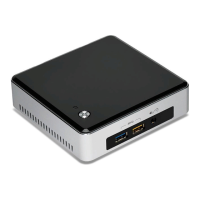
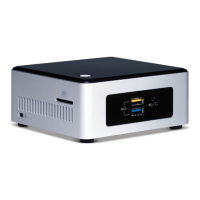
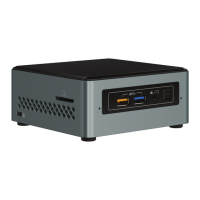
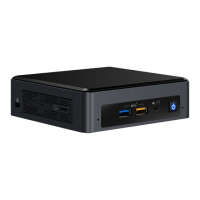
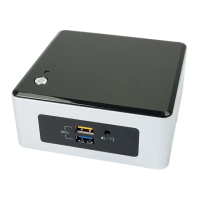
The Intel NUC Kit NUC5i3RYK and NUC5i5RYK are compact computing devices designed for various applications, from home entertainment to business productivity. This user guide provides comprehensive instructions for installing, configuring, and maintaining these NUC kits, ensuring users can maximize their functionality and longevity.
Function Description:
The Intel NUC Kits NUC5i3RYK and NUC5i5RYK serve as small form factor personal computers, offering a versatile platform for a wide range of computing tasks. These kits are designed to be highly customizable, allowing users to select and install their preferred memory, storage, and operating system. Their compact size makes them ideal for environments where space is limited, such as behind a monitor using a VESA mount, or as a discreet component in a home theater setup. They provide the core components of a PC, including a motherboard with an integrated processor, and require the user to add memory, storage, and an operating system to become fully functional. The NUC kits support various peripherals through their integrated ports, making them suitable for general computing, media consumption, light gaming, and even some professional applications.
Important Technical Specifications:
- Processor: The NUC5i3RYK features an Intel Core i3 processor, while the NUC5i5RYK comes with an Intel Core i5 processor. Both are designed for efficient performance within their respective tiers.
- Memory: Both NUC kits are equipped with two 204-pin DDR3L SO-DIMM sockets.
- Voltage: They require 1.35V low voltage memory.
- Speed: Supported memory speeds include 1333 MHz or 1600 MHz SO-DIMMs.
- Error Correction: They support Non-ECC memory.
- Installation: If only one SO-DIMM is installed, it should be placed in the lower memory socket.
- Storage: The NUC kits support M.2 SSDs in various form factors: 80mm, 60mm, and 42mm. This allows for flexible storage options depending on user needs and available M.2 SSDs.
- Connectivity: While specific port details are not exhaustively listed in the provided text, the mention of device drivers such as Intel Gigabit Ethernet, Intel Wireless, Intel Bluetooth, and Intel USB 3.0 (for Windows 7*) indicates robust connectivity options. Near Field Communication (NFC) is also supported, along with Realtek High Definition Audio and Nuvoton Consumer Infrared.
- Chassis: The chassis is designed for easy access, with four corner screws on the bottom cover allowing for straightforward opening and component installation.
- VESA Mount Support: Both models support VESA mounting, enabling them to be attached to the back of compatible monitors or TVs for a clean, integrated setup.
Usage Features:
- Customizable Configuration: Users have the flexibility to choose and install their own memory (SO-DIMMs), M.2 SSD, and operating system, tailoring the NUC to their specific performance and storage requirements.
- Compact Form Factor: The small size of the NUC kits allows for discreet placement in various environments, making them suitable for home theaters, office desks, or digital signage applications.
- VESA Mounting: The optional VESA mount bracket allows the NUC to be securely attached to the back of a monitor or TV, saving desk space and creating an all-in-one computing solution.
- Operating System Flexibility: The NUC kits are compatible with Intel-validated Windows operating systems and various versions of Linux, offering users a choice of their preferred software environment.
- Driver and Software Support: Intel provides comprehensive support for device drivers and software, including the Intel Driver & Support Assistant (DSA) for automatic updates, and manual downloads from the Intel Download Center for specific models (NUC5i3RYK, NUC5i5RYK). This ensures optimal performance and compatibility with installed hardware.
- Ease of Installation: The guide provides clear, step-by-step instructions for installing memory, M.2 SSDs, and the VESA bracket, making the setup process accessible even for users with moderate technical skills.
Maintenance Features:
- User-Serviceable Components: Key components like memory and M.2 SSDs are designed for user installation and removal, facilitating upgrades and replacements without requiring specialized tools or professional service.
- Clear Disassembly Instructions: The guide details how to open the chassis by unscrewing four corner screws, providing easy access to internal components for installation or maintenance.
- Safety Precautions: The manual emphasizes critical safety guidelines, including disconnecting power before performing any procedures, observing ESD precautions with an antistatic wrist strap and conductive foam pad, and being aware of sharp edges or hot components. These precautions help prevent personal injury and equipment damage during maintenance.
- Log Keeping: Users are advised to maintain a log of their computer's information, such as model, serial numbers, installed options, and configuration. This practice aids in troubleshooting and future maintenance.
- Driver Updates: Regular driver and software updates are crucial for maintaining system stability, performance, and security. Intel offers tools and resources to keep all necessary drivers current, including chipset, graphics, management engine, network (Gigabit Ethernet, Wireless, Bluetooth), USB, audio, infrared, NFC, and rapid storage technology drivers.
- Component Handling Guidelines: Instructions for handling components, such as holding SO-DIMMs by the edges and storing them in anti-static packages, help prevent damage during removal or installation.
- Reassembly Instructions: The guide includes steps for reinstalling and reconnecting parts after maintenance, ensuring the system is properly reassembled and functional.

 Need help?

 To Next Page
 General