ENGLISH
► The operator must always use personal protection devices: protective apron or overalls, non-slip waterproof shoes, rubber gloves, protective
goggles and ear protectors and mask to protect the respiratory tract.
► When using oor cleaning detergents, follow the instructions and warnings on the product labels.
► Do not use detergents that may produce hazardous reactions, vapours, heat, etc.
► Keep hands away from moving parts.
► Never wash the machine with water jets.
► Make sure the electrical characteristics of the machine (voltage, frequency, power) given on the nameplate correspond to those of the mains
electricity supply.
► Make sure the power sockets used for the battery charger are connected to a suitable earth system and protected by thermal magnetic and
earth leakage breakers.
► Battery charger: check the power cable regularly for damage; if the power cable is damaged, do not use the charger. To replace the cable,
contact a specialist service centre.
► Battery charger, when carrying out maintenance on the machine, disconnect both power supplies (AC and DC).
► When using cable-powered versions, make sure to avoid crushing or tearing the power cable, and make sure the rotating brush does not
come into contact with the power cable.
► Check the power cable regularly. If damaged, do not under any circumstances use the machine. For replacement, contact a specialised
service centre.
► In the presence of particularly strong magnetic elds, assess the possible eect on the control electronics.
► It is indispensable to respect the battery manufacturer’s instructions and applicable legislation.
► The batteries should always be kept clean and dry to avoid surface leakage current.
► Protect the batteries from impurities such as metal dust.
► Never rest tools on the batteries as they could cause short circuits leading to explosions.
► When using battery acid, always follow scrupulously the safety instructions given in the “Batteries: preparation “ section.
► If the machine is installed with lead batteries (WET), keep sparks, ames and hot materials away from the batteries. Explosive gases are
released during normal operation, in particular when charging.
► If the machine is installed with lead batteries (WET), highly explosive hydrogen gas is produced when charging the batteries. Lift the tank
(insert the safety bracket) during the entire battery charge cycle and only perform the procedure in areas that are well ventilated and far away
from naked ames.
► If deciding to no longer use the machine, it is recommended to remove the batteries and consign them to a waste collection centre, in com-
pliance with environmental safety standards in force.
► To charge the batteries, always use the battery charger supplied with the machine (if supplied), or one that meets the recommended values
shown in the technical specications.
► In the event of machine faults and/or malfunctions, switch it o immediately (disconnecting it from the batteries/mains power supply); do not
try to repair it, rather contact the manufacturer’ service centre.
► All maintenance operations must be performed in an adequately lit place and only after disconnecting the machine from the power supply, in ca-
ble models by unplugging the machine from the socket, in battery models by disconnecting the battery connector; In cable models, the operator
must also be able to verify from any position that the machine remains unplugged from the mains socket while maintenance is being carried out.
► Only use original accessories and spare parts supplied by the Manufacturer to guarantee safe and problem-free operation of the machine.
► Never use parts removed from other machines or from other kits.
The machine is designed and constructed to provide ten years’ service from the date of manufacture shown on the nameplate. After this period, wheth-
er the machine has been used or not, it should be disposed of according to current legislation in the country in which it is used.
It should be disconnected from the power supply, emptied of all liquids and cleaned prior to disposal.
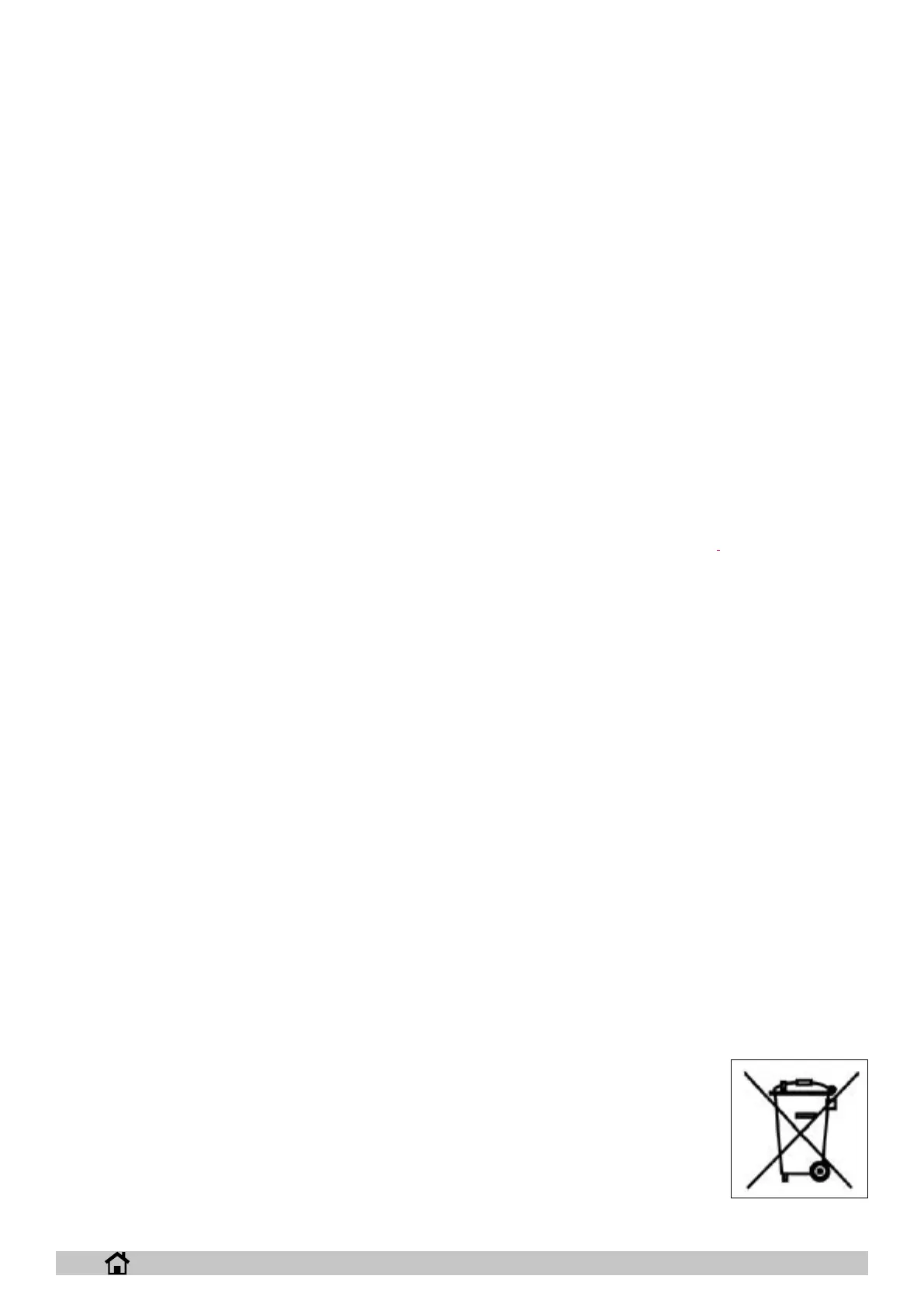
The machine is classied as WEEE-type special waste and is covered by the requirements of applicable environmental protection regulations
(2002/96/EC WEEE).
The machine must be disposed of separately from ordinary waste in compliance with current legislation and standards.
Also make sure that all parts of the machine that could represent a hazard, particularly to children, are made safe.
Alternatively, return the machine to the Manufacturer for a complete overhaul.
9


 To Next Page
 Loading...