Need help?
Do you have a question about the iRhythm Zio XT and is the answer not in the manual?
Enroll the patient and record identification details.
Position patch on the upper left chest using anatomical guides.
Shave the skin where the Zio XT Patch will be applied.
Abrade skin with 40 strokes for proper adhesion and signal quality.
Clean the prepared skin with alcohol pads and let it dry.
Peel off the two parts of the top label before final pressing.
Press firmly across the device for 2 minutes to adhere.
Press the button to start monitoring; green light indicates success.
Wear the Zio XT Patch for the prescribed duration, up to 14 days.
Avoid showering first 24 hours; keep patch dry during baths.
Avoid excessive sweating to maintain patch adhesion.
A properly working patch will not flash or make noise.
Contact for patch falling off; return patch in original packaging.
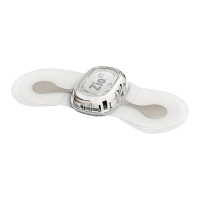
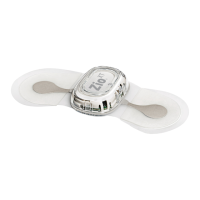
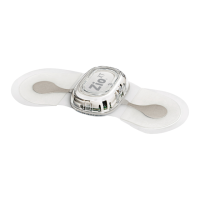
The Zio XT Patch is a prescription-only, single-patient-use, continuously recording ECG monitor designed for extended wear, up to 14 days. Its primary function is to capture and record cardiac activity, aiding in the diagnosis of conditions associated with symptoms such as palpitations, shortness of breath, dizziness, light-headedness, presyncope, syncope, fatigue, or anxiety. The device is intended for patients who may be asymptomatic or experiencing these transient symptoms.
The Zio XT Patch is designed for ease of application and patient comfort during the monitoring period. The process begins with patient enrollment, which can be completed online at www.zioreports.com. Essential patient information, including ID number, initials, physician, and start date/time, should be recorded on the cover of the Patient Instructions & Button Press Log.
Proper placement is crucial for optimal performance. The patient should stand with arms relaxed, and the skin in the placement area must be free of perspiration. The device is positioned on the flattest part of the upper left chest, specifically one finger width below the collarbone, centered over the left pectoral muscle. The edge of the Zio XT Patch should be next to the sternum, angled so the arrow on the top label points upward. It is important to avoid placement in the armpit and breast tissue areas.
Skin preparation is a critical step to ensure proper adhesion and high-quality ECG signal. A large area of skin needs to be prepared, starting with shaving the area. Following this, the skin should be abraded using pressure and 40 broad strokes—10 times in each direction indicated by arrows in the provided diagrams. This abrasion is vital for both adhesion and ECG signal quality. After abrasion, the skin must be thoroughly cleaned with all alcohol pads and allowed to dry for one minute before patch application.
To apply the patch, the device should be held in the center, and the clear backings removed, ensuring the top label remains in place. It is important not to touch the adhesive. The Zio XT Patch is then placed in the recommended position, and firmly pressed across the entire device for two minutes to ensure initial adhesion.
The final steps involve activating the device and ensuring proper adhesion. The two parts of the top label are peeled off. The device is then firmly pressed across its entire surface for another two minutes, working the adhesive into the skin. Particular emphasis should be placed on pressing the dotted areas shown in the accompanying figures. To activate monitoring, the 'Zio' button is firmly pressed and released. A green light will flash five times, indicating that monitoring has successfully started. Patients should be familiarized with the button's location.
During the monitoring period, patients are instructed to press the 'Zio' button each time a symptom is felt and record the symptom in the Button Press Log. The device is designed to capture every beat, so it is normal if no symptoms are experienced.
The Zio XT Patch is designed to be worn for the physician-prescribed duration, up to a maximum of 14 days. While individual wear experiences may result in shorter actual wear times, the device should not be worn beyond 14 days.
Patients can shower with the Zio XT Patch on, but it is recommended to avoid showering during the first 24 hours of wear to allow for full adhesion. After this initial period, brief showers with the back facing the shower head are permissible, and soaps and lotions should be kept away from the patch. Baths are also allowed, provided the Zio XT Patch remains above water and is not submerged. Swimming or sitting in a hot tub is not permitted while wearing the device.
Patients can generally continue with their daily activities. However, activities that cause excessive sweating should be avoided, especially in the first 24 hours, as this can cause the patch to slide, loosen, fall off, or shorten wear time. The device is designed to operate silently and without blinking or making noise when functioning correctly. If the patch falls off, patients are advised to contact support.
Upon completion of the monitoring period, the patient should write the "Date Removed" on the cover of the Patient Instructions & Button Press Log. The Zio XT Patch, along with the log, should be placed in the original postage-paid box and returned via mail.
The Zio XT Patch is a single-use device and should not be reused on multiple patients, as this can lead to incorrect patient data and skin irritation. The device has a shelf-life date, and using an expired device may compromise ECG signal quality or battery performance. It is important not to use the Zio XT Patch if its package is damaged, as the device may not perform as intended.
The device has temperature and humidity limitations. Exposure to extreme conditions can degrade adhesive performance, potentially causing the device to slip or fall off during wear.
Prior to application, the patient's skin area should be examined for conditions such as dermatitis, eczema, rashes/hives, acute/chronic cutaneous infections, or irritation. If skin irritation, severe redness, itching, or allergic symptoms develop after application, the Zio XT Patch should be removed, and support contacted.
The Zio XT Patch is not intended for use in patients with symptomatic episodes where instantaneous variations in cardiac performance could pose immediate danger. It should not be used in combination with external cardiac defibrillators, high-frequency surgical equipment, or near strong magnetic fields or devices like MRI. It is also contraindicated for patients with neuro-stimulators, as it may disrupt ECG data quality. Patients must have the competency to wear the device for the prescribed monitoring period.
The safety and effectiveness of the Zio XT Patch have not been established for pediatric patients (younger than 18 years old) or for patients receiving any form of pacing therapy. Paced cardiac rhythms may not be accurately detected or correctly classified by the device.
 General
| Monitoring Duration | Up to 14 days |
|---|---|
| Battery Life | Up to 14 days |
| Weight | Approximately 20 grams |
| Sampling Rate | 200 Hz |
| FDA Cleared | Yes |
| Data Transmission | Cellular |
| Data Storage | Stores continuous ECG data |
| Connectivity | Cellular |
| Water Resistance | IP22 rating (splash resistant) |
| Electrodes | Integrated hydrogel electrodes |
| ECG Channels | Single-channel |
| Memory | Sufficient to store 14 days of ECG data |

 To Next Page