15
V
V
M
M
a
a
i
i
n
n
t
t
e
e
n
n
a
a
n
n
c
c
e
e
Caution: The operations and adjustments described in this chapter must be performed by
authorized personnel only as they can affect the appliance's reliability in detection.
IMPORTANT: It is prohibited to open the transmitter when energized.
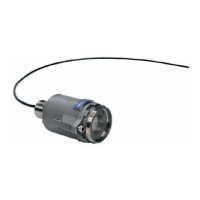
1. Detectors OLC20 and OLC20D
These types of detectors are equipped with a removable cell unit.
Gas detection instruments are potential life-saving devices. Recognizing this fact, Industrial Scientific
Corporation recommends that a functional “bump” test be performed on every fixed gas-monitoring
instruments as part of a regular maintenance program. A functional test is defined as a brief exposure of the
detector to a concentration of gas(es) in excess of the lowest alarm set-point for each sensor for the purpose
of verifying sensor and alarm operation and is not intended to be a measure of the accuracy of the
instrument.
Industrial scientific further recommends that a full instrument calibration be performed using a certified
concentration(s) of calibration gas(es) quarterly, every 3 months.* Calibrations may be necessary more or
less frequently based, for example, on application, field conditions, exposure to gas, sensor technology, and
environmental conditions. The frequency of calibration is best determined by company policy or local
regulatory agencies.
If an instrument fails to operate properly during any functional “bump” test, a full instrument calibration
should be performed successfully prior to use.
These recommendations are based on safe work procedures, industry best practises, and regulatory standards
to ensure worker safety. Industrial scientific is not responsible for setting safety practices and policies.
* For new installations it may be prudent to carry out bump tests frequently at first (perhaps weekly),
increasing the time intervals (to, perhaps, monthly or more) as confidence grows with experience in the
installation concerned, on the basis of the maintenance record.
1.1. CALIBRATION
Procedure to be followed once the required site authorisations have bee granted
On the data logger On the DETECTOR
Set the measuring channel to the calibration
position (alarm relays inhibited)
Make the zero and sensitivity adjustments.
Return the measuring channel to the "normal"
position and make sure that it is working
properly, after.
Position the gas input pipe and carry out
the calibration in accordance with the
procedure defined during the training
course provided by ISC/OLDHAM or by a
person approved by ISC/OLDHAM .


 To Next Page
 Loading...