EasyManua.ls Logo

Jayco Conventional Travel Trailer 2003 - User Manual

Jayco Conventional Travel Trailer 2003
64 pages
Print Icon
To Next Page IconTo Next Page
Loading...
WARNING: Read all instructions in manual before using your
camper.
This manual has been provided by Jayco, Inc. for the sole purpose of
providing instructions concerning the operation and maintenance of this
vehicle and its components. Nothing in this manual creates any warranty,
either expressed or implied. The only warranty offered by Jayco, Inc. is as set
forth in the limited warranty applicable to this vehicle.
The owner’s failure to provide required service and/or maintenance
could result in the loss of warranty. The owner should review Jayco’s limited
warranty and the limited warranties of all other manufacturers offering them
that are applicable to this vehicle.
Instructions are included in the manual for operating various components
which are optional on some vehicles. In addition, the owner should refer to
individual manufacturer’s operating instructions contained in the owner’s
packet.
WARNING: Review the compatibility of your tow vehicle with the trailer you
will be towing. You must not exceed the gross vehicle weight rating of the
trailer (GVWR). Know your loaded hitch weight and select a hitch that is
adequate for that weight. You, as the owner, are responsible for the safety and
compatibility of your tow vehicle and trailer selections. Consult your hitch
and tow vehicle manufacturers with any questions before you tow your trailer.
You are responsible for the maintenance of your tow vehicle and trailer. Do
not exceed the tow or cargo capacity of your tow vehicle, and remember that
the GCVWR relates to towing capacity and does not necessarily indicate
braking capacity. Do not overload your trailer with additions, cargo, or tank
fluids to exceed the GVWR of the trailer. Do not load your trailer so that it
is unbalanced from front to rear or from side to side. You must clearly
understand how your particular tow vehicle capacities are calculated. Make
sure your tow vehicle is mechanically sound for your intended usage and pay
particular attention to suspension components, tires and tire pressure. We
recommend you use sway control devices and weight distributing hitches with
all Jayco towable products (excluding fifth-wheels, which use a different type
of hitch). Many states have lower speed limit requirements for tow vehicle/
trailer combinations. Obey all traffic laws and use your seatbelts at all times.
We recommend that you do not exceed 55 MPH when towing a trailer.
Consult an expert for specific driver education when towing a trailer. There
are private RV driving schools and some RV clubs offer driving seminars as
part of their club activities. Recreation vehicle publications and the Internet
can be a source of information regarding RV driver education as well as many
other topics to help you learn to safely use your recreation vehicle.
© 1997 Jayco, Inc. LITHO U.S.A. 09/02**03-2 PART NO. 0053067
®
Where Tradition and
Innovation Meet...
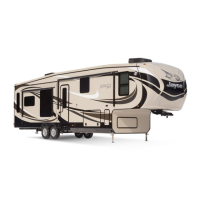
Fifth-Wheel
Travel Trailer
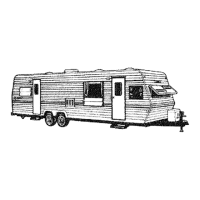
Conventional
Travel Trailer
Owners Manual
Model Year 2003
Go To Table of Contents

Table of Contents

Question and Answer IconNeed help?

Do you have a question about the Jayco Conventional Travel Trailer 2003 and is the answer not in the manual?

Overview

This document is the owner's manual for a Jayco Conventional Travel Trailer and Fifth-Wheel Travel Trailer, Model Year 2003. It provides comprehensive information on the function, technical specifications, usage, and maintenance of these recreational vehicles.

Function Description

The Jayco Travel Trailer and Fifth-Wheel Travel Trailer are designed to provide a comfortable and enjoyable recreational experience. These vehicles serve as mobile living spaces, equipped with various systems and appliances to support extended stays in different locations. They are intended for towing by a suitable tow vehicle, offering flexibility for travel and camping. The manual emphasizes safety, proper operation, and regular maintenance to ensure the longevity and reliability of the RV.

Important Technical Specifications

The manual details several critical technical specifications for both conventional and fifth-wheel travel trailers.

  • Weights and Cargo Capacity: This section is crucial for safe operation. It includes:

    • GVWR (Gross Vehicle Weight Rating): The maximum permissible weight of the trailer when separated from the tow vehicle.
    • UVW (Unloaded Vehicle Weight): The weight of the trailer as manufactured at the factory when separated from the tow vehicle, including full LP gas, but excluding fresh water, fuel, and cargo.
    • CCC (Cargo Carrying Capacity): The maximum weight of all liquids, supplies, and personal belongings that can be carried. This is calculated as GVWR minus UVW.
    • GCWR (Gross Combination Weight Rating): The maximum allowable weight of the trailer and tow vehicle combined.
    • Specific examples are provided, such as a trailer with a GVWR of 9,330 lbs., UVW of 8,330 lbs., and CCC of 1,000 lbs.
    • The manual stresses the importance of never exceeding the GVWR, GAWR (Gross Axle Weight Rating), or tire capacities.
  • Tires:

    • The manual includes a tire chart with tire sizes, load ranges, and maximum load per tire for various trailer models (e.g., ST205/75R15, ST225/75R15, ST235/80R16).
    • It specifies recommended tire pressures and emphasizes regular checks for proper inflation.
    • Information on wheel lug torque requirements is provided, with a chart detailing torque values for different wheel sizes (e.g., 14-inch, 15-inch, 16-inch) across three stages of tightening.
  • LP Gas System:

    • The LP gas system operates appliances like the furnace, water heater, refrigerator, and cooking range.
    • It uses two 20-pound (30 or 44 liters) or 30-pound (66 or 100 liters) LP gas cylinders in a recessed compartment or housing.
    • The system includes a two-stage regulator to maintain consistent pressure.
    • Safety warnings regarding LP gas leaks, carbon monoxide, and proper ventilation are extensively covered.
  • Electrical System:

    • 12-Volt DC System: Powers various components, including interior lights, water pump, slideout motors, and the refrigerator's control board. The system is supplied by a 12-volt deep cycle battery, which is charged by the tow vehicle or a converter when connected to shore power.
    • 120-Volt AC System: Powers high-demand appliances like the air conditioner, microwave, and electrical outlets. It requires connection to an external 120-volt AC power source (shore power) or a generator.
    • GFCI (Ground Fault Circuit Interrupter): Protects against electrical shock in wet areas.
    • Converter: Converts 120-volt AC to 12-volt DC to power 12-volt systems and charge the battery.
    • Auxiliary Battery (Dealer Installed Option): Provides additional 12-volt power.
    • Fuse and bulb charts are included for troubleshooting.
  • Plumbing System:

    • Fresh Water System: Includes a fresh water tank, water pump, and city water connection for potable water supply.
    • Sanitizing and Filling the Potable Water System: Detailed instructions for sanitizing the fresh water system with a bleach solution.
    • Water Heater: Operates on LP gas and/or 120-volt AC, providing hot water for sinks and showers.
    • Wastewater Systems: Includes a gray water tank (for sink and shower water) and a black water tank (for toilet waste). Instructions for draining and sanitizing these tanks are provided.
  • Appliances:

    • Furnace: LP gas-fired, provides heating for the living space.
    • Refrigerator: Operates on LP gas or 120-volt AC, with specific models like the "Aqua Magic® Starlite/Galaxy/Aurora" and "N611/N841 Series."
    • Water Heater: LP gas and/or 120-volt AC operation.
    • Oven/Range: LP gas-fired for cooking.
    • Microwave Oven / Convection Oven (Option): 120-volt AC powered.
    • Air Conditioner (Option): 120-volt AC powered for cooling.
    • TV Antenna: Retractable, with instructions for raising, lowering, and connecting to a TV.
    • Monitor Panel: Displays levels for fresh water, gray water, black water, and battery voltage.
    • BBQ Grill (Option): External LP gas connection for an outdoor grill.

Usage Features

  • Towing and Hitching:

    • Detailed instructions for hitching and unhitching both conventional and fifth-wheel travel trailers.
    • Emphasizes the importance of using a weight distribution hitch for conventional trailers and proper fifth-wheel hitch installation.
    • Warnings about exceeding gross vehicle weight rating (GVWR) and gross axle weight rating (GAWR).
    • Guidance on safe towing practices, including pre-trip checks, braking, and turning.
    • Breakaway switch operation for emergency braking if the trailer separates from the tow vehicle.
  • Slideout Room Operation:

    • Instructions for extending and retracting slideout rooms, which expand the living space.
    • Manual override procedures in case of electrical failure.
    • Warnings about obstructions and ensuring the area is clear before operation.
  • Setting Up Your Travel Trailer:

    • Procedures for leveling the trailer using stabilizer jacks.
    • Connecting to shore power, fresh water, and sewer systems.
    • Instructions for preparing the LP gas system for use.
  • Carbon Monoxide Detector:

    • Provides continuous monitoring for carbon monoxide.
    • Instructions for testing the detector and actions to take if an alarm sounds.
  • Fire Extinguisher:

    • Location and proper use of the fire extinguisher.
    • Maintenance checks for readiness.
  • Plumbing System Operation:

    • Instructions for sanitizing the fresh water system.
    • Operating the water pump and city water connection.
    • Draining and winterizing the plumbing system to prevent freezing.
    • Toilet operation and waste tank management.
  • Appliance Operation:

    • Detailed instructions for operating the furnace, refrigerator, water heater, oven, and other appliances.
    • Safety precautions for LP gas appliances.
  • Battery System:

    • Information on the 12-volt DC battery, including charging and maintenance.
    • Battery isolator for preventing the tow vehicle battery from being drained.
  • Exterior Features:

    • Care and maintenance of exterior aluminum, fiberglass sidewalls, exterior roof, and windows.
    • Instructions for cleaning and protecting exterior surfaces.

Maintenance Features

  • Warranty Registration: Instructions for registering the warranty to ensure coverage.

  • Service Procedures: Guidance on obtaining service from dealers and factories, including warranty service.

  • Owner's Responsibility: Emphasizes the owner's role in regular maintenance and inspections.

  • Maintenance Checklist: Comprehensive checklists for daily, weekly, monthly, and annual maintenance tasks.

    • First Trip: Checks for LP gas leaks, carbon monoxide detector, battery water level, tire pressure, running lights, safety chains, brakes, and fresh water tank.
    • First Two-Hundred Miles: Checks wheel nuts and brakes.
    • Each Trip: Checks for LP gas detector, battery water level, tire pressure, running lights, safety chains, brakes, and fresh water tank.
    • After Every Tire Change: Tightens wheel nuts to specified torque values.
    • Daily: Recharges battery and ensures LP gas detector operation.
    • Weekly: Checks LP gas detector, tire pressure, and brakes.
    • Monthly: Cleans and lubricates the coupler, checks fire extinguisher, and tests the ground fault circuit interrupter (GFCI).
    • Every Three Months or 3,000 Miles: Compares water heater pilot flame with ideal flame, checks refrigerator door seals, inspects LP gas lines, sanitizes fresh water system, checks wheel nuts, examines tires for wear, lubricates chassis, checks electrical connections, inspects and reseals exterior, lubricates the leveling gear, lubricates the bearing surface, lubricates the antenna, and lubricates the slideout gear.
    • Every Six Months or 6,000 Miles: Cleans drains, checks pipe connections, lubricates moving parts, cleans and lubricates stabilizer jacks, inspects for cracks, dents, or distortion, inspects and reseals exterior, lubricates the leveling gear, lubricates the bearing surface, lubricates the antenna, lubricates the slideout gear, and lubricates the wheel hub.
    • Every Year or 12,000 Miles: Lubricates moving parts, cleans entry water strainer, checks exhaust connections, rotates fluorescent tubes, replaces battery on carbon monoxide detector, inspects and seals exterior, lubricates the leveling gear, lubricates the bearing surface, lubricates the antenna, lubricates the slideout gear, and repacks wheel bearings.
  • Wheel Bearings: Instructions for inspection, lubrication, and replacement.

  • Brakes: Maintenance of brakes and brake linings.

  • LP Gas System: Inspection of LP gas lines and components.

  • Appliances: Cleaning and maintenance of appliances.

  • Sealants: Regular inspection and resealing of exterior sealants to prevent water intrusion.

  • Clearance Lights, Entrance Door, Roofs: Inspection and maintenance.

  • E-Z Lube Axle: Specific lubrication procedures for axles.

  • Storage: Recommendations for preparing the RV for storage, including winterization.

  • Refueling Generator (Option): Instructions for refueling and safety warnings.

  • Microwave Oven / Convection Oven (Option): Maintenance guidelines.

  • Rubber Roof: Care and cleaning of the rubber roof.

The manual also includes a section on "Care of Body Components," covering exterior aluminum, fiberglass sidewalls, exterior roof, doors, windows, vents, furniture, cushions, bedspreads, window treatments, shower curtain and liner, tire covers, vinyl floor, wood floor, bathroom tubs, lavatory sinks, carpeting, countertops, and hardware and sink or shower fixtures. This section provides cleaning and maintenance tips for each component to preserve the RV's appearance and functionality.
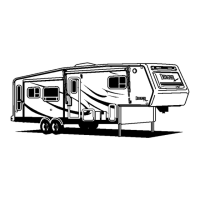
Jayco Conventional Travel Trailer 2003 Specifications

General IconGeneral
BrandJayco
ModelConventional Travel Trailer 2003
CategoryCaravans
LanguageEnglish

Related product manuals