47
to determine the plants’ requirements and the corresponding correct dosing of the fertiliser. Afterwards, you
can gradually change over to routine measurements carried out at longer intervals. Values of around 5 to 10
mg/l are generally required for good plant growth. In aquariums with a high rate of illumination of around 1 W/l
illumination intensity and higher, the value should be between 10 and 30 mg/l. Higher potassium values in
aquarium water favour growth of green blanket weed.
Remedial measures for fresh water:
Potassium concentration too low (< 5 mg/l): Fertilisation with JBL Ferropol, JBL ProScape Fe +Microelements
and daily fertilisation with JBL ProScape K Macroelements in particular.
Potassium concentration too high (> 20 mg/l): Repeat the measurement after 24 hours. If the value is still too
high, perform a corresponding water change.
Remedial measures for salt water
We advise against targeted follow-up dosing of potassium in salt water due to its toxicity for diverse organisms.
Regular partial water changes ensure a balanced potassium concentration in a marine aquarium.
Instructions for use of the Potassium Test in fresh water:
1. Rinse the measuring tube and the tube for reading the potassium content with the water to be tested
several times.
2. Use the enclosed syringe to ll the measuring tube with 15 ml of sample water.
3. Add 10 drops of Reagent 1 and mix by agitating.
4. Add 1 large level measuring spoon (broad end of the enclosed double-ended spoon) of Reagent 2 and
agitate gently for approx. 30 seconds until the powder has dissolved. The water turns a whitish, cloudy
colour. Let set for 1 minute and then shake gently once more.
5. Place the tube for reading the potassium content on the cross of the color card.
6. The following procedure should be carried out in light, diffuse light. The turbid water is lled in as long as the
tube for reading until the cross on the color card through the haze from above is no longer visible from the
measuring tube.
7. The potassium content can now be read on the scale of the measuring tube (bottom of the meniscus).
Instructions for the Potassium Test in salt water:
1. Dilute the aquarium water you wish to test 1:30 with potassium-free water or distilled water (e.g. JBL Dest),
e.g. ll 10 ml to 300 ml.
2. The other steps correspond to the instructions for fresh water.
3. Multiply the test result by a factor of 30.
Our tip for ecologically minded users:
All reagents for the JBL Test Sets are commercially available as reasonably priced rells!
Storage:
Store in a cool (+5 °C to +25 °C ) and dry place.
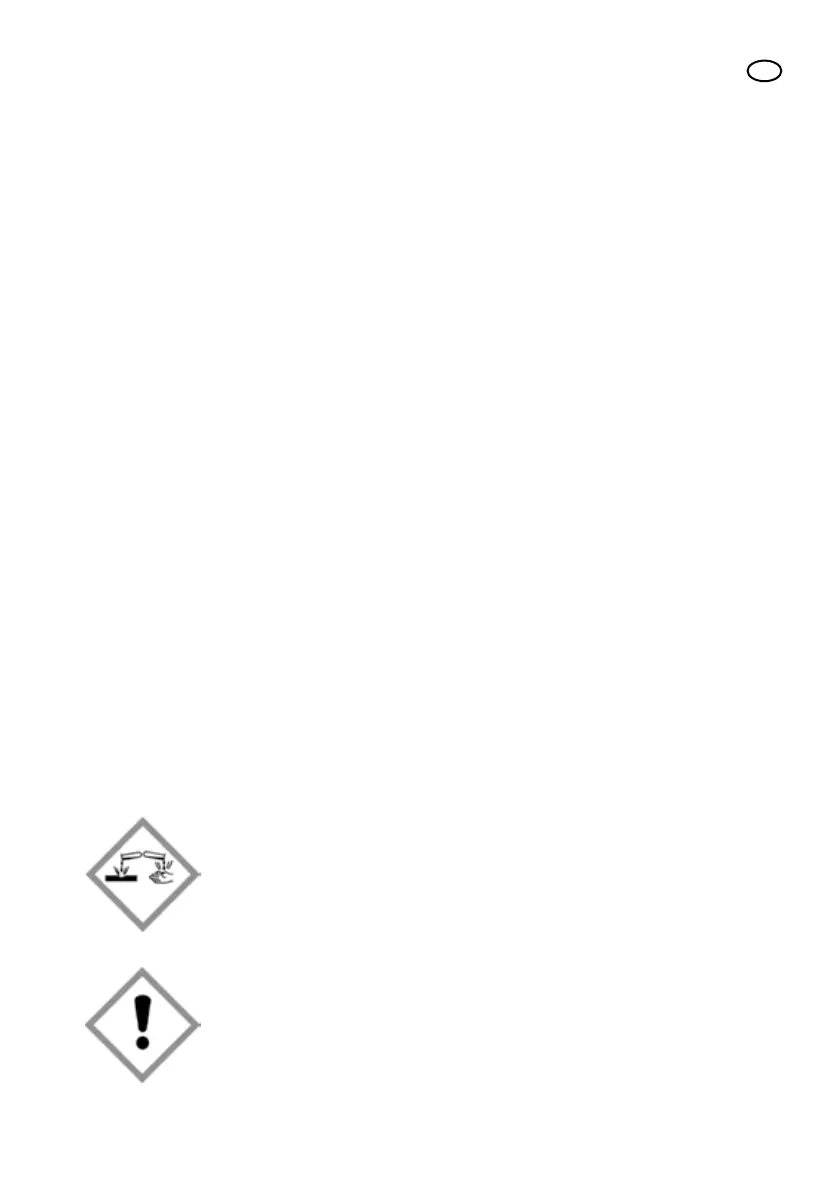
Warning and safety notices reagent 1:
Danger
Causes severe skin burns and eye damage. If medical advice is needed, have product
container or label at hand. Keep out of reach of children. Wear protective gloves/protective
clothing/eye protection/face protection. IF IN EYES: Rinse cautiously with water for
several minutes. Remove contact lenses, if present and easy to do. Continue rinsing.
Immediately call a POISON CENTER or doctor/physician.
Warning and safety notices reagent 2:
Attention
Causes serious eye irritation. If medical advice is needed, have product container or label
at hand. Keep out of reach of children. Wear protective gloves/protective clothing/eye
protection/face protection. IF IN EYES: Rinse cautiously with water for several minutes.
Remove contact lenses, if present and easy to do. Continue rinsing.
GB


 To Next Page
 Loading...