Jinma Tractor Introductory User Guide July 2007 Page 21
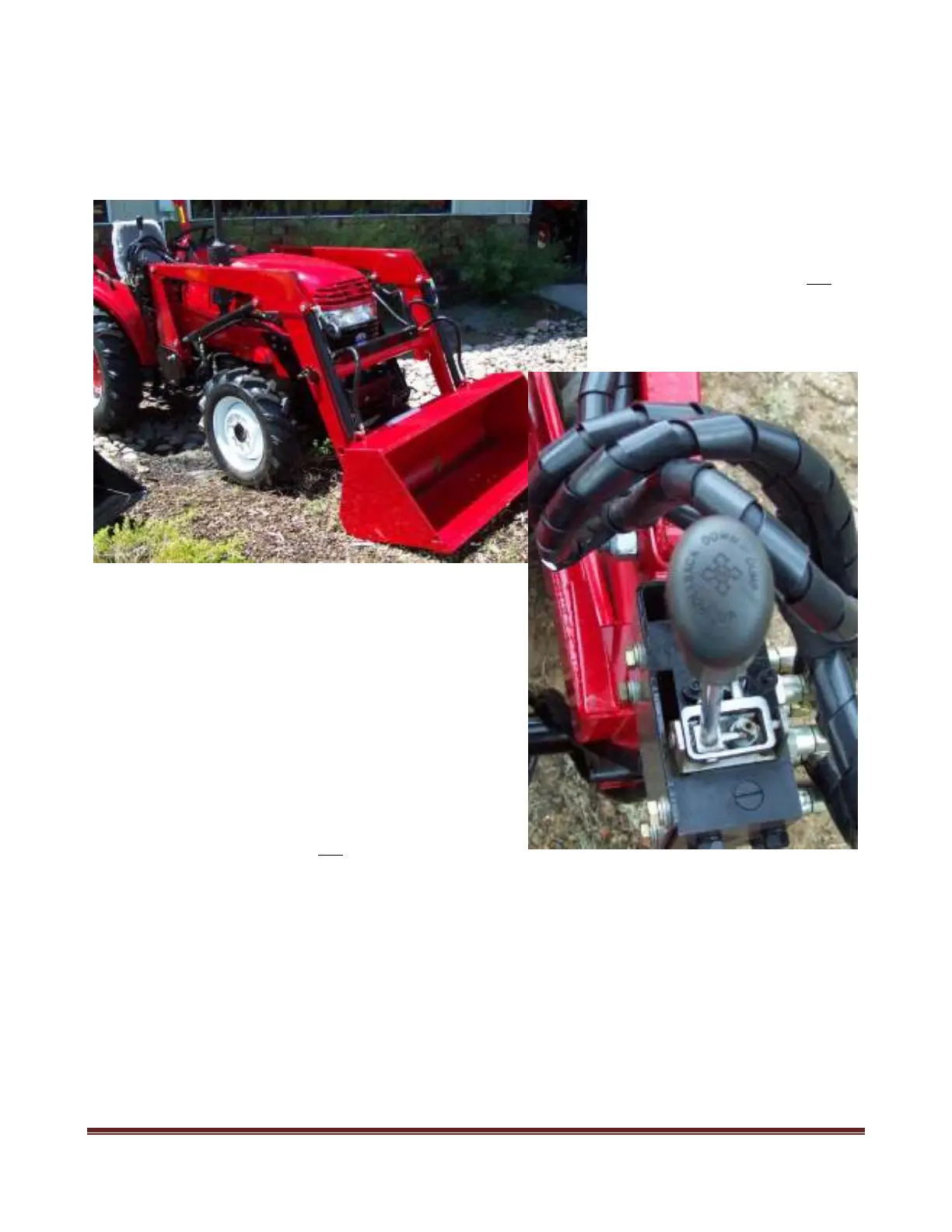
The most common use of the hydraulic system for the front of the tractor is to power a Front-End Loader (or
similar device) which can pick up materials and transfer these materials to another location. A Front-End
Loader (FEL) is physically attached to stationary locations on the tractor. It is also attached to the hydraulic
system. There is a control valve (see
picture below) which comes with the
Front-End Loader and which controls
the operation of the loader bucket
(raises and lowers the bucket and
tilts
the bucket up or down).
To do work with a Front-End Loader,
you must coordinate the operation of
the bucket with the forward motion of the tractor. As a
simple example: In order to pick up a pile of dirt, you would
position the bucket at the bottom of the pile with the bottom
of the bucket parallel to the ground. Then you would use the
forward gears of the tractor to move the tractor forward into
the pile of dirt to fill the bucket. With the bucket full then
you would tilt the bucket up so the dirt stays in the bucket.
Then you would raise the bucket into the air so you can move
the tractor to the location where the dirt will be dumped. (In
doing an operation of this type and depending on the weight
being moved, you may set the hand throttle higher than slow
to provide more hydraulic power to the Front-End Loader.)
For the hydraulic system to work properly it is important to
use good quality hydraulic fluid and
keep the hydraulic fluid
reservoir full. While hydraulic fluid does not freeze, the fluid does become “thicker” at lower temperatures.
That means that the performance of the system will be reduced at colder temperatures until the hydraulic fluid
heats up from the work being done. Therefore, in colder weather operate the attachment at a lower work level
until the hydraulic system warms up; as there is not a hydraulic fluid temperature gage you will have to learn
this from experience. (Note: Remember that hydraulic fluid leaks can either be on the tractor itself or on the
attachment; check both areas for leaks.)


 To Next Page