Need help?
Do you have a question about the John Crane 4620P and is the answer not in the manual?
Mandatory instructions for personnel handling seals and product use.
Refer to family instructions; do not excessively compress seal before or during installation.
Wet seals operated without lubrication can cause damage, noise, and reduced life.
Decommissioning, safe removal, and reconditioning of seals.
Information on creating the optimum environment via piping.
Take precautions for toxic fluids and do not exceed operating limits.
Ensure free shaft rotation and properly vent the seal chamber.
Thorough venting of seal faces is essential for long seal life.
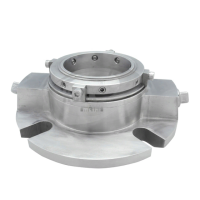
This document describes the installation, operation, and maintenance of John Crane Standard Cartridge Seals, specifically covering models 4610, 4615, 4620P, 5610, 5610D, 5610L, 5610P, 5610Q, 5610VL, 5610VQ, 5611, 5611L, 5611Q, 5615, 5615L, 5615Q, 5620, 5620D, 5620P, 5620VP, 5620V, 5625, 5625P, EZ-1, FFET, SB1, SB1A, SB2, SB2A, and SBW. These mechanical seals are precision products designed for use in rotating equipment to minimize process fluid emissions.
The primary function of these seals is to provide a reliable sealing solution for rotating shafts, preventing leakage of process fluids to the atmosphere or ground. They are engineered to operate in various conditions, including those involving hazardous or toxic fluids, requiring appropriate precautions for containment. The design emphasizes long life and environmental responsibility, aiming to reduce waste, prevent pollution, and preserve valuable materials through the use of high-quality, durable components.
For proper usage, it is crucial to adhere to the installation instructions meticulously. The seal must only be used in technically perfect condition and operated within its recommended performance limits. Any deviation from the intended application or performance limits requires consultation with John Crane. Before installation, the machine must be checked for proper alignment of the driver or motor, and all gland plate nuts/bolts and screws must be securely tightened. Setting spacers, if present, must be removed after the seal is in its final working position and the drive collar socket set screws are tightened. The shaft should rotate freely by hand.
Piping and connections, especially for seal recirculation/flush, heating, or cooling requirements, must be correctly installed and unused ports safely plugged. For liquid lubricated seals, proper venting of the seal chamber and adequate liquid lubrication are essential to prevent overheating, scoring, and reduced seal life. Dry running or operation without adequate liquid lubrication can lead to squealing noises and damage.
Maintenance of these seals primarily involves periodic visual external inspection to monitor emission levels. As no maintenance is possible while installed, the seal should be replaced when emissions become unacceptable. It is recommended to keep a spare seal in inventory for immediate replacement. When decommissioning equipment, it must be made safe by isolating the driver, releasing pressure, draining liquids, venting gases, and removing chemicals. If the machine has handled toxic or hazardous fluids, thorough decontamination is mandatory before commencing work, as fluid can remain trapped within the seal chamber.
When removing the seal, care should be taken as it may be suitable for reconditioning. For cartridge seals, setting spacers must be refitted before removal. After removal, mechanical seals should always be serviced. John Crane strongly recommends returning used seals for rebuilding to as-new specifications, especially for non-contacting gas seals, to maximize reliability and minimize safety risks. Only genuine John Crane spare parts should be used for reconditioning.
Environmental aspects are a key consideration in the product's design. John Crane adheres to a "Design For the Environment" (DFE) principle, aiming to reduce waste, prevent pollution, and preserve materials. Fluorocarbon and PTFE components, if present, must never be burned or incinerated due to the highly toxic fumes and residues produced. If fluorocarbons are accidentally heated above 400°C/750°F, protective gloves should be worn as hydrofluoric acid may be present. Scrapped components should be handled with extra care due to potential contamination and recycled through local industrial recycling plants. All packaging materials are recyclable and environmentally friendly.
The installation process involves checking machine tolerances, lubricating the shaft, sliding the cartridge onto the shaft, positioning the barrier inlet ports, ensuring the gland plate sealing ring is in place, fitting and tightening gland plate fasteners, locking the shaft axially, and tightening drive collar socket set screws. Setting clips or spacers must be removed and stored for future use. Proper piping for flush, quench, and barrier liquids is critical, with specific plans provided for single and dual seals on horizontal and vertical shafts, as well as for hot processes and thermosiphon systems. Thorough venting of the seal faces is essential for long seal life, particularly for liquid lubricated seals.
The manual also provides guidance on fitting lubricants, emphasizing the use of lubricants compatible with the machine, ancillary equipment, and sealed product, applied sparingly. Socket set screw tightening torques are specified for different seal series and screw sizes to ensure correct assembly. Overall, the John Crane Standard Cartridge Seals are designed for safe and reliable operation when installed and maintained according to these comprehensive instructions, ensuring optimal performance and environmental responsibility.
 General
| Brand | John Crane |
|---|---|
| Model | 4620P |
| Category | Industrial Equipment |
| Language | English |


 To Next Page