This document is an installation manual for Jolywood N-type Mono-crystalline Double Glass Modules, specifically the M10 Double-glass module (HD108N/P) type. It provides comprehensive information regarding the installation methods, safety precautions, transportation, storage, unpacking, electrical installation, and maintenance of these photovoltaic (PV) modules.
Function Description:
The Jolywood N-type Mono-crystalline Double Glass Modules are photovoltaic modules designed to convert sunlight into electricity. These modules are built with a double-glass structure, enhancing their durability and performance. They are suitable for various solar power systems, including those installed in landscape or portrait orientations. The modules are designed to operate for more than 30 years under proper conditions, contributing to sustainable energy generation.
Important Technical Specifications:
- Module Type: N-type Mono-crystalline Double Glass Module (M10 Double-glass module, HD108N/P).
- Module Size: 1728mm x 1134mm x 30mm and 1722mm x 1134mm x 30mm.
- System Voltage: Maximum 1500V DC (according to the National Electrical Code).
- Cable Specifications: DC copper cable with a cross-sectional area of 4mm², insulation layer maximum work temperature up to 90°C, UV-resistant.
- Fuse Rating: Maximum 30A for series connection.
- Mechanical Load Capacity (Front/Back):
- Clamps along long frame (A=350mm±30mm, C-shaped steel parallel to long frame): Front ≤2400pa, Back ≤2400pa.
- Clamps along long frame (A=350mm±30mm, C-shaped steel perpendicular to long frame): Front ≤5400pa, Back ≤2400pa.
- Clamps along short frame (A=250mm±30mm, C-shaped steel parallel to short frame): Front ≤1200pa, Back ≤1200pa.
- Clamps along short frame (A=250mm±30mm, C-shaped steel parallel to long frame): Front ≤4800pa, Back ≤1200pa.
- Clamps along short frame (A=50mm~100mm): Front ≤1200pa, Back ≤1200pa.
- Clamps along long frame (A=50mm~100mm): Front ≤1800pa, Back ≤1800pa.
- Bolt Mounting (M8 x 1.25 (5/16") bolts):
- Yield strength of bolts and nuts: Not less than 450 MPa.
- Recommended torque: 16-20 Newton meters.
- Outer flat washer: M8 (A2-70) stainless steel (SUS304), outer diameter 20±2 mm, thickness 1.1-1.2 mm.
- Spring washer: Stainless steel, thickness 2.0±0.2mm.
- Application Level: Class A.
- Environmental Resistance: Tested for resistance to ammonia (near cowsheds), wet (coastal) areas, and areas with frequent sandstorms.
- Storage Conditions:
- Humidity: <70%.
- Temperature: -20°C to +50°C.
- Stacking: Less than 2 layers.
Usage Features:
- Installation Flexibility: Modules can be installed in either landscape or portrait orientation. Landscape installation is recommended to minimize shading effects from dust.
- Mounting Options: Modules can be mounted using clamps or bolts. Specific instructions and load capacities are provided for various clamp and bolt configurations, including those along the long or short frames, and with C-shaped steel parallel or perpendicular to the frames.
- Grounding: All module frames and brackets must be properly grounded in accordance with the National Electrical Code. Grounding can be achieved using third-party grounding equipment or by bolting to the support structure with appropriate grounding wires and hardware.
- Electrical Connections: Modules can be connected in series to increase voltage or in parallel to increase current. Proper polarity must be observed to prevent damage to bypass diodes. All wiring should be performed by qualified personnel using dry tools and protective measures. Cables and connectors must be corrosion-resistant, clean, and dry.
- Cable Management: Cables should be fixed or tied to avoid direct sunlight exposure, which can cause aging. They should be run in proper cable ducts and located away from water-prone areas to prevent issues like electric leakage and fire.
- Fuse Protection: Fuses should be connected to each non-grounded pole of the array. The maximum fuse rating is 30A, and the number of parallel connected arrays is affected by the module's maximum reverse current withstand.
- Unpacking Safety: Unpacking should be done by two or more people in a dry environment. Protective gloves should be worn to avoid injury and fingerprints on the glass. Modules should not be lifted by grasping the terminal box or lead wires. Unpacked modules should not be stacked at the project site without proper assembly.
- Transportation and Storage: Modules should be transported and stored in their original packaging. During transportation, packages should be fixed to prevent tumbling and stacking should not exceed two layers. Outdoor storage requires covering modules to protect them from moisture and rain, with the glass surface facing down on a soft surface.
Maintenance Features:
- Regular Visual Inspection: Modules in the array should be regularly inspected for damage such as broken glass, broken cables, or damaged junction boxes. Damaged modules must be replaced with the same type.
- Hardware Inspection: Check that all installed hardware is securely in place.
- Fuse Inspection: Verify that all array fuses in non-grounded poles are working properly.
- Electrical and Mechanical Connection Checks: Every 6 months, inspect electrical, grounding, and mechanical connections to ensure they are clean, safe, free from damage, and rust-free. Mountings should be properly tightened, and cables should be checked for tightness.
- Cleaning:
- Frequency: Cleaning is generally not required if power generation increases by less than 5% after cleaning. Regular trimming of vegetation is recommended to prevent shading.
- Conditions: Clean modules under irradiance of less than 200W/m². Avoid cleaning during windy, heavy rain, or heavy snow conditions. Do not use water with a large temperature difference from the air to prevent cracking.
- Water Quality: Use softened water if hard water is present. Water quality requirements include: PH 5-7, Chloride/salt content 0-3,000 mg/L, Turbidity 0-30 NTU, Conductivity 1500-3000 µs/cm, Total dissolved solids ≤1000 mg/L, Water hardness 0-40 mg/L. Demineralized water is preferred.
- Method: Water pressure on the glass surface should not exceed 700 kPa (14619.80 lb/ft2). Use soft parts, cloth, and mild detergent with water. Do not step on modules or splash water on the back of modules or cables. Steam cleaning machines are strictly prohibited.
- Substances: For difficult-to-clean substances like oil, use a non-friction neutral liquid cleaner. Avoid organic solvents containing alkali or acid, corrosive solvents, or hard objects.
- Post-Cleaning Inspection: After cleaning, modules should appear clean, bright, and free of stains, ash accumulation, scratches, or cracks. Module brackets should not be tilted or bent, and module terminals should be connected.
- Professional Maintenance: Maintenance should be carried out at least once a year by trained personnel wearing rubber gloves and insulated boots due to high system voltage.
- Troubleshooting: If a module does not work after installation, the installer should be notified immediately. For technical issues or claims, contact Jolywood's after-sales service team via their website.

 Need help?
 General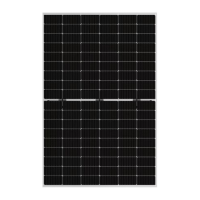

 To Next Page