The JorVet J1448M IV Fluid & Blood Infusion Warmer is a portable, lightweight, dry-heat device designed to warm IV fluids and blood transfusion fluids for veterinary use. It provides continuous heating during infusion and blood transfusion, ensuring fluids are administered at a temperature close to body temperature for better therapeutic results, especially for patients suffering from shock or susceptible to hypothermia.
Function Description:
The warmer operates by heating IV fluids as they pass through a channel on a heating plate. It does not control the fluid flow rate. The heating control board works to maintain a set temperature, which can be adjusted between 32°C and 42°C (89.6°F and 107.6°F). The device includes a main control system for managing and processing operations, a heating device with a heating sheet and exchanger, a temperature detection sensor, and an alarm system with both audio and visual alerts. An input and display interface allows for setting heating parameters, viewing temperature, and displaying alarm messages.
Important Technical Specifications:
- Heating Range: 95°-107.6° F (35°C-42°C)
- Flow Rates: 25ml/hr to 1000ml/hr
- Temperature Accuracy: ±1°C or ±1.8°F
- Warming-Up Time: Less than 2 minutes
- Overheat Protection: 48°C
- Applicable IV Set: Exclusive IV Set or standard single PVC IV Set (20 and 60 cl/ml, with an outer diameter of 3.4 ~ 4.5mm)
- Input Voltage: 100-240V
- Power: 85VA
- Device Dimension: 180mm x 70mm x 35mm
- Weight: ~0.2KG (without knob); 0.4KG (with knob)
- Display Type: LED
- Working Mode: Continuous working mode
- Protection Against: Electric shocks (internal power supply), leakage current, splashing of fluid.
- Environmental Conditions (Transportation and Storage): Temperature -20°C-55°C, Relative Humidity 10%~93%.
- Alarm Signal: Red flashing light visible up to 13 feet, audible alarm intensity of 45 decibels from 3 feet.
Usage Features:
The warmer is designed for ease of use by professional trained Veterinary Personnel.
- Mounting: It can be hung on an IV pole using a convenient strap and tightened with a knob. If an infusion pump is used, the warmer should be placed slightly under the IV line's exit from the pump.
- IV Set Installation: The IV set end is installed from top to bottom inside the heating path. There are three heating path options based on IV set length and heating requirement:
- Long Heating Path: Approximately 52cm heating length.
- Middle Heating Path: Approximately 31cm heating length.
- Short Heating Path: Approximately 25cm heating length.
- Power On/Off: The warmer automatically starts when the power cord is connected and turns off when disconnected.
- Temperature Adjustment: In standby mode, temperature can be set in 0.1°C increments using the Plus (+) and Minus (-) buttons.
- Temperature Unit Setting: The display can be toggled between Fahrenheit (°F) and Celsius (°C) units.
- Start/Stop Operation: The "Start/Stop" button initiates or stops the warming process. If temperature readjustment is needed, pressing "Start/Stop" again returns the unit to standby mode.
- Display: The LED display shows the set temperature, alarm messages (e.g., E001 for system error, E002 for door open), and indicates temperature unit.
- Running Light: Flashes during temperature rising and remains on once the set temperature is reached.
- Mute Button: Silences alarms for 2 minutes.
Alarm Types:
- Overheat Alarm: Sounds intermittently and flashes the overheat alarm light if the temperature increases 2°C above the set temperature. Requires stopping and restarting the warmer.
- Low Temperature Alarm: Sounds intermittently and flashes the overheat alarm light if the temperature decreases 2°C below the set temperature. Requires stopping and restarting the warmer.
- System Error Alarm (E001): Indicates a malfunction or incorrect operation. Restart the unit.
- Warming-Up Alarm: The running light flashes continuously until the desired temperature is reached, then stops flashing.
- Door Open Alarm (E002): Displays if the warmer's door is open while running. Clears once the door is closed.
- Alarm Levels: High-level alarms include System Error, Overheat, and Low Temperature. All other alarms are low-level.
Maintenance Features:
- Daily Check: Before first use, or every 6-12 months, perform a complete test of the unit to ensure proper functioning. This includes checking the environment and power standard, AC power cord integrity, mechanical functionality of the unit and accessories, alarm functionality, and temperature accuracy.
- Cleaning and Sterilization:
- Use a low-concentrated detergent or disinfectant and a soft cloth to wipe clean.
- DO NOT soak the unit in fluid/water or pour cleaning solution directly onto it.
- AVOID abrasive materials, dimethyl benzene, or acetone detergents.
- Always unplug the AC power before cleaning.
- Regular cleaning is recommended.
- Optional Detergents/Disinfectants: Warm water, diluted soapy water, diluted ammonia water, sodium hypochlorite (clean bleaching powder), H2O2 (3%), Ethanol (70%), Isopropyl Alcohol (70%).
- DO NOT Sterilize with ETO or Formaldehyde.
- Regular Maintenance Schedule:
- As per Hospital Cleaning Rules: Clean the surface completely before or after long-term storage.
- At least once per year: Test the AC power socket and cable, and test the temperature accuracy before use.
- Precautions:
- Do not dismantle or modify the warmer; maintenance must be done by authorized staff.
- Check the warmer daily and all functions if not used for a long period.
- Turn off and contact Jorgensen Laboratories if a malfunction occurs.
- Ensure a 5cm circumference around the unit for heat loss and air circulation.
- If moved to a location with temperature changes, do not use until condensation subsides.
- Avoid direct sunlight, strong light, heating installations, furnaces, humidifiers, chemicals, dust, humidity, water, shaking, or unflat surfaces.
- Avoid microwave interference.
- Ensure other devices near the warmer meet EMC standards. Mobile phones, X-Ray, or MRI can cause malfunction due to high-frequency radiation.
- Adding other accessories, sensors, or cables may increase electromagnetic emission and lower anti-electromagnetic interference.
- Do not place other equipment next to or overlap the warmer unless monitored to ensure proper function.
- The warmer must be maintained and installed in an environment compliant with the EMS Standard.
- Avoid operating the warmer during MRI or similar device operations to prevent breakdown from electromagnetic interference.
- CISPR Emission Standard equipment may interface the warmer.
- Temperature accuracy may be affected if the input signal range is lower than the specified lowest range.
- RF communication equipment may interfere with warmer performance.

 Need help?
 General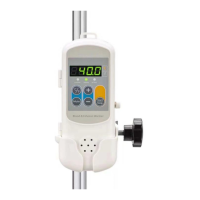

 To Next Page