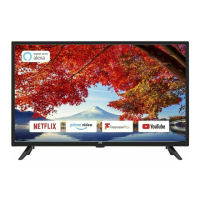
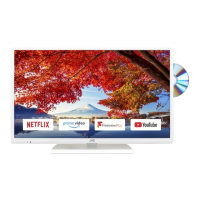
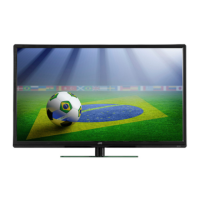
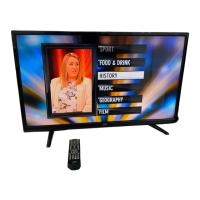
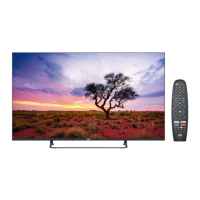
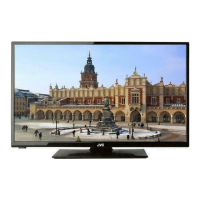
This document is a user guide for the JVC LT-32MAW200 HD LED TV, a 32-inch class (31.5-inch diagonal) television. It provides comprehensive instructions for installation, operation, and troubleshooting, ensuring users can maximize their viewing experience.
Function Description
The JVC LT-32MAW200 is an HD LED TV designed to deliver a complete viewing experience. It features a wide screen and LED backlight for enhanced picture quality. The television includes an integrated ATSC TV tuner, allowing for the reception of HDTV broadcast signals. Multiple HDMI inputs are provided for true digital connections, enabling users to connect various external devices such as DVD players, set-top boxes, gaming consoles, and camcorders. The TV also supports digital audio systems, allowing for connection to external audio equipment for an immersive sound experience.
Usage Features
The TV offers a user-friendly interface accessible via the remote control. The remote control allows users to power the TV on or off, directly access programs using number keys, and navigate through the on-screen menu. Key functions include adjusting sound levels (VOL+/-), muting audio (MUTE), displaying the channel list (CH.LIST), and changing the TV's input source (INPUT). Users can confirm selections with the ENTER button and exit menus with the EXIT button.
Picture settings can be customized through the PICTURE MENU, where users can adjust contrast, brightness, color, and sharpness. Different picture modes like Standard, Energy Saving, and Personal are available. For PC mode, advanced settings such as horizontal and vertical position, screen size, and phase can be fine-tuned. The AUDIO MENU allows for sound effect adjustments, offering various sound modes like Standard, Music, Movie, Sports, and Personal. Audio language options are available for ATSC/TV programming.
The TIME MENU provides settings for the sleep timer, time zone, and clock. The OPTION MENU includes language selection for the OSD (On-Screen Display), closed caption settings, a setup wizard, HDMI CEC controls, TTS (Text-to-Speech), and options to restore default settings or perform software updates via USB.
Channel management is handled in the CHANNEL MENU, where users can select between Air and Cable TV signals, perform auto scans for channels, and manage favorite channels. The TV also supports displaying JPEG files from a USB drive, allowing users to view photos directly on the screen.
The remote control includes dedicated buttons for quick access to specific functions:
- ASPECT: To change the picture aspect ratio.
- CC: To enable or disable the Closed Caption function.
- AUDIO: To change the audio language.
- SLEEP: To set the sleep timer.
- S.MODE: To access favorite channels in digital TV mode.
- P.MODE: To switch picture modes.
- GUIDE: To display the program guide for DTV channels.
- INFO: To display current information on the screen.
- HDMI1, HDMI2, HDMI3: To directly access the respective HDMI inputs.
- COMP: To directly access the Component input.
- COLOR KEYS: Reserved for future functions.
Maintenance Features
The user guide emphasizes several maintenance and safety features to ensure the longevity and safe operation of the TV. For the remote control, it is recommended to remove batteries if the remote will not be used for an extended period to prevent leakage. Users are advised not to mix old and new batteries or different types, and to dispose of used batteries responsibly in a recycling bin. The batteries should not be exposed to excessive heat.
For the TV itself, proper installation is crucial. The guide provides instructions for base stand assembly and wall mounting, recommending professional assistance for wall mount installation to prevent damage or injury. Adequate ventilation is essential, and users are warned not to block ventilation openings or place the TV near heat sources. The TV should not be exposed to dripping or splashing liquids.
Troubleshooting tips are provided for common issues such as no power, no picture, sound problems, distorted picture, and channel reception issues. These tips guide users through basic checks like power cord connection, antenna connection, volume settings, and remote control battery replacement. The guide also explains that certain visual artifacts like colored dots or breaking up pictures might be due to external interference or inherent properties of the LED screen, rather than a malfunction.
The manual also includes important safety warnings, such as not removing the back cover of the TV due to high voltages, and not placing the TV on unstable surfaces. It stresses the importance of using manufacturer-recommended cabinets or stands and securing the TV to prevent tipping, especially around children. The power cord should be protected from being walked on or pinched.


 To Next Page
 General