
 Need help?
Do you have a question about the Kärcher HDS 695 MX Eco and is the answer not in the manual?
Proper disposal of recyclable packaging materials at a recycling centre.
Responsible disposal of scrapped units and components to prevent environmental contamination.
Ensure engine oil, fuel, diesel, and petrol are handled and disposed of ecologically.
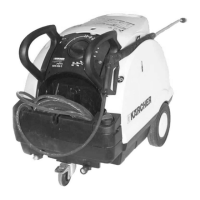
Diagram identifying all components of the high-pressure cleaner with numerical labels.
Detailed description of each numbered operating control and its function.
Links item numbers in instructions to the unit illustration for clarity.
Steps and safety checks required before initial operation of the unit.
Procedures for checking oil, filling scale inhibitor, fuel, and cleaning agent.
Connecting the handgun, nozzle, and hose to units without a hose reel.
Connecting handgun, hose reel, and hoses for units equipped with a hose reel.
Connecting the water supply hose and drawing water from a tank or container.
Guidelines for safe and correct connection to the mains power supply, including impedance and rotation checks.
Step-by-step process to start the unit, including setting controls and checking indicator lamps.
Adjusting the temperature regulator for optimal cleaning with hot water or steam.
Adjusting the operating pressure and flow rate using the control spindle and regulator.
Proper use and concentration of cleaning agents, controlled by the metering valve.
Applications of the cleaner and safety precautions for specific environments like petrol stations.
Selection of appropriate nozzles for different cleaning tasks and dirt types.
General steps for cleaning, including applying detergent and removing dirt effectively.
Detailed instructions for operating with cold water, hot water, and steam, including temperature and pressure settings.
Procedures to follow after using hot water or steam, including cooling the unit.
Flushing the unit with cold water after cleaning agent use to remove residue.
Comprehensive steps for safely shutting down and securing the unit after use.
Steps for draining and winterizing the unit for storage or periods of non-use.
Recommended schedule for regular checks and servicing of unit components.
Specific tasks for cleaning strainers and filters to ensure optimal performance.
Instructions for cleaning strainers in water connections and filters in the cleaning agent suction hose.
Guide to safely changing the unit's oil, including disposal instructions.
Diagnosing and resolving issues indicated by indicator lamps, unit not running, and other operational faults.
Diagnosing and resolving problems related to the unit failing to build pressure, including air and water supply.
Troubleshooting unit leaks and intermittent switching on/off, checking high-pressure system integrity.
Resolving problems with the unit not drawing cleaning agent or the burner failing to ignite.
Identifying causes for the unit not reaching the desired operating temperature, such as pressure or soot.
Details on warranty coverage, terms, and the process for making a claim through authorized service centers.
Explanation of the functions of the overflow valve, safety valve, low water protection, and motor protection switch.
Information regarding brief voltage drops during startup and potential impact on other appliances.
Lists the EC directives that the machine complies with for safety, health, and environmental requirements.
Details the harmonised and national standards that the product adheres to for quality and safety.
Comprehensive table detailing technical specifications for various Kärcher models, including performance and dimensions.
Detailed illustration showing the exploded view of the unit components with part numbers for reference.
 General
| Voltage | 400 V |
|---|---|
| Frequency | 50 Hz |
| Hose Length | 10 m |
| Lance Length | 1050 mm |
| Hot Water Capability | Yes |
| Fuel Type | Diesel |
| Sound Pressure Level | 75 dB(A) |
| Fuel Tank Capacity | 25 l |
| Nozzle | Triple nozzle (0°/25°/40°) |
| Detergent Tank Capacity | 20 l |



 To Next Page
