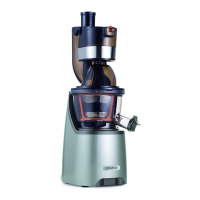
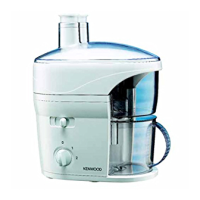
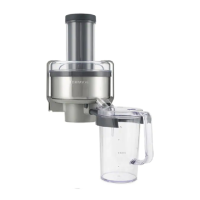
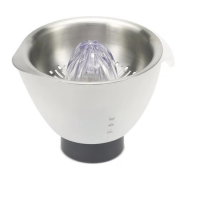
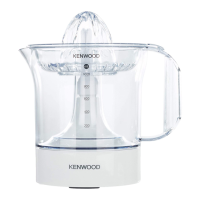
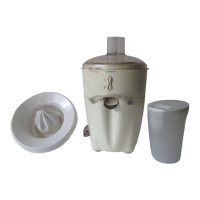
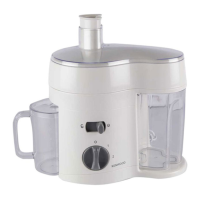
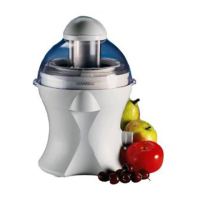
This document provides instructions for the KENWOOD TYPE: JMP60 juicer, a slow juicer designed for extracting juice from various fruits and vegetables. It also includes information on a sorbet attachment, if supplied.
Function Description:
The Kenwood JMP60 is a slow juicer, also known as a masticating juicer, which operates by crushing and pressing fruits and vegetables at a low speed to extract juice. This method is generally believed to preserve more nutrients and enzymes compared to high-speed centrifugal juicers, as it generates less heat and oxidation. The juicer is designed for domestic use and is capable of processing a wide range of produce, from soft berries to harder fruits and leafy greens. It features a pulp stopper to control the flow of pulp and an anti-drip stopper to prevent leaks. The inclusion of a reverse function helps to clear blockages, ensuring continuous operation. A clip-on sieve is provided for those who prefer a smoother juice, allowing for additional filtration of pulp. The sorbet attachment, when supplied, expands the appliance's functionality to create frozen desserts from frozen fruits and yoghurts.
Important Technical Specifications:
While specific power ratings (e.g., wattage) are not detailed in the provided pages, the manual emphasizes that the appliance must be earthed and that the electricity supply should match the specifications on the underside of the appliance. The juicer is designed to conform to EC Regulation 1935/2004 regarding materials in contact with food. The juice jug has a capacity of 230ml (8 fl.oz.), and the manual recommends not exceeding three such glasses of juice per day unless accustomed to it.
Usage Features:
The juicer's assembly process is clearly outlined, starting with fitting the pulp stopper into the juicing bowl, then attaching the bowl to the power unit. The filter basket is placed into the wiper holder, followed by the scroll. The lid with the hopper is then secured, and the food pusher is inserted into the feed tube. The pulp container and juice jug are positioned under their respective spouts, and the anti-drip stopper must be in the open position before juicing.
Key usage tips include:
- Preparation: Thoroughly wash all fruits and vegetables. For hard foods, juicing at room temperature is recommended. Thin peels or skins do not need to be removed, but thick peels (e.g., oranges, pineapples, melons, uncooked beetroots) should be. Stones and hard seeds from fruits like cherries and plums must be removed. For pomegranates, the fruit should be opened, scored, and submerged in cold water to separate seeds from pulp.
- Feeding: Place small quantities of food at a time into the feed tube and push down slowly to maximize juice extraction. Avoid overfilling the feed tube or using excessive force, as this can damage the juicer.
- Operation: Switch on the juicer using the On/Off/Reverse switch. The wiper holder is designed to rotate during operation. After adding the last piece of food, allow the juicer to run to clear remaining juice from the bowl.
- Blockage Clearing: If food becomes jammed, switch to the 'O' (off) position, then press and hold the 'R' (reverse) button until the food is dislodged.
- Juice Quality: For a smoother juice, use the clip-on sieve, emptying it after processing approximately 1kg of fruit/vegetables.
- Health Recommendations: Do not drink more than three 230ml glasses of juice daily unless accustomed. Dilute juice for children with an equal amount of water. Dilute strong juices from dark green or red vegetables. Individuals with diabetes or low blood sugar should be mindful of the high fructose content in fruit juice.
- Sorbet Attachment (if supplied): This attachment replaces the wiper holder and filter basket. Frozen food items should be thawed for 5 to 10 minutes before processing. Whole fruits like apples, oranges, and kiwi can be cut to fit the feed tube and frozen in a single layer. Ingredients that have formed a solid mass during freezing should be broken up before processing. Frozen yoghurt cubes with chosen fruit can be processed to create an 'iced dessert'.
Maintenance Features:
Regular cleaning is crucial for the longevity and performance of the juicer.
- General Cleaning: Always switch off, unplug, and disassemble the juicer before cleaning. Clean all parts immediately after each use to reduce stains, especially from ingredients like carrots or leafy vegetables.
- Power Unit: Wipe with a damp cloth and dry. Never immerse the power unit in water.
- Pulp and Filter Outlets: Do not use sharp, pointed objects (like a knife) to clean the pulp or filter outlets, as this can damage the bowl. Use the tip of the cleaning brush handle for this purpose.
- Filter Basket: To aid in pulp and fibre removal, close the anti-drip stopper, switch the juicer on, pour approximately 300ml of water down the feed tube, operate for 20 seconds, then open the stopper to allow the water to flow out. Always clean the filter basket immediately after juicing. Use the supplied brush to clean the filter, rinsing under water until clear.
- Wiper Holder: The wipers within the filter holder can be removed for thorough cleaning. To reassemble, insert the upper/lower wipers into the gap of the filter holder and secure them, ensuring they are correctly fitted before reassembling the juicer.
Troubleshooting:
The manual includes a troubleshooting guide for common issues:
- Juicer not starting/operating: Check power supply, ensure all parts (juicing bowl, lid) are correctly aligned and locked.
- Juicer stopped during operation: Could be due to clogging in the filter/scroll or food pieces being too large. Use the reverse button to clear blockages. If overloaded/overheated, disassemble, clear, reassemble, and press the reset button (12) for 1-2 seconds.
- Juice leaking from underneath the bowl: Check if the pulp stopper is correctly fitted.
- No juice exiting the outlet: Ensure the anti-drip stopper is open.
- Too much pulp in juice: May be caused by filter/scroll clogging or processing very fibrous fruit/vegetables. Cut food into smaller pieces. Use the clip-on sieve for smoother juice and empty it after 1kg of produce.
- Wiper holder not rotating: Check if the filter or scroll are correctly located.
- Squeaking noise: Normal operation, but avoid operating the juicer empty.
- Staining on parts: Natural colouring from food. Rubbing with a cloth dipped in vegetable oil can help remove discolouration.
The appliance is designed and engineered by Kenwood in the UK and made in China. It is covered by a warranty that complies with legal provisions in the country of purchase. The document also provides important information regarding the correct disposal of the product in accordance with the European Directive on Waste Electrical and Electronic Equipment (WEEE), indicating that it should not be disposed of as urban waste but taken to a special local authority waste collection centre or a dealer.

 Need help?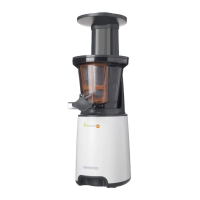

 To Next Page
 General