WARNING
If this chassis is equipped with an
Electronic Stability Control (ESC) and
is modified (for example, adding or re-
moving an axle, converting from a
truck to a tractor, converting from a
tractor to a truck, changing the body,
lengthening of the wheelbase and/or
frame, relocating frame components,
or modifying pneumatic or electrical
ABS/ESC harnesses) the ESC must
be evaluated by a qualified technician.
If you have any questions, contact
your authorized dealer. Failure to com-
ply may result in death, personal in-
jury, equipment damage, or property
damage.
Tires
Your tires are a very important part of your
vehicle’s whole braking system. How fast
you can stop depends mostly on how much
friction you get between the road and your
tires. Keeping your tires in good condition
is essential to the safe, efficient operation
of your vehicle. Regular, frequent
inspection and the right care will give you
the assurance of safe and reliable tire
operation. Here are some tips on
maintaining your tires.
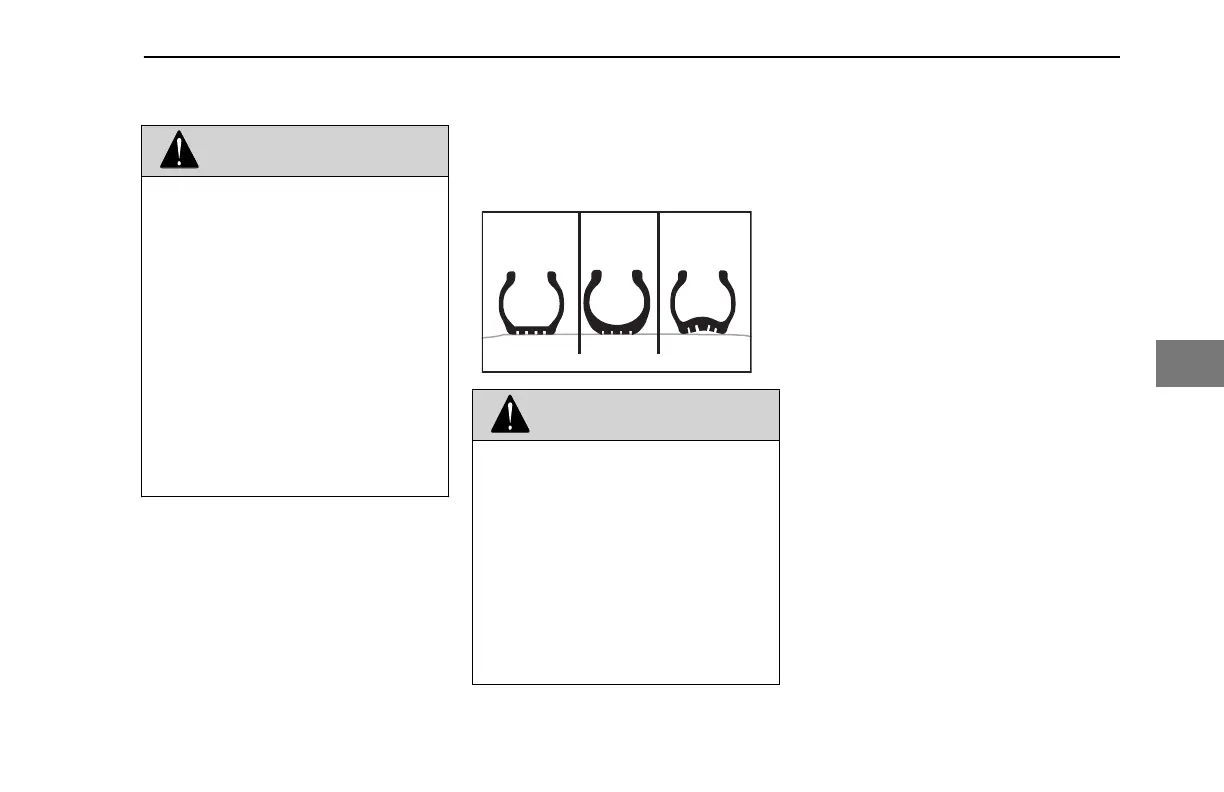
Proper
Over
Under
TREAD CONTACT WITH ROAD
WARNING
DO NOT repair damaged tires unless
you are fully qualified and equipped to
do so. Wheel and tire assemblies can-
not be worked on without proper tools
and equipment, such as: safety cages
or restraining devices. Have all tire re-
pairs performed by an expert. Stand
away from the tire assembly while the
expert is working. Failure to comply
may result in death, personal injury,
equipment damage, or property dam-
age.
Checking Inflation Pressure
Low pressure is a tire’s worst enemy.
Underinflation allows tires to flex
improperly, causing high temperatures to
build up. Heat causes early tire damage
such as flex break, radial cracks, and ply
separation. Low pressure may affect
control of your vehicle, especially at the
front wheels. Most tire wear problems are
caused by underinflation as the result of
slow leaks, so check tire pressure
regularly. Lower tire pressure does not
provide better traction on ice or snow. Give
your tires a visual test every day, and
check inflation with a gauge every week:
• When checking tire pressure,
inspect each tire for damage to
sidewalls, cuts, cracks, uneven
wear, rocks between duals, etc. If a
tire appears underinflated, check
for damage to the wheel assembly.
Don’t forget to check between dual
wheels. If you find wheel damage,
have an expert tire service repair it.
• Maximum tire pressure will be
indicated on the sidewall of a tire.
• Check pressure only when the tires
are cool. Warm or hot tires cause
pressure buildup and will give you
an inaccurate reading. So never
MAINTENANCE - Tires
Y53-1200-1L1 (05/2024) 329
5



 To Next Page