Maintenance
487
Remove the valve cap from the tyre
valve stem. Press the tyre gage firm-
ly onto the valve to get a pressure
measurement. If the cold tyre infla-
tion pressure matches the recom-
mended pressure on the tyre and
loading information label, no further
adjustment is necessary. If the pres-
sure is low, add air until you reach
the recommended amount.
If you overfill the tyre, release air by
pushing on the metal stem in the
centre of the tyre valve. Recheck the
tyre pressure with the tyre gage. Be
sure to put the valve caps back on
the valve stems. They help prevent
leaks by keeping out dirt and mois-
ture.
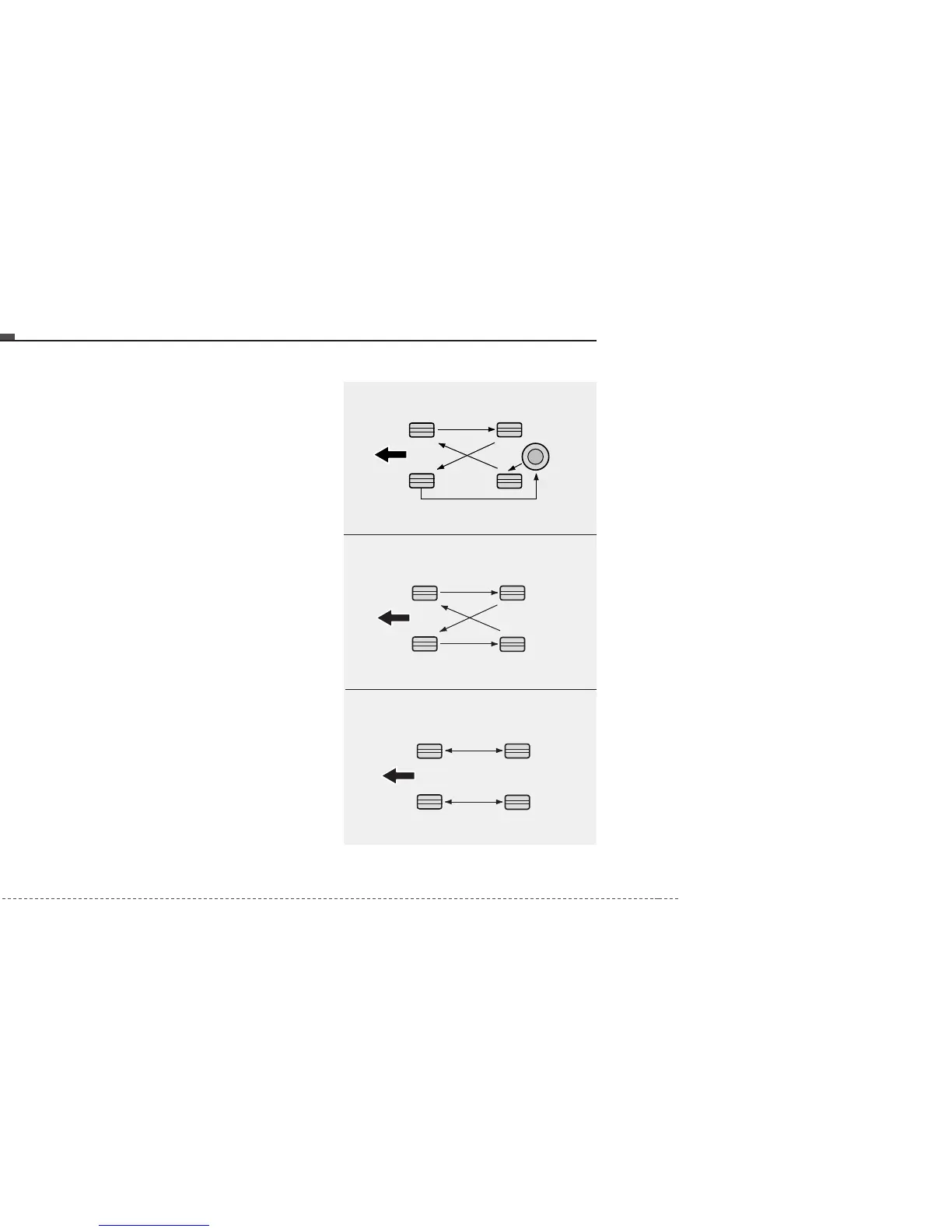
Tyre rotation
To equalize tread wear, it is recom-
mended that the tyres be rotated
every 12,000 km (7,500 miles) or
sooner if irregular wear develops.
During rotation, check the tyres for
correct balance.
When rotating tyres, check for
uneven wear and damage. Abnormal
wear is usually caused by incorrect
tyre pressure, improper wheel align-
ment, out-of-balance wheels, severe
braking or severe cornering. Look for
bumps or bulges in the tread or side
of tyre. Replace the tyre if you find
either of these conditions. Replace
the tyre also if you can see fabric or
cord. After rotation, be sure to bring
the front and rear tyre pressures to
specification and check lug nut tight-
ness.
Refer to Section 8, Specifications.
CBGQ0706
CBGQ0707
CBGQ0707A
Without a spare tyre
With a full-size spare tyre
Directional tyres (if equipped)



 To Next Page