The fundamental Thiele-Small calculations can be performed using a scientific calculator and a little
knowledge of algebra. However, it is important to note that the basic calculations have some factors aver-
aged or removed for simplicity, and the answers they give are only approximate. Your best bet is to use
known enclosure design data such as given here, or to use a computer program such as Leap along with
our published driver specifications to assist you in designing enclosures.
When you have completed your enclosure, it is important to make sure the speaker is at least close to
your design spec. For 100% certainty that everything is correct, you may want to measure the box tuning
frequency for vented enclosures. If you did the calculations by hand or with a simple computer program
(any program that requires only Qts, Vas, and Fs for enclosure performance calculations is simple), you will
definitely want to measure tuning frequency because the vent dimensions given by the calculations could
be off enough to reduce the speaker’s performance. Be sure to measure the tuning with the enclosure in
the vehicle, the acoustic environment of the speaker can also affect its tuning.
When designing an enclosure, it is best to follow what we call “The Design Sequence”. This is a simple,
three step process that can save you a lot of time and hair pulling!
The Design Sequence
1. Determine size of the enclosure.
2. Calculate and subtract driver, brace and port (if ported)
3. Finalize driver selection.
Step One: Determine size of enclosure.
This is the easy part. Get a tape measure and get in the vehicle. Consult your customer on exactly how
much space he or she is willing to give up for their system. They must understand, you have got to give in
order to get. In other words, if they want big bass they must be willing to give up space. Measure this area
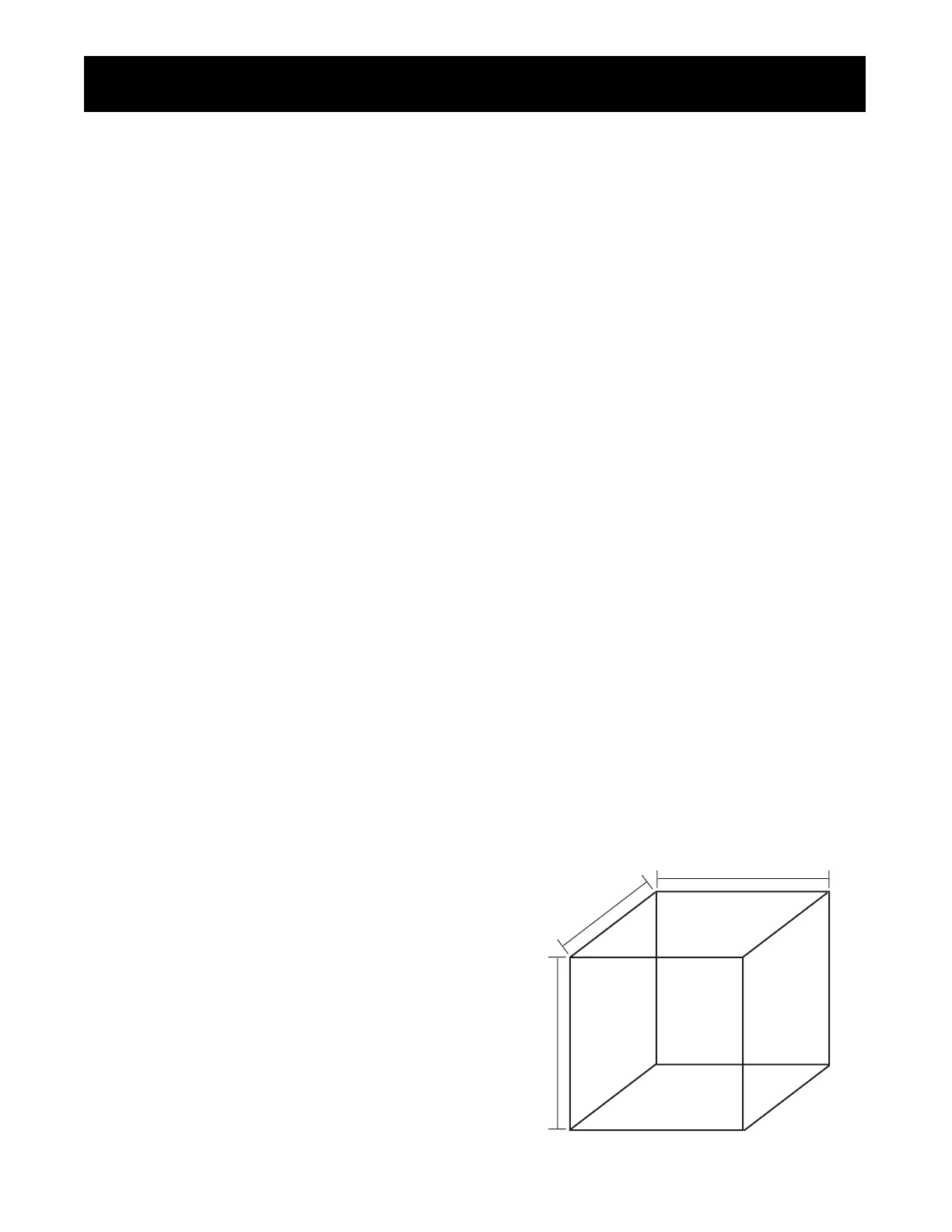
and write down the height, length and width dimensions in inches or fractions of a mile if you are really
good at math. A piece of paper is a good place to write these numbers down, but if you only have a piece
of MDF, remember not to throw it away or cut it up to make a piece of the box!
Now we’ll learn how to calculate volume for a cabinet from the dimensions we just took.
Let’s say that after we have subtracted golf bag, misc. shoes and bag o clothes we are left with the available
space that measures:
14” High 41” long x 14” wide
The formula for figuring volume is pretty simple.
Memorize it now (or for quick reference, Write it down on
the wall near the table saw) You will be using it so much it
will become mundane.
Height x Length x Width = Total Cubic Inches
Total Cubic Inches/ 1728 = Total Cubic Feet
Total Cubic Feet/ # of Drivers = Total Cubic
Feet Per Driver
Designing General Enclosures


 To Next Page
 Loading...