16 17
KWT-555-IML23 Kielder WT Ltd Kielder WT Ltd KWT-555-IML23
Charging The Battery Pack
CAUTION!
• The charger is designed to
operate on standard domestic
electrical power as shown
on the rating plate. Charge only on the
voltage indicated on the rating plate e.g.
230v/50Hz.
• Do not attempt to use it on any other
voltage or frequency rating!
• If the temperature of the battery pack is
extremely low, charging may automatically
stop to prevent degradation of the battery.
• The ambient temperature range for
charging is between 0°C and 40°C.
The battery pack may not work if the
temperature is outside these parameters.
• When charging a cool battery pack (below
0°C) in a warm place, leave the battery
pack at the place and wait for more than
one hour to warm up the battery to the
ambient temperature.
• Allow the charger to cool in between
charges, when charging more than two
battery packs consecutively.
• Do not insert your ngers onto the contact
area at any time.
• To prevent the risk of re or damage to the
battery charger, do not cover vent holes
on the charger and the battery pack.
• Unplug the charger when not in use.
• Take care to ensure metal objects such
as nails, coins etc are kept away from
the charger. Metal objects can make a
connection from one terminal to another
and could short the charging unit.
• Ensure that the terminals on the charger
are free of foreign objects such as dust
and water. If any dirt is found on the
terminals clean the terminals before
charging the battery pack.
• When the charger is not in use, store in
a location to prevent dust or dirt from
contaminating the terminals which may
cause a fault or short circuit.
• Position the charger on a work bench or
similar in a well ventilated location and
ensure that the charger cannot be covered
by workshop cloths etc.
• Plug the charger into a suitable power
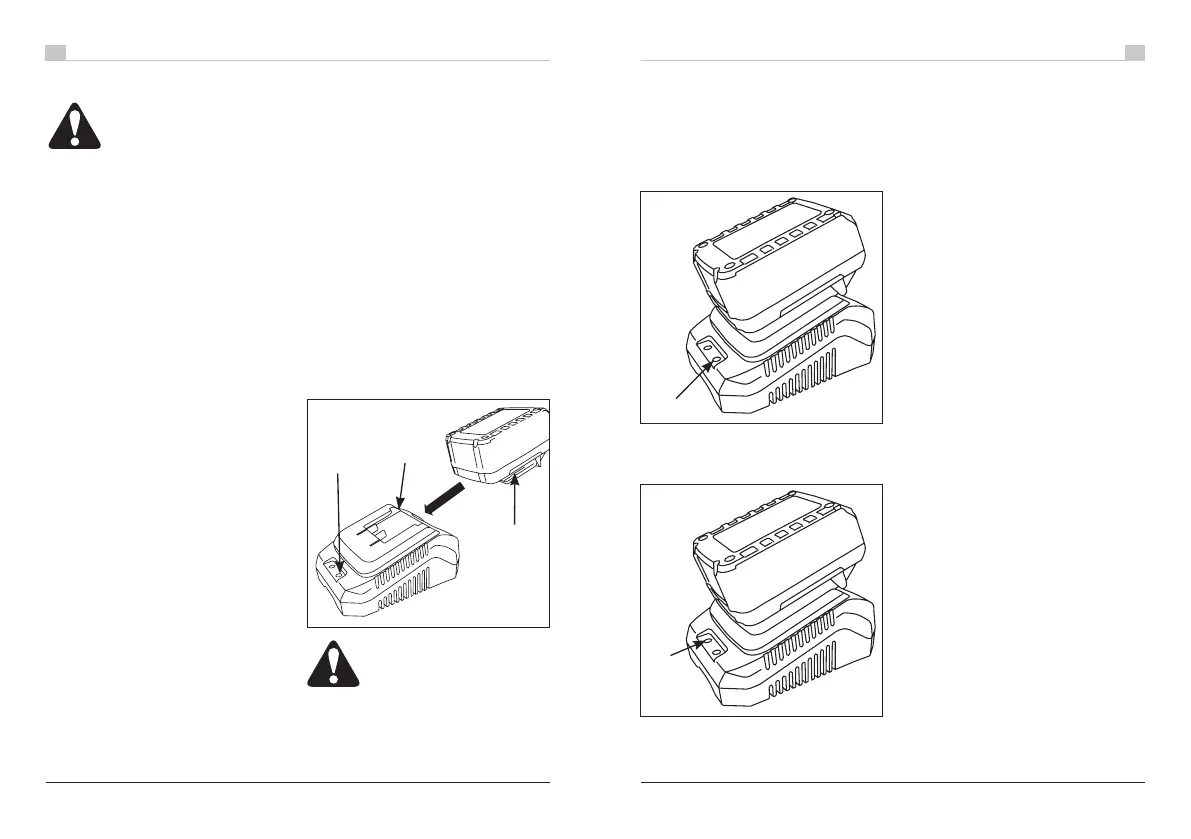
socket. The green LED (L) will illuminate.
Note:
Sparks may be produced when the plug is
inserted into the power supply but this isn’t
a problem in terms of safety.
• Connect the battery pack into the
charger; line up the alignment channels
on the battery (M) with the corresponding
channels on the charger (N) and slide the
battery into place.
WARNING!
When a battery becomes
discharged due to prolonged
use or exposure to direct
sunlight or heat, always allow the battery
pack to cool down before recharging. This
will allow the battery to be recharged to its
full capacity.
(L)
(M)
(N)
• The red charging LED (O) will be
illuminated during charging. When
charging is completed an internal
electronic switch will automatically trigger
to prevent overcharging. Charging may
not start if the battery pack is warm (such
as immediately after sustained use).
• When charging is complete the red LED
(O) will extinguish and the green LED will
illuminate (K).
• Once charging is complete slide the
battery out of the charger, disconnect the
charger from power supply and store.
Charging Times
Normal charging time for the KWT-003-
25 5.0Ah battery pack is between 75-
90mins, but this can vary depending upon
circumstances.
• If the battery pack is not fully discharged
it may take less than 75 minutes to
recharge.
• If the battery pack and ambient
temperature are cold then recharging
could take up to and over 90 minutes.
• If the battery pack is very hot it may not
recharge. Allow it to cool right down
before beginning the charging process.
Charging Indicator
This charger is designed to detect
problems that can sometimes arise with
rechargeable battery packs. The status
of the LED’s can alert the operator to a
potential problem with the battery pack.
This will be either by the Green LED
staying illuminated when a discharged
battery is connected i.e the charger
remains in standby mode, or by the red
LED failing to turn o at the end of a
charge. If any issue is suspected with the
battery do not attempt to re-charge or
use it.
Note:
If battery pack failure is suspected, we
recommend that the operator inserts
a new battery of known quality into
the charger to check that the charger
is working correctly. If the new battery
charges correctly, then the original battery
is probably defective and should be sent
for safe recycling. If the new battery
pack displays the same problems as the
original, have the charger tested by a
qualied person.
(O)
(L)


 To Next Page
 Loading...