
 Need help?
Do you have a question about the King Air C90GTi and is the answer not in the manual?
Provides basic and background information needed to learn airplane operation and performance details.
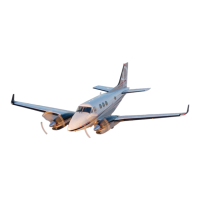
Presents an overall view of the airplane, including external familiarization, cabin arrangements, and cockpit layout.
Describes the airplane's systems and components, focusing on pilot management for normal and emergency operations.
Details the high-performance, conventional tail, pressurized, twin-engine turboprop airplanes.
Describes the location and operation of the cabin entry airstair door and associated provisions.
Details the location and release mechanism of the emergency exit door.
Describes the pressurized cabin interior, including the flight deck, passenger seating, and baggage area.
Describes the flight deck layout, instruments, controls, and seating arrangements for crew efficiency and comfort.
Explains the airplane's control surfaces (ailerons, elevators, rudder) and their operation.
Provides procedures for securely mooring the airplane, including protective covers and wheel chocks.
Describes ground turning radii, considerations for propeller windstream, and danger areas.
Outlines aircraft maintenance, servicing intervals, and consumable materials requirements.
Information on established service facilities and parts support for the Super King Air.
Details the preflight inspection procedure divided into five areas for thorough aircraft examination.
Explains the importance of understanding the electrical system for pilot workload and emergency situations.
Describes the airplane's electrical system and components, focusing on pilot needs for normal and emergency operations.
Details the 28-VDC system, battery, starter/generators, and basic electrical symbols used.
Explains the protection of the electrical system from high current flow using three current sensors and relays.
Describes bus isolation features protecting generator buses and center bus by high-current sensing.
Explains the automatic removal of excess loads from generator buses when power source is reduced to battery only.
Details the lead-acid battery location and its role in powering aircraft systems directly.
Describes the dual-purpose engine-driven units used as starters and generators.
Explains the control of generator phase of operation through switches and generator control units (GCUs).
Describes the external power receptacle and its connection to the electrical system when the airplane is parked.
Details the avionics master switch and its function in removing power from avionics equipment.
Explains the DC power distribution via circuit breaker panels and procedures for tripped breakers.
Describes the aircraft lighting system, comprising cockpit-controlled interior and exterior lights.
Presents a description and discussion of the airplane lighting system and its components.
Details the overhead light control panel arrangement and controls for all lighting systems in the cockpit.
Describes the controls for indirect fluorescent cabin lights and NO SMOKING/FASTEN SEAT BELT signs.
Details switches for landing lights, taxi lights, wing ice lights, navigation lights, and others on the pilot's subpanel.
Shows the lighting system circuit breakers located on the pilot's small circuit breaker panel.
Explains warning and caution indicators as the first indication of trouble or malfunction.
Presents a description and discussion of the warning, caution, and advisory annunciator panel.
Describes the annunciator panel, PRESS-TO-TEST switch, MASTER WARNING and CAUTION flashers.
Details the function of the red MASTER WARNING flasher and its operation.
Explains the bright and dim modes of illumination intensity for annunciators and flashers.
Covers testing annunciator lamps and procedures for replacing faulty lamps.
Lists warning, caution, and advisory annunciators and the cause for their illumination.
Emphasizes the essential nature of fuel system understanding for competent and confident aircraft operation.
Describes the physical layout of fuel cells, boost pumps, transfer pumps, crossfeed, and firewall shutoff valves.
Details automatic fuel flow from wing tanks to center section tank and engine-driven fuel pump.
Explains the wing fuel system, consisting of bladder-type tanks, fuel transfer pumps, and crossfeed.
Describes the submerged boost pump in the nacelle tank, its pressure supply, and associated annunciators.
Details the automatic fuel transfer system from wing tanks to nacelle tanks and the transfer pump operation.
Explains the capacitance gauging system, total usable fuel capacity, and fuel flow indicators.
Describes the fuel system venting through recessed ram scoop vents and heated external vents.
Details the firewall shutoff valves, their location, control switches, and function.
Explains crossfeeding fuel authorization, the crossfeed line, and its control valve.
Describes the fuel purge system designed to consume residual fuel in manifolds during engine shutdown.
Explains the capacitance-type fuel quantity indication system and its components.
Details fuel drain locations and procedures for checking fuel contamination during preflight.
Provides practices for fuel handling, including takeoff limitations, water content, and settling time.
Lists approved fuel grades and additives, including kerosene and aviation gasoline limitations.
Provides procedures for filling aircraft fuel tanks, including static grounding and nacelle tank servicing.
Describes procedures for draining fuel daily to remove water or contamination from low points.
Highlights the importance of in-depth knowledge of powerplants for good power management and safety.
Presents a description and discussion of the Pratt and Whitney PT6A turboprop engines.
Details the PT6A turboprop engines, their ratings, terms, and installation.
Explains power measurement in Equivalent Shaft Horse Power (ESHP) and Shaft Horse Power (SHP).
Defines basic terms for understanding PT6A engine operations: N1, N2, NF, P3, ITT, T5.
Describes the PT6 family of engines as free-turbine, reverse-flow engines driving a propeller through planetary gearing.
Details how inlet air enters the engine, passes through compressor stages, and mixes with fuel.
Identifies points in the engine by station numbers for pressure and temperature references.
Explains the engine's division into gas generator and power sections for ease of maintenance.
Describes the pneumatic piston valve that prevents compressor stalls and surges in low N1 rpm range.
Details the engine start switches and the two spark-type igniters providing positive ignition during engine start.
Describes engine-driven accessories mounted on the accessory gearbox, driven by the compressor shaft.
Explains the dual function of the PT6A engine lubrication system: cooling/lubricating and oil supply.
Describes the fuel control system, including boost pump, heat exchanger, and fuel control unit.
Details the FCU's primary purpose of metering fuel amounts to engine nozzles and its operation.
Explains the FUEL PRESS annunciator and its illumination conditions.
Describes how fuel flow is sensed and indicated on the Engine Indicating System (EIS).
Discusses the use of oil-to-fuel heat exchanger and anti-icing additives for fuel temperature control.
Explains how propeller levers and power levers adjust engine power and propeller rpm.
Details engine temperature and torque limitations and indications on the Engine Indicating System (EIS).
Describes the propellers and associated system, including controls, operation, reversing, and feathering.
Explains the operation and testing of the propeller system on the Beechcraft King Air C90GTi and C90GTx.
Details the advantages of Hartzell propellers, including lower tip speeds, less noise, and less vibration.
Explains blade angle measurement and its difference near the hub versus the tip.
Describes the primary governor's function in converting a variable-pitch propeller into a constant-speed propeller.
Explains how the low pitch stop prevents propeller blades from reducing airflow over the empennage.
Details the power lever linkage geometry and its effect on the Beta valve position for ground handling.
Provides protection against excessive propeller speed in the event of primary governor malfunction.
Explains how the fuel topping governor controls overspeed conditions by limiting propeller rpm.
Describes the power levers' function in establishing gas generator rpm and fuel flow.
Explains how propeller rpm is set by the position of the propeller control levers.
Details the automatic feathering system for immediate oil pressure dumping upon engine failure.
Describes the system that automatically matches propeller rpm and blade position.
Explains the fire protection system consisting of engine fire detection and fire extinguishing systems.
Presents a description and discussion of the airplane fire protection system and components.
Describes the fire detection system designed to provide immediate warning in the event of fire.
Details the rotary switch test for the fire detection system, verifying circuitry and detector function.
Describes the optional engine fire extinguishing system with explosive cartridges and controls.
Explains the test functions for the fire extinguisher system, checking bottle charge and squib firing.
Explains the necessity of pneumatic and vacuum systems for various aircraft operations.
Presents a description and discussion of the pneumatic and vacuum systems.
Details the pneumatic system supporting surface deice, rudder boost, cabin door seal, and pressurization.
Describes bleed air obtained from engine compressor sections, regulated at 18 psi.
Explains vacuum derivation from a vacuum ejector for flight instruments and pressurization control.
Describes how pneumatic air inflates door and escape hatch seals after liftoff.
Details the system protecting leading edges of wings and stabilizers by inflating inflatable boots.
Covers conditions conducive to icing and systems available to prevent ice formation on the airplane.
Describes the airplane's ice and rain protection systems, including location, controls, and usage.
Details seven pilot-controlled anti-ice/deice systems, including surface, propeller, and windshield systems.
Explains how inflatable boots on leading edges remove ice accumulation by pneumatic pressure.
Describes the propeller electric deice system, including heated boots, slip rings, and timer.
Details the electrical heating elements in windshields for ice protection and temperature controls.
Explains the dual wipers mounted on pilot's and copilot's windshields, driven by a single electric motor.
Describes the inertial vane system installed on each engine to prevent ice or foreign object ingestion.
Details the ice vane and bypass door controls located on the pilot's subpanel.
Explains the automatic ignition system providing automatic ignition to attempt a restart should a flame-out occur.
Describes how the lip around each air inlet is heated by hot exhaust gases to prevent ice formation.
Details the pitot masts containing heating elements to protect against ice accumulation.
Explains anti-ice systems protecting fuel flow through lines to the engine and preventing fuel freezing.
Describes the stall warning vane and plate with heat to ensure against freeze-up during icing conditions.
Details wing ice lights provided to illuminate leading edges to determine ice buildup in icing conditions.
Provides precautions for winter or icing conditions, including inspection and airspeed requirements.
Focuses on teaching participants to operate environmental systems effectively and within their limitations.
Presents a description and discussion of air conditioning, bleed-air heating, and fresh air systems.
Describes devices controlling the pressure vessel's environment, including air circulation and temperature control.
Explains fresh-air ventilation from bleed-air heating and ram-air scoop sources.
Details how engine bleed air is used for cabin pressurization and heating.
Describes the electrical heater with heating elements and its protection against overload.
Explains cabin cooling provided by a refrigerant gas vapor-cycle refrigeration system.
Details environmental controls on the copilot's subpanel for automatic or manual system control.
Explains the importance of pressurization for cabin environment and reducing the need for supplemental oxygen.
Presents a description of the pressurization system, its components, and controls.
Details the system designed to provide a cabin environment with sufficient oxygen for normal breathing.
Describes how bleed air from engines is used for pressurization, heating, and ventilation.
Explains the adjustable cabin pressurization controller and its function in modulating the outflow valve.
Details the functional check of the pressurization system during runup using the cabin pressurization switch.
Describes cabin pressure altitude changes during climb and the system's response to maintain selected altitude.
Provides guidance for setting cabin altitude selectors for descent and preparation for landing.
Explains the unit that controls bleed air flow for pressurization, heating, and ventilation.
Aids pilot in proper handling of landing gear operation, emergency procedures, and brake system.
Presents description and discussion of landing gear system, controls, limits, and indicators.
Details landing gear assemblies, components, and operation for extension and retraction.
Describes the landing gear doors, their mechanical actuation, and closure mechanisms.
Explains the direct linkage to rudder pedals for nosewheel steering when the nose gear is down.
Details the electrically controlled and hydraulically actuated landing gear system.
Describes how landing gear assemblies are extended and retracted by a hydraulic power pack.
Explains the caution annunciator for low hydraulic fluid level and its testing.
Warns the pilot about landing gear not down and locked during specific flight regimes.
Shows maximum speeds and operating range of flaps (VFE), including approach and beyond approach speeds.
Describes the system aiding pilot in maintaining directional control during engine failure or power variation.
Details the non-assisted hydraulic brake system with multi-disc dual hydraulic brakes.
Explains the dual brakes plumbed in series, with each rudder pedal attached to its own master cylinder.
Describes the parking brake system utilizing regular brakes and a set of valves.
Details brake fluid supply and reservoir maintenance, including checking connections for seepage.
Explains automatic brake lining adjustment and periodic checks for dimension 'A' not reaching zero.
Provides checks for brakes and tire-to-ground contact for freeze lock-up in cold weather.
Familiarization with flap system operation and limits for optimum performance in takeoff, approach, and landing.
Presents a description and discussion of the four-segment Fowler-type flap system, its controls, and limits.
Details the flap system, including electric motor drive, gearbox, driveshafts, and actuators.
Explains flap selection to three positions: up, approach (15°), and down (43°).
Warns the pilot that the landing gear is not down and locked during specific flight regimes.
Shows maximum speeds and operating range of flaps (VFE), including approach and beyond approach speeds.
Describes the system aiding pilot in maintaining directional control during engine failure or power variation.
Describes the Collins Pro Line 21 avionics system as an integrated flight instrument, autopilot, and navigation system.
Covers the Electronic Flight Instrument System (EFIS) and its components.
Details the LCD Adaptive Flight Displays (AFD) containing flight and navigation information.
Explains the PFD's function to show airplane attitude and dynamic flight data.
Describes the attitude display on the PFD, including flight director, autopilot, and navigation information.
Explains the function of the four line select keys (LSK) used in conjunction with the information being viewed.
Details the airspeed display on the PFD as a moving tape design with digital readouts.
Indicates altitude and vertical speed, with a moving tape design and digital readout.
Shows heading, current on-side navigation source, radar or terrain, and traffic information.
Provides system integration and operating logic for most systems that make up the Pro Line 21 avionics.
Describes the digital Air Data Computers that convert dynamic flight data into electronic signals for airplane systems.
Provides pitch, bank, and magnetic heading data to the onside displays.
Explains AFD reversion and how to provide reversionary support to each other in case of display failure.
Details the Air Data Computer (ADC) switch for reversion capabilities and handling ADC failures.
Describes independent pitot and static systems provided for pilot and copilot flight indications.
Explains the digital outside air temperature (OAT) gage and its indications in Celsius and Fahrenheit.
Describes the stall warning system consisting of a transducer, computer, and warning horn.
Details the integrated flight director (FD) and autopilot (AP) system, including yaw damping and pitch trim.
Explains how each FGC is supplied with input from AHRS, navigation data, FGP selections, servo, and ADC.
Describes the FGP controls for both FGCs, and the AP/FD mode selections made on this panel.
Explains the AP button's function for autopilot engagement and its conditions for activation.
Details the YD button's control of yaw damper engagement, which may be engaged without the autopilot.
Controls which flight guidance computer (FGC) supplies flight director commands and attitude data to the autopilot.
Explains how mode buttons on the FGC control flight director modes and cross-side compatibility.
Controls display of flight director command bars on the respective PFD.
Controls reference values for vertical speed and pitch angle, used for automatic level-off.
Describes the basic lateral mode, automatically activated if no other lateral mode is selected.
Controls selection of heading mode, annunciating HDG on the PFD when active.
Simultaneously controls heading bugs shown on PFDs and MFD, and provides digital readout of selected heading.
Resets the heading bugs to the current heading.
Limits the maximum bank angle to 15°, automatically selected when climbing through 18,500 feet.
Controls selection of the approach mode, determined by the active navigation source.
Serves as a control for communication and navigation radios, FMS, and limited display control for PFDs/MFD.
Displays a pictorial of the flight, centered on airplane position with current heading at top.
Details TCAS traffic display on PPOS or overlayed on map format, controlled via CCP.
Provides display of select weather maps, depending on chosen weather provider (e.g., NEXRAD, ECHO TOPS).
Describes the Universal Weather provider using VHF datalink and satellite antenna for weather images.
Contains status pages indicating settings and configurations for the IFIS system.
Explains how IFIS system can optionally contain Jeppesen instrument charts loaded via dataloader.
Provides multiple flight management functions, including lateral and vertical navigation.
Describes VNAV capabilities for creating and displaying a descent profile or glidepath.
Explains how GPS signal correction improves vertical and lateral navigation accuracy.
Describes correction forms: Ground-based (GBAS) and Satellite-based (SBAS).
Details WAAS integrity messages, departures, enroute, arrivals, and approaches.
Explains messages appearing when SBAS integrity degrades during an LPV approach.
Describes SBAS corrections for lateral guidance and automatic FMS use of RAIM.
Provides quick reference for WAAS FMS operations, including approach loading and SBAS provider selection.
Guides on choosing the appropriate SBAS provider for world region (WAAS, EGNOS, MSAS, GAGAN).
Details procedures for loading an LPV approach, same as non-LPV approach.
Describes messages and procedures when SBAS system fails during an LPV approach.
Provides procedures for loading LNAV/VNAV or LNAV approaches, with or without WAAS.
Outlines messages and actions when SBAS signal fails during LNAV/VNAV or LNAV approaches.
Explains messages displayed on CDU and PFD when navigation integrity falls outside tolerance.
Details RAIM prediction necessity when outside SBAS coverage or during SBAS NOTAMs.
Focuses on teaching flight crewmembers to use the oxygen system safely and effectively.
Presents a description and discussion of the oxygen system, including its principle of operation and controls.
Explains current FAR requirements for oxygen availability above 25,000 feet.
Describes the constant-flow type system, each mask plug with its own regulating orifice.
Details crew masks that deliver oxygen upon inhalation and can be donned with one hand.
Describes cabin plug-in masks adjustable to fit the average person with minimum oxygen leakage.
Explains oxygen supply from a cylinder mounted behind the aft pressure bulkhead.
Describes the shutoff valve regulator and its actuation by a remote push/pull knob.
Explains preflight check for oxygen availability and duration computation.
Provides a sample computation for oxygen duration based on cylinder pressure and number of people.
Shows the average time of useful consciousness available at various altitudes from hypoxia onset.
Describes training programs directed toward understanding and surviving the flight environment.
Details oxygen system servicing via a filler valve and precautions for purging or servicing.
Describes the miscellaneous systems in the King Air C90GTi and C90GTx aircraft.
Details the forward-facing toilet in the aft cargo area, its electrical-flushing type, and controls.
Describes the optional relief tube located in the cabin sidewall and cockpit, with a valve lever for use.
Refers to appropriate abbreviated checklists or the FAA-approved Aircraft Flight Manual for procedures.
Covers flap system operation and limits for optimum performance in takeoff, approach, and landing.
Details crosswind takeoff, instrument takeoff, and obstacle clearance takeoff procedures.
Presents specific flight profiles graphically depicted on the following pages.
Covers flaps-up, single-engine, and crosswind approaches and landings.
Explains windshear avoidance and procedures for recovery from potential windshear situations.
Describes the crew resource management program, including crew concept briefing and altitude callouts.
Provides adherence to SOPs for enhancing situational awareness and performance.
Defines terms like PIC, PF, and PM for crew coordination and responsibilities.
Details the briefing to be completed before initiating an IFR approach, covering departure, weather, and emergencies.
Outlines the crew coordination approach sequence for IFR approach initiation.
Provides standard altitude callouts for enroute, precision, and non-precision approaches.
Specifies altitude callouts for enroute phases, including prior to level off and deviations.
Details altitude callouts for precision approaches at minimums, decision height, and 100 ft AGL.
Provides altitude callouts for non-precision approaches at minimums, MDA, and MAP.
Describes callouts for IAS, heading, altitude, and CDI deviations and required pilot responses.
Describes the Collins Pro Line 21 avionics system as an integrated flight instrument, autopilot, and navigation system.
Covers the Electronic Flight Instrument System (EFIS) and its components.
Details the LCD Adaptive Flight Displays (AFD) containing flight and navigation information.
Describes MFD display options for weather radar, navigation, and terrain information.
Explains the vertical panels adjacent to each PFD that provide primary pilot interface for flight displays.
Details the system integrating avionics for most systems within the Pro Line 21 avionics suite.
Describes the digital Air Data Computers converting flight data into electronic signals for airplane systems.
Provides pitch, bank, and magnetic heading data to the onside displays.
Explains AFD reversion and how to provide reversionary support to each other in case of display failure.
Describes the digital OAT gage located on the left sidewall, displaying indicated temperature in Celsius/Fahrenheit.
Details the system consisting of a transducer, lift computer, and warning horn for stall detection.
Describes the integrated flight director (FD) and autopilot (AP) system, including yaw damping and pitch trim.
Explains FGC input from AHRS, navigation data, FGP selections, servo, and ADC.
Details FGP controls for FGCs, managing AP/FD mode selections.
Explains the AP button's function for autopilot engagement and its conditions for activation.
Controls yaw damper engagement, which may be engaged independently of the autopilot.
Controls which flight guidance computer (FGC) supplies flight director commands and attitude data.
Explains FGC mode buttons, providing independent guidance and cross-side compatibility.
Controls display of flight director command bars on the respective PFD.
Sets vertical speed or pitch angle reference values for automatic level-off.
Describes the basic lateral mode, automatically activated if no other lateral mode is selected.
Controls selection of navigation mode, displaying NAV source and bearing information.
Select the course to be flown on the respective PFD; knob is not active when FMS is active source.
Automatically selects a direct course to the active waypoint, centering the CDI.
Basic vertical operating mode that activates when no other vertical mode is active.
Controls selection of the vertical speed mode, showing VS reference value on the PFD.
Controls Vertical Navigation mode selection, annunciated on PFD as 'V'.
Controls the Flight Level Change mode for climb or descent towards preselected altitude.
Selects the IAS or Mach reference value used by the FLC mode.
Switches between Mach mode or IAS mode for FLC Speed Bug and FLC reference.
Holds the aircraft at the current barometric altitude or preselected altitude.
Allows the pilot to select a target altitude for automatic level off.
Details switches on control wheels affecting FGS operation.
Disengages the autopilot and yaw damper; interrupts electric trim operation.
Details the location of the remote mount nose section for pitot static system.
Explains how ground communications electric bus provides power from the main aircraft battery.
Describes static electrical charge buildup and discharge via static wicks.
Details the WXR-852 radar system installed in the Pro Line 21 King Air C90GTi.
Controls display of weather radar menus on the PFD.
Controls ground clutter suppression selection of the weather radar.
Controls the antenna tilt angle, with selected angle displayed.
Controls the scanning range shown on the MFD map and radar pictorial.
Puts weather radar in basic detection mode, displaying precipitation returns in four colors.
Explains how to set radar gain at NORM, ±1, ±2, or ±3.
Allows weather radar to provide detailed ground returns, changing colors for features.
Describes the CVR recording audio from audio panels, PA system, and cockpit area microphone.
Details the ELT designed to provide beacon location to aircraft after a crash.
Uses GCAM for predictive and reactive alerts for terrain, obstructions, and altitude callouts.
Describes cautions and warnings from basic ground proximity, generating PFD messages and aural alerts.
Provides look-ahead protection for terrain and obstacles in the flight path.
Details the SKYWATCH HP system for aiding visual acquisition of conflicting traffic.
Explains the ON/STBY switch for system operation and ground/flight modes.
Controls the range shown on the MFD map and radar pictorial.
Initiates self-test and controls vertical display mode (Above, Below, Normal).
Covers flap system operation and limits for optimum performance in takeoff, approach, and landing.
Details crosswind takeoff, instrument takeoff, and obstacle clearance takeoff procedures.
Presents specific flight profiles graphically depicted on the following pages.
Covers flaps-up, single-engine, and crosswind approaches and landings.
Explains windshear avoidance and procedures for recovery from potential windshear situations.
Describes the crew resource management program, including crew concept briefing and altitude callouts.
Provides adherence to SOPs for enhancing situational awareness and performance.
Defines terms like PIC, PF, and PM for crew coordination and responsibilities.
Details the briefing to be completed before initiating an IFR approach, covering departure, weather, and emergencies.
Outlines the crew coordination approach sequence for IFR approach initiation.
Provides standard altitude callouts for enroute, precision, and non-precision approaches.
Specifies altitude callouts for enroute phases, including prior to level off and deviations.
Details altitude callouts for precision approaches at minimums, decision height, and 100 ft AGL.
Provides altitude callouts for non-precision approaches at minimums, MDA, and MAP.
Describes callouts for IAS, heading, altitude, and CDI deviations and required pilot responses.
Identifies factors affecting situational awareness and methods to maintain it.
Explains leadership styles varying with situation and their impact on crew performance.
Describes identification of vulnerability areas, detection, mitigation, and prevention of errors.
Outlines effective communication techniques including feedback, advocacy, and inquiry.
Details a structured process for decision making, from problem identification to evaluation.
Defines standards for situational awareness, stress management, communication, decision making, and automation use.
Lists avionics units located in the nose section: ADC, COMM/NAV/DME, GPS, IAPS, Standby Battery, Weather Radar.
Identifies AHRS as the mid avionics unit located near the center of the aircraft.
Lists aft avionics units: Air Cell Satellite Phone, CVR, ELT, FSU, TCAS I, Transponder, Universal Weather, XM Weather.

 To Next Page
 General