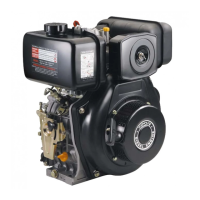
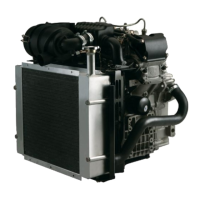
The KIPOR KD388 and KD488 are in-line, vertical, 4-stroke, water-cooled cylinder line, direct-injection diesel engines. These products include charged, exhaust turbocharged, and intercooled types. The engines are designed for easy framing and dismantling, with small overall dimensions and light weight, offering excellent performance suitable for various applications such as generator sets, architectural machinery, transportation engines, vessel dynamos, combine harvesters, and agricultural mechanisms.
Engine Features:
The engines incorporate a screw intake pipe, which directs intake air around the axes, creating a more ideal flammable bland gas mixture with mist oil grains and compressed air. The combustion chamber features a foursquare arc shape top land and a W rotator at the bottom, optimally matched with the vortex helix inlet pipe in the cylinder for high combustion efficiency and powerful output with minimal fuel. Low inertia pin injection, with a 10° slope relative to the cylinder axis, positions the injection head 1.5mm x 4mm from the cylinder center. The injection diameter is 0.18mm, with four oil fog streams falling on the side cliff of the W combustion chamber on the piston head, ensuring thorough mixing of oil fog and air.
A VE type proportioning pump is used, providing a compact appearance. The oil injection pressure for the long cellular type (4 bore) oil injector is 16.5Mpa, ensuring precise fuel delivery to the combustion chamber for high efficiency. For charged types, a 5-bore oil injector with 20Mpa injection pressure is used. A board heater in the intake flange warms the gas in the cylinder, and glow/heater plugs significantly improve the diesel starting efficiency of small bore direct injection combustion chambers. The cylinder features an inlayed thin wall (1mm thick) chrome plating (0.10-0.12mm net shape chrome) for improved wear resistance, thermal stability, and corrosion resistance.
The lubricating system uses forced lubrication with a trochoid pump. The oil pump is a rotor type with large oil capacity, small pulse, and stable oil supply. The cooling system maintains water temperature between 80°C and 95°C using a thermostat.
Technical Specifications (KD388 / KD488):
- Cylinder no-Bore x Cycle (mm): 3-88×90 / 4-88×90
- Piston Displacement (L): 1.642 / 2.190
- Compression ratio: 18.2 (KD388, KD488) / 17.5 (KD388Z, KD488Z)
- Fire order: 1-3-2 (from flywheel terminal) / 1-3-4-2 (from flywheel terminal)
- Inlet ways: Nature inspiration / Supercharge-middle cooling
- Rated power/speed (Kw(ps)/rpm):
- 1500rpm: 12.3(16.7) / 14.5(19.7) (KD388/Z) ; 16.4(22.3) / 19.5(26.5) (KD488/Z)
- 1800rpm: 14.8(20.1) / 17.5(23.8) (KD388/Z) ; 19.7(26.8) / 23.5(32) (KD488/Z)
- 2200rpm: 20(27.2) / 24(32.6) (KD388/Z) ; 26.7(36.3) / 32(43.5) (KD488/Z)
- 2600rpm: 24(32.6) / 28.8(39.2) (KD388/Z) ; 32(43.5) / 38.4(52.2) (KD488/Z)
- 3000rpm: 27(36.7) / 32.4(44) (KD388/Z) ; 36(49) / 43.2(58.5) (KD488/Z)
- 3600rpm: 31.5(42.8) / 37.6(51) (KD388/Z) ; 41.8(56.8) / 50(68) (KD488/Z)
- Fuel consumption (g/kw.h): 1500rpm, 230g/kwh; 3000rpm, 258g/kw.h
- Lubrication system: Composite (Pressure and splash)
- Cooling system: Forced liquid cooling closed type cycle
- Starting system: Starting motor
- Location of output terminal: Flywheel terminal of horizontal axis
- Rotation speed of output terminal: Counterclockwise (face to flywheel)
- Starting motor capacity: 12V 1.4kw
- DC charging generator capacity: 12V 15A
- Accumulator capacity: 12V 80Ah
- Lube oil capacity (L): 6.9 / 8.5
- Cooling water capacity: 4.6 / 5.9
- Overall dimension (L×W×H): (610.5×449.5×641.5)mm / (704.5×449.5×641.5)mm
- Net weight (kg): 170 / 175 (KD388/Z) ; 200 / 205 (KD488/Z)
Operation Control System:
The engine uses a 4-grade starting switch with heat and automatic reset.
- OFF: Engine stopped, current cut off.
- ON: Current flows through meters and alarm systems.
- START: Activates starter motor.
- HEAT: Activates air-heater for cold starting.
The air-heater, located in the inlet pipe flange, facilitates easy starting in low temperatures. When activated, the electrical heated platen warms the inlet air. A heat indicating lamp signals heating, turning off after approximately 15 seconds, indicating preheating completion. The engine should be started immediately after the lamp turns off.
The stopping-engine device uses a fuel shut-off electromagnet on the fuel injection pump. Turning the key to OFF during operation cuts off fuel supply, stopping the engine quickly.
A mechanical centrifugal speeder (all speed governor) controls engine speed via a control lever. Moving the lever upward increases speed, downward decreases it. Remote control is possible with an attached device and micro motor. High and low speed limit switches are strictly restricted and should not be loosened.
Alarm lamps monitor abnormal states:
- CHARGE ALARM LAMP: Indicates normal battery charging when off. If on, check for abnormal charging.
- Heat alarm lamp: On for about 15 seconds during warm-up, then off.
- Lube oil low pressure alarm: On when starting, off with normal oil pressure. If oil pressure drops below 49Kpa (0.5kgf/cm²) during operation, the engine will stop. Oil pressure must be above 0.5Mpa.
- Water temperature alarm system: Off during normal operation (80-95°C). On and engine stops if coolant temperature exceeds 95°C and reaches 110°C.
- Alarm lamp of low intake pressure: Off during normal operation. On if air cleaner element is clogged, increasing intake resistance.
Before Operation:
- Fuel: Use recommended diesel fuel (ISO8217DMA, ASTMD975 Level 1-D or 2-D, GB/T252-1994 light diesel 0#, -10#, -20#, -30# depending on ambient temperature). Keep fuel in clean cans, free from water or dirt. Allow fuel to settle for 24 hours before use.
- Lubricant Oil: Use specified CD Level oil under API classification, chosen according to ambient temperature (10W-30 or 15W-40 for general use). Avoid dirt or dust in oil. Do not mix oils of different specifications.
- Cooling Water: Use soft water (tap or rain water) with durable LLC to prevent rust and freezing. LLC ratio should be 30-55% (30% for >-15°C, 50% for >-35°C). Replace LLC annually.
- Battery: Electrolyte is sulfuric acid; avoid contact with skin/eyes. Maintain electrolyte level between upper and lower marks. If below, add electrolyte. Check electrolyte proportion against temperature and charging rate table. Charge battery in a well-ventilated area, away from fire. Do not connect positive to negative terminal. Open battery cap during charging. Cool battery liquid if overheated (>45°C).
Daily Check before Operation:
Visually inspect for oil, fuel, or water leaks. Check for damaged parts.
- Fuel: Check and add fuel.
- Oil: Check and add oil to upper limit.
- Cooling Water: Check and add cooling water to radiator and sub-tank.
- Governor Lever: Ensure smooth operation.
- Alarm System: Verify all alarm systems function normally.
Starting Procedure:
- Release clutches or turn starting switch to OFF.
- Open fuel tank switch.
- Turn on battery switch.
- Insert key into starting switch.
- Turn key to ON, check alarm systems.
- Set governor (control lever) to LOW.
- Turn key to START. Release key once engine starts.
- Do not operate start switch for more than 15 seconds. Allow 15 seconds interval between starts.
- For cold weather (<0°C), use glow plug: Turn key to HEAT for 15 seconds, then to START.
- If engine fails to start, wait 30 seconds before retrying.
Running:
Run engine at low, no-load speed for 5 minutes initially to lubricate parts. Avoid long idle running. Gradually increase speed and load. Adjust speed with governor lever. Avoid rapid acceleration/deceleration.
Notes during Running:
- New Engine: Do not accelerate or overload abruptly for the first 50 hours.
- Exhaust and Smoke: Stop engine if excessive smoke, indicating overload or damage.
- Abnormal Noise/Shock: Stop engine if abnormal noise/shock occurs at rated speed.
- Alarm Lamp: If alarm lamp lights, cut power output, reduce speed, stop engine, and check.
- Leakage/Loose Bolts: Check for gas, fuel, water leakage, and loose bolts.
- Oil/Fuel Level: Check and add oil/fuel if low.
Stopping Procedure:
- Cut off clutch or load switch.
- Reduce speed gradually to idle for 5 minutes to cool parts.
- Turn start key to OFF. Remove key.
- Turn off battery switch.
- Turn off fuel tank switch. If engine does not stop, turn off fuel tank switch to cut fuel supply.
- Do not stop urgently, as this can cause engine damage.
Long-Term Storage:
- Drain Cooling Water: If no antifreeze, drain cooling water completely to prevent frost damage. Drain hot water only after it cools.
- Clean Outer Parts, Oil Draining, Oiling: Clean dust and oil from engine. Drain fuel completely or top up fuel tank. Add lubricant to timing system.
- Waterproof and Dustproof: Cover engine with sealed plastic jacket.
- Battery: Disconnect switch or ground wire. Charge monthly.
- Restart: Perform "before operation" procedures.
Maintenance:
- Daily Check: Performed daily before starting.
- Terminal Check: Performed at intervals (50h, 250h, 500h, 1000h, 2000h).
- 50 Running Hours: Replace lubricant and oil filter element.
- Every 50 Hours: Drain fuel tank, check battery, clean air cleaner element.
- Every 250 Hours: Change lubricant and oil filter element. Clean radiator chip.
- Every 500 Hours: Replace fuel filter. Replace cooling water. Check and adjust valve clearance (0.2-0.3mm). Check and adjust injector pressure and spray quality.
- Every 1000 Hours: Check and adjust injection timing. Clean cooling system scale and rust.
- Every 2000 Hours: Check and replace fuel, lubricating oil, cooling water, rubber hose. Check and lap inlet and exhaust valve seal band. Check injection pump performance.
Troubleshooting:
- Alarm System Fault:
- Lubricating oil alarm: Low oil level (add oil), clogged oil filter (change filter element).
- Cooling water temperature alarm: Low coolant level (add water), dirty radiator core (clean), leakage (check/change pipe), loose V-belt (tighten/change), water pump malfunction (service/change).
- Charging light: Battery malfunction (check/charge/change), line malfunction (check/service/change), alternator malfunction (service/change).
- Air-in pressure/under voltage light: Dirty air cleaner element (blow clear/change).
- Start Failed:
- Supply system malfunction: Empty fuel tank (add fuel), air in fuel system (drain air), solenoid valve not open (check/service/change), incompetent fuel (change oil), dirty air cleaner (change filter), low temperature (use air heater), clogged fuel filter (change filter), untrue oil supply time (check/adjust), clogged injection head (check/change), untrue inlet/exhaust port (check/adjust valve clearance), poor air cylinder compression (service by professional), low oil in injector pump (service/adjust).
- Circuit malfunction: Insufficient battery power (check/charge), powerless starter (service/change), difficult starter intermeshing (adjust position), low starter rotation speed (check voltage drop/lead).
- Abnormal Smoke Color:
- Black smoke: Overload (decrease load), clogged air cleaner (clean/change), incompetent fuel (use right fuel), large valve clearance (check/adjust), clogged/leaking injection head (check/adjust pressure/spray), untrue oil supply timing (check/adjust angle), unsealed valve (check/service/lap), heavy wear in air cylinder/piston/ring (change/service).
- Blue smoke: High oil level (drain oil), excessive oil mist in breathing apparatus (check valve plate/return hole), disabled valve oil seal/large valve stem clearance (change seal/service valve/pipe), acclivitous face ring in reverse (check/correct).
- White smoke: Low temperature (natural at start-up), water in fuel (drain), poor oil atomization (check pressure/spray), late injection advance angle (check/adjust), air cylinder/cover/head gasket leak (check filter).
- Engine Power Not Enough: Dirty air cleaner/fuel filter (clean/change), clogged fuel pipe (check/clean/change), air suction pipe leakage (check/exhaust), soft timing spring (check/adjust speed), low oil level (magnify level), small oil transfer pump (check oil supply), wrong oil supply advance angle (check/adjust), tinpot injection pressure/sprayer (check/adjust), wrong air valve clearance (check/adjust), bad oil quality (use right oil), clogged fuel tank cover breathing hole (check/dredge), insufficient cylinder compression (check/lap air valve/change seat ring, tighten cylinder head bolt/change gasket, change parts, tighten/change injector gasket).
- Running Unstable: Air in fuel system (drain air/check suction tube leakage), drag rod not flexible/large clearance (use oil pump experiment table), not flexible timing (use oil pump experiment table), asymmetric injection pump (use oil pump experiment table), bad injection pump spray quality/oil dripping (use injector experiment table).
- Engine Too Hot:
- Water temperature too high: Low cooling water (add water), air resistance in cooling water tank (add water/drain air), overload (drop load), loose fan belt (tighten/change), clogged cooling water pipe (check/change), late oil injection (adjust angle), abnormal burn (check quality), dirty water tank (clean), serious scaling (clean with professional), broken thermostat (change), deviant water pump (service/change), wrong water thermometer (change).
- Oil temperature too high: Too much/little oil (check level), dirty radiator (clean), bad oil quality (use right spec), large piston ring blow-by (check cylinder/piston ring abrasion), high cooling water temperature (troubleshoot from above), overload (decrease load), oil temperature gauge failure (change).
- Stop Abruptly: Empty fuel tank (add fuel), oil pipe leakage/suction air (check leakage/drain air), solenoid valve breakdown (change filter/check circuit), crankshaft not running (change oil transfer pump/injection pump/disconnect and check reason/service by professional for piston scuffing/low oil pressure/broken oil pump/air valve turn around).
- Abnormal Voice: Large air valve clearance (check/adjust), large piston/cylinder clearance (check/change parts), large main shaft/connecting rod bearing shell clearance (check crank journal/change tile), large piston pin/small end connecting rod clearance (check/change bushing/pin), large piston/annular clearance (change piston/ring), large crankshaft axial clearance (change plummer block patch), air valve bump piston (check clearance/gas phase), large gear clearance (change gear), early injector (check/adjust timing), broken injector parts (clear/change).

 Need help?

 To Next Page
 General