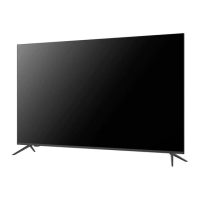
This document serves as the owner's manual for the KONKA U5 Series 4K Ultra HD Android TV, providing comprehensive instructions for its setup, operation, and troubleshooting. The television is designed to function as a primary display terminal, capable of storing both air and cable TV programs, and features HDMI connectivity for various external devices. Additionally, it includes a multi-media player function via USB, allowing users to enjoy content from portable storage devices.
The manual begins with essential safety and warning information, emphasizing the importance of proper installation and handling to prevent injury or damage. It advises users to read all instructions carefully, keep the manual for future reference, and heed all warnings. Key safety precautions include avoiding water exposure, cleaning with a dry cloth, ensuring proper ventilation, and keeping the TV away from heat sources. The document also highlights the importance of using the provided polarized plug correctly and protecting the power cord from damage. For servicing, users are instructed to refer to qualified personnel, especially if the apparatus is damaged, exposed to liquids, or not operating normally. Environmental aspects of battery disposal are also mentioned, along with warnings against exposing the apparatus to dripping or splashing liquids and placing objects filled with liquids on it. A specific warning is given to ensure the product is placed on a stable, horizontal surface to prevent tipping.
Further safety guidelines detail the risks associated with placing the television in an unstable location, which could lead to serious personal injury or death, particularly for children. It recommends using manufacturer-recommended cabinets or stands, ensuring furniture can safely support the TV's weight, and anchoring tall furniture and the television to a suitable support to prevent falling. Users are also advised against placing the TV on cloth or other materials that might be located between the TV and supporting furniture, and to educate children about the dangers of climbing on furniture to reach the TV or its controls. These considerations are also applicable if an existing television set is being retained and relocated. The manual includes symbols for caution regarding electric shock and important operating instructions, and warns against exposing the apparatus to rain or moisture, or batteries to excessive heat.
The manual also provides FCC statements, warning against unauthorized modifications that could void the user's authority to operate the equipment. It notes that the unit complies with Class B digital device limits and offers measures to correct potential radio or television interference, such as reorienting the antenna, increasing separation, or connecting to a different circuit. Personal safety notices reiterate the importance of reading all instructions, placing the TV on a level and sturdy surface, and preventing children from pulling or climbing on the TV or its furniture. It also advises proper cable routing to avoid accidental pulling and recommends professional installation for wall mounting, including checking wall structure support.
Installation instructions cover the assembly of the base stand and wall mount. For base stand assembly, users are guided to place the TV display-side down on a flat surface protected by a cloth, then insert the two bottom brackets into the designated gaps and secure them with four screws, ensuring they are firmly tightened. A note clarifies that the stand is not a swivel stand. For wall mount installation, the process involves using expansion bolts to fix wall mount brackets to the wall, then securing the TV to the wall mount with four screws on the rear side. A warning specifies that the angle between the TV and the wall must not exceed 3°.
The front panel description details the remote control sensor, indicator LED (red for standby), and key board. The key board includes a middle button for power on/off and OK function in menus, left/right keys for volume adjustment and cursor movement, and up/down keys for channel adjustment and cursor movement. Rear AV connections are illustrated, showing USB, HDMI1(ARC), and HEADPHONE ports on the side, and LAN, OPTICAL output, additional USB ports, HDMI4, HDMI3, HDMI2, AV IN, and RF ports on the rear. An antenna connection diagram explains how to connect an outdoor or indoor antenna, or CATV net, with instructions for loosening screws, inserting feeder wires, and tightening screws. A table of preset HDMI modes with corresponding resolutions and frequencies is also provided.
The AV equipment section explains how to connect various external devices like VCRs, DVDs, camcorders, and stereo systems using the provided input terminals. It illustrates connections for video equipment and an audio receiver, indicating the yellow, red, and white audio/video inputs.
The remote controller section details each button's function, including power, input selection, dedicated buttons for NETFLIX and YouTube, closed captioning, stop, mute, reverse, forward, play/pause, sound mode, info, picture mode, navigation arrows, OK, return, home page, on-screen menu, Google Assistant, volume, channel, numeric keys, a symbol key, and colored buttons for specific operations. Instructions for installing batteries in the remote control are also included, emphasizing correct polarity and not mixing old and new batteries.
The initial setup guide walks users through the first-time setup process, starting with pairing the remote control via Bluetooth. It then guides users through selecting the system language, connecting to Wi-Fi, agreeing to Google's location and Android improvement settings, and browsing features like Google Play apps and Chromecast built-in. Users can also adjust text-to-speech speed. Further setup steps include setting up a device password for security, confirming the password, selecting the time zone, and choosing between "Home" and "Retail" TV modes. After agreeing to Google's Terms of Service, the setup is completed, and users can begin watching TV.
The manual then delves into detailed operation instructions, starting with input source selection from the HOME interface or via the SOURCE button. It explains how to navigate the on-screen menu to access various settings, including Network & internet settings for Wi-Fi and Ethernet connections, and APP permissions. Device preferences cover "About" information like system updates, device name, restart options, status, legal information, model, version, and software version.
Date & Time settings allow users to configure automatic date and time, set date and time manually, select time zone, and choose 24-hour format. Timer settings include Power On Timer Type, Auto Power On Time, Power Off Time Type, and Power Off Time. Language settings allow selection of the desired language. Keyboard settings cover current keyboard, Gboard settings, and managing keyboards. Inputs settings allow users to select input sources, control HDMI devices, and manage device auto power off and TV auto power on features.
Power settings include Sleep Timer, Picture off, Switch off timer, and No Signal Auto Power Off. Picture settings allow adjustment of Picture Mode (Energy Saving, User, Standard, Vivid, Sport, Movie, Game), Backlight, Brightness, Contrast, Saturation, HUE, Sharpness, Gamma (Dark, Middle, Bright), Color Temperature, Advanced Video, and Reset to Default. Sound settings cover Sound Style (User, Standard, Vivid, Sports, Movie, Music, News), Balance, Sound Surround, Equalizer Detail, Speakers (TV Speaker, External Audio System), Digital Output (Auto, Bypass, PCM, Dolby Digital Plus, Dolby Digital), SPDIF Delay, Auto Volume Control, Downmix Mode (Stereo, Surround), and Reset to Default.
Storage settings display internal shared storage and removable storage information. Home Screen settings allow customization of channels, enable video/audio previews, reorder apps/games, and access open source licenses and Android TV services. Retail Mode settings allow users to turn retail mode on or off. Google Assistant settings include accounts, view permissions, searchable apps, SafeSearch filter, block offensive words, and open source licenses. Chromecast built-in settings provide information about the feature, open source licenses, and version number. Screen Saver settings allow users to choose screen saver type (Backdrop, Colors, Turn screen off), when to start, and when to put the device to sleep. Location settings show location status and recent location requests. Usage & Diagnostics settings allow users to enable or disable automatic sending of diagnostic information to Google. Reset settings allow users to erase all data and restore factory defaults. Remote & Accessories settings are for pairing Bluetooth devices.
Finally, the manual includes a Multimedia Player section, explaining how to access the MMP APP from the HOME interface to view video, photo, audio, and text files from a USB flash drive. A troubleshooting section provides a table of common problems related to picture and audio, along with suggested inspections to resolve issues like snow, ghosting, interference, no picture, no color, or scrambled channels. It clarifies that accessories like the remote control are not covered by the guarantee.



 To Next Page
 General