The device described in this manual is the KORTEL DESIGN KOLIBRI EVO paragliding harness.
Function Description
The KOLIBRI EVO is a lightweight paragliding harness designed for hike-and-fly competitions, bivouac flights, and expeditions. It aims to provide optimal comfort, piloting efficiency, and storage capacity, building on the reputation of the Kolibri series since 2014. The harness is intended for single-pilot use and is not suitable for tandem flights or acrobatic maneuvers due to its design characteristics and the inability to carry a suitable reserve parachute in such configurations.
Important Technical Specifications
The KOLIBRI EVO harness is available in three sizes: M, L, and XL.
- Weight (kg): M (1.44), L (1.54), XL (1.64)
- Carbon ring weight (g): 45
- Connectors weight (g): 20
- Mousse-bag weight (kg): 0.4
- Total weight (kg): M (1.9), L (2), XL (2.1)
- Certification: CE/EN 1651/1249
- Max weight in flight (kg): 100
Materials:
- Fabric: 110 D Robic Nylon laminated / Aquatech 90 D Elasthane-polyester laminated
- Straps / ropes: Dynalight 3mm / Nylon 10, 15, 25mm / Spectra 2mm
- Other: Triplex boards / Zip
- Buckles: LFR 16/8 – 10/3 / T-Bones plastic buckles
The harness features an integrated back protection system (airbag/mousse-bag type) certified according to Fpr EN 1651-2018 & LTF 2. DV LuftGerPV §1, Nr. 7c, corresponding to a ground impact at 5m/s under a reserve parachute, and protocol SP-001 02/2016 of CRITT SL. This back protection is not tested for other ground arrival configurations. The device has a maximum lifespan of 10 years and should not be used in temperatures below -20°C or above 40°C.
Usage Features
The KOLIBRI EVO comes with several components: 1 harness, 2 T-Bone links, 2 mousse-bags, 1 light 3-bar speedbar, 1 reserve handle, 1 carbon ring, and 1 reserve riser connection.
Key features include:
- Integrated Cockpit (12): For instruments and navigation.
- Cocoon (4): Designed for optimal leg extension and comfort during flight. Its length can be adjusted independently for the upper and lower parts using blue straps.
- Reserve Container (1): Integrated at the front, on top of the cocoon, suitable for rescue parachutes with volumes between 2.6L and 4.6L. It has connection loops for direct attachment of reserve risers to the main connection points.
- Airbag Dorsal (7) / Mousse-bag (11): Provides back protection. The airbag has two inflation chambers (high and low) that fill with relative wind through lateral and frontal scoops (6). The scoops have zippers for protection during storage and must be properly closed before each take-off. The mousse-bag is placed under the pilot's seat.
- Adjustments: The harness offers four independent adjustment elements for optimal comfort and piloting efficiency:
- Shoulder length adjustment (18): Carries the harness on take-off, limits pilot inclination, prevents head-down falls, and supports the pilot under the reserve.
- Back tilt adjustment (17): Adjusts the pilot's back inclination, affecting comfort and ease of exiting the harness on landing.
- Lumbar support adjustment (16): Maintains lumbar support for comfort during long flights and adjusts ergonomics for sitting or lying positions.
- Frontal adjustment (15): Adjusts the distance between main attachment points, influencing harness stability and glider behavior. Tightening binds the harness, while loosening makes it more lively.
- Speedbar (1): A 3-bar light speedbar is included, with adjustment pads (5) for optimal setting to utilize the full range of the wing. It should not be set too short to avoid unintended acceleration.
- Connectors: Equipped with flexible T-Bone links (2) as standard, which are lightweight and ultra-resistant (>2400DaN), ideal for mountain use. Light aluminum carabiners can also be used. Connectors should have a minimum resistance of 2400daN for rescue-lift links and 1200daN for risers-harness links. Flexible connectors should not be used on straps wider than 25mm.
Pre-flight Checklist:
Before each flight, a thorough check is imperative:
- Equipment condition: No visible damage to harness or glider; connectors in good condition and functioning.
- Back protection: Good condition, operational inflation scoops, and properly closed zippers.
- Reserve parachute: Flaps and needles in place, handle properly attached. Practice "control handle" pulls regularly.
- Speedbar: Not too short; ensure it doesn't interfere with reserve extraction if risers are guided sideways.
- Glider preparation: Correctly spread out, untangled lines.
- Glider connection: No twists in risers, connectors properly closed.
- Weather conditions: Correct analysis is crucial; consult a professional if in doubt.
In-flight operation:
- Take-off: Lean onto the chest strap for airspeed, maintain position for cocoon opening, keep right leg straight, grab cocoon with left heel, pull right leg in, swing back, tuck in left leg.
- Flying: Adopt an upright position in thermals/transitions near terrain for better visibility; near the ceiling, relax and observe clouds. In strong aerology, bend legs, use abdominal/lumbar muscles, and anticipate roll movements.
- Speedbar use: Requires effort; test under a gantry first. Use only in conditions not requiring constant speedbar use. Press firmly until A-riser pulleys touch for maximum speed. Always use with sufficient altitude and distance from obstacles.
- Reserve parachute use: Locate and firmly grab handle, pull to release locking pins and pod, throw pod and handle away from harness, neutralize main canopy by pulling B or C lines, adopt upright position for impact.
- Landing: Re-focus, analyze environment, exit harness to regain leg mobility. With cocoon, exit one foot at a time, keeping heel inside. Mobilize ankles/knees if flight was long/cold. Cushion impact with legs, not back protection.
Maintenance Features
General Care:
- Visual inspection: Complete visual inspection of the harness recommended every 2 years, annually is preferable.
- Reserve parachute: Follow manufacturer recommendations. Ventilate and repack 1-2 times per year. Test extraction on a gantry crane twice a year.
- Storage: Store in a dry, temperate place, away from light. Avoid compressing back protection or bending parts with foam/plates.
- Washing: Wash with fresh water and mild soap. Remove foam protection if possible. Do not tumble dry, do not exceed 30°C. Rinse carefully and dry in an airy place away from direct sunlight.
- Water landing: Rinse harness in fresh water after sea water immersion.
Repairs:
- Problems: For wear, broken seams, or material damage, contact sav@korteldesign.com with harness model, serial number, problem description, circumstances, and photos.
- Warranty: Free repairs for manufacturing/design defects within the 2-year legal warranty period. Beyond this, repairs are not free unless it's a proven manufacturing or design defect.
- Lifespan: Normal use duration is 10 years, but this is indicative. Bi-annual inspection determines if earlier disposal is needed. Proper storage is essential.
Revisions:
- Visual check: Visually check harness every two years, especially after tree/rock landings or fire brigade interventions. Contact dealer or sav@korteldesign.com for initial inspection.
- Aging: UV, humidity, abrasion, and material defects can cause premature aging. Critical points should remain in good condition.

 Need help?
 General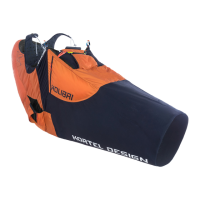

 To Next Page