This document describes the METIS M308 / M309 / M313 / M316 / M318 / H309 / H316 / H318 series of pyrometers, which are non-contact temperature measurement devices. These pyrometers are designed for industrial applications requiring precise temperature monitoring.
Function Description
The METIS pyrometers measure temperature without contact, making them suitable for applications involving high temperatures, moving objects, or environments where physical contact is impractical or unsafe. They operate by detecting the infrared radiation emitted by an object and converting it into a temperature reading. The devices offer various optical configurations, including fixed focus, manually focusable, and motorized focus optics, to accommodate different measuring distances and spot sizes.
The pyrometers are equipped with a 14-pin connector, allowing for display and push-button device configuration. They support various versions with integrated optics, optical fiber, PID controller, Profibus, or Profinet interfaces, providing flexibility for integration into different control systems.
Key functionalities include:
- Temperature Measurement: Non-contact measurement of object temperatures within specified spectral and temperature ranges.
- Signal Processing: Conversion of detected infrared radiation into a digital or analog temperature output.
- Control Capabilities: Some versions include an integrated PID controller for closed-loop temperature control.
- Communication Interfaces: Support for serial interfaces (RS232, RS485), Profibus, and Profinet for data exchange and remote control.
- Targeting: Laser targeting light or viewfinders are available for precise alignment of the pyrometer with the target object.
Important Technical Specifications
The METIS pyrometers come in different models (M308, M309, M313, M316, M318, H309, H316, H318), each with specific technical characteristics:
Temperature Ranges:
- M308: 700–1400 °C (600–1400 °C with optics)
- M309: 550–1600 °C (550–1600 °C with optics)
- M313: 400–1800 °C (450–1800 °C with optics)
- M316: 250–1300 °C (200–1300 °C with optics)
- M318: 100–700 °C (150–700 °C with optics)
- M323: 50–800 °C (80–1200 °C with optics)
- H309: 550–1400 °C (550–1200 °C with optics)
- H316: 250–800 °C (300–800 °C with optics)
- H318: 120–520 °C (180–520 °C with optics)
Spectral Ranges:
- M308 / M309: 0.855 – 0.905 µm (Silicon detector)
- M313 / M316 / M318: 1.45 – 1.8 µm or 1.4 µm (InGaAs detector)
- M323: 2.2 – 2.6 µm (InGaAs detector)
- H309 / H316: 0.7 – 1.1 µm or 0.87 µm (Silicon detector)
- H318: 1.65 – 2.1 µm (InGaAs detector)
Response Time (t90):
- < 0.5 ms (with dynamical adaptation at low signal levels), adjustable up to 10 s
Uncertainty (ε=1, t90=1s, TA=23°C):
- Full-scale temp. up to 2500°C: 0.25% of reading in °C+1K
- Full-scale temp. above 2500°C: 0.5% of reading in °C
- 0.4% of reading in °C+1K or 2°C (the higher value is valid)
Repeatability (ε=1, t90=1s, TA=23°C):
- 0.1% of reading in °C + 1K
- 0.2% of reading in °C+1K or 1°C (the higher value is valid)
Temperature Coefficient (deviations to 23°C):
- From 0 to 10°C and 60 to 80°C: 0.02%/K
- From 10 to 60°C: 0.04%/K
- 0.02%/K or 0.04%/K
Serial Interface:
- RS232 (max. 115.2 kBd) or RS485 (max. 921.6 kBd), switchable.
Power Consumption:
- Max. 6 VA (all outputs unconnected)
Ambient Temperature:
- 0 to 80°C (32 to 176°F) for device
- 0 to 70°C (32 to 158°F) for fiber optic and optics on optics side
- -20 to 250°C (-4 to 482°F) for fiber optic and optics on optics side
- To prevent its overheating, the laser targeting light is deactivated at a device temperature above 65°C / 149°F; the camera module from 55°C / 131°F.
Analog Outputs:
- 2 programmable analog outputs 0 or 4-20 mA, switchable, max. load: 500 Ω.
- Resolution: 0.0015% of the adjusted temperature sub range (16 bit).
Digital Inputs/Outputs:
- 3 configurable inputs / outputs (max. 3 inputs, inside or outside the measuring range).
- Digital inputs (max. 3 individually, inside or outside the measuring range): laser targeting light on/off, clearing of peak picker, controller start (when equipped with PID controller), load pyrometer configuration, and trigger input for start, stop or measured value recording.
- Digital outputs (max. 3 outputs): 0/4-20 mA, protected against short circuit; limit switch, exceeding the beginning of temperature range (for material recognition), device ready, device error, device over-temperature, signal with PID controller, controller active, control process within limits, control process finished.
- Analog output (0-20 mA, protected against reverse polarity and incorrect connection).
- Analog output of the emissivity, or setpoint for PID controller (when equipped with PID controller).
Display:
- 10-digit LED display (5 mm high) for temperature display or device settings.
Storage:
- Storage temperature: -20 to 65°C (-4 to 185°F).
- Relative humidity: max. 95%, no condensing conditions, do not store outdoors, protect from direct sunlight, store dry and dust-free, do not expose to corrosive media, avoid mechanical vibrations.
Housing / Protection Class:
- Aluminum, IP65 to DIN 40 050 with connector.
Weight:
Usage Features
The METIS pyrometers are designed for ease of use and integration into various industrial processes.
- User Manual: A comprehensive user manual provides detailed instructions for installation, configuration, operation, and maintenance.
- Safety Information: Clear warnings and symbols (e.g., laser radiation, hot surfaces) are provided to ensure safe operation.
- Device Configuration: Pyrometers can be configured via a 14-pin connector with push buttons, or remotely via software (SensorTools) through serial interfaces (RS232/RS485) or fieldbus systems (Profibus/Profinet).
- Optical Alignment: Laser targeting light or viewfinders assist in precise alignment of the pyrometer with the target object, crucial for accurate measurements.
- Adjustable Optics: Manually focusable and motorized focus optics allow users to adjust the measuring distance and spot size to suit specific application requirements. Fiber optic versions offer flexibility in mounting the sensor head in harsh environments.
- Software Integration (SensorTools): The SensorTools software provides a graphical user interface for programming, starting, and connecting the pyrometer. It allows for:
- Measured Temperature Display: Numerical and graphical representation of temperature data.
- Data Recording: Recording of measured values, settings, and events for analysis and documentation.
- Device Settings and Configuration: Comprehensive control over device parameters, including temperature sub-range, analog outputs, digital inputs/outputs, and PID controller settings.
- Graphical Measurement Data Playback: Visualization of recorded data for trend analysis.
- Spot Size Calculation: Tools to determine the optimal spot size for a given measuring distance.
- PID Controller Equipment: Integrated PID controllers enable precise temperature control, with adjustable parameters for proportional band (Xp), integral time (Ti), and derivative time (Td). AutoTune functionality simplifies controller setup.
- Fieldbus Communication: Profibus and Profinet interfaces allow for seamless integration into existing industrial control networks, enabling remote monitoring and control.
- Data Buffer Mode: Allows for high-speed data recording, useful for capturing rapid temperature changes.
- Single-Point Adjustment: A feature for calibrating the pyrometer at a specific temperature point to improve accuracy.
- Customizable Analog Output: Analog outputs can be configured to represent temperature, emissivity, or other process variables.
- Multiple Device Management: SensorTools can manage multiple pyrometers simultaneously, facilitating large-scale monitoring systems.
Maintenance Features
Regular maintenance ensures the longevity and accuracy of the METIS pyrometers.
- Cleaning: The lens and other optical components should be cleaned with a soft cloth and a little acetone to remove dust and dirt. Care must be taken to avoid scratching optical surfaces.
- Protective Window Change: The protective window unit can be replaced if damaged or contaminated, ensuring optimal optical performance.
- Firmware Updates: The device firmware can be updated using the SensorFlash software, ensuring the pyrometer operates with the latest features and improvements. Firmware updates are typically downloaded from the manufacturer's website.
- Pyrometer Calibration: Regular calibration is recommended to maintain measurement accuracy. This can be done by sending the pyrometer to the manufacturer or by performing a single-point adjustment using the SensorTools software.
- Troubleshooting: The manual provides a troubleshooting section to help identify and resolve common issues, including error messages and device malfunctions.
- Customer Service / Spare Parts: Information on contacting customer service for technical support and ordering spare parts is provided.
- Disposal: Instructions for environmentally friendly disposal of the product in accordance with WEEE Directive are included.
- Documentation: The user manual serves as a comprehensive resource for all aspects of device operation and maintenance, including detailed descriptions of parameters and communication protocols.

 Need help?
 General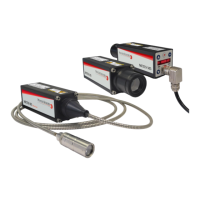

 To Next Page